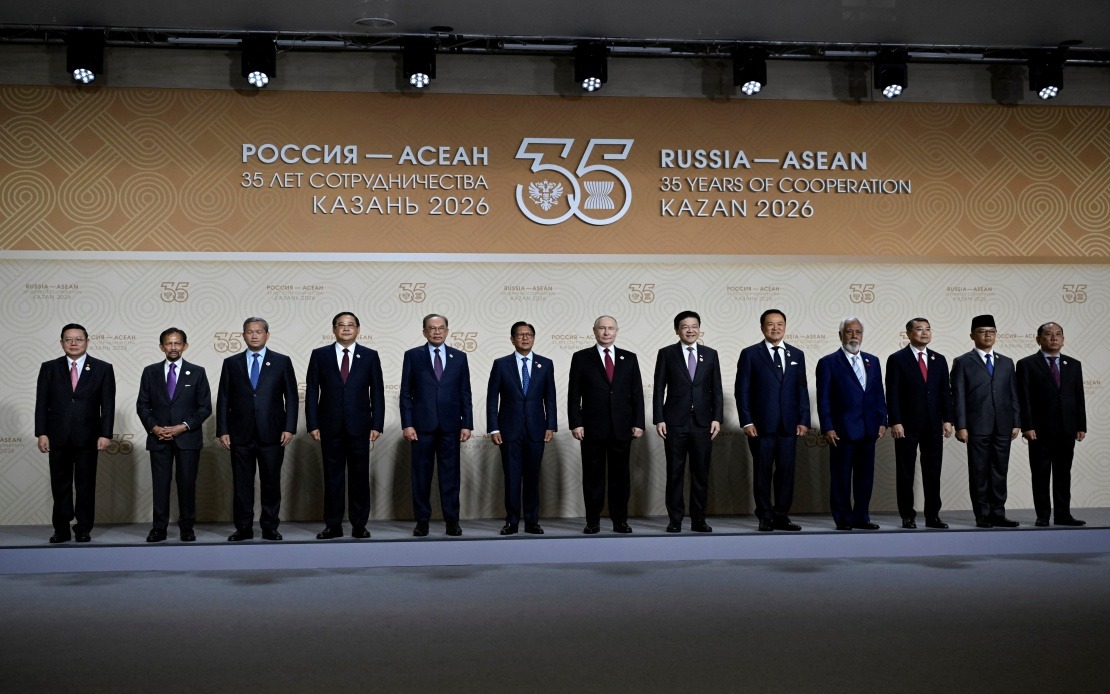
Philippine President Ferdinand R. Marcos Jr has identified significant untapped opportunities for strengthening the relationship between the Association of Southeast Asian Nations and Russia, particularly by channelling collaboration into rapidly evolving technological domains. Speaking after attending the ASEAN-Russia Commemorative Summit in Kazan, Marcos remarked that whilst the regional bloc and Moscow have maintained diplomatic ties for over three decades, the partnership has operated well below its maximum capability. The comments underscore a strategic recognition within Philippine leadership that traditional avenues of trade and political engagement, whilst valuable, no longer fully capture the scope of what ASEAN and Russia could accomplish together in the modern global economy.
Marcos acknowledged that partnership development between ASEAN and Russia has proceeded at a measured pace, though he noted important variations across the ten-member bloc. Some Southeast Asian nations have advanced their bilateral ties with Moscow more aggressively than others, reflecting divergent foreign policy priorities and geopolitical orientations. This heterogeneity within ASEAN has historically complicated efforts to establish unified regional positions on major external partners, yet the Philippine leader suggested this diversity need not impede collective progress on specific sectoral initiatives. His observation hints at a pragmatic approach wherein ASEAN could pursue coordinated action in selected domains whilst allowing individual member states flexibility to pursue independent relationships where strategic interests diverge.
The sectors Marcos highlighted—advanced technology, artificial intelligence, data centres, and power generation—represent areas where Russia possesses considerable expertise and where ASEAN nations face growing infrastructure demands. The Philippines itself grapples with chronic energy deficits and expanding digital infrastructure requirements as its economy develops. Russia's involvement in these emerging fields has intensified in recent years despite Western sanctions, and Marcos framed this expansion as creating fresh collaborative possibilities rather than viewing Russia's role as part of any zero-sum geopolitical competition. This framing carries subtle significance for Malaysian observers, as it reflects a broader Southeast Asian inclination to engage with multiple global partners based on functional capability rather than ideological alignment.
Marcos emphasised that many contemporary partnership opportunities simply did not exist within the framework of traditional ASEAN-Russia relations. Technology sectors, particularly those involving artificial intelligence and sophisticated data management infrastructure, barely registered in bilateral diplomatic agendas a decade ago. The emergence of these fields has coincided with ASEAN's own technological maturation and rising domestic appetite for digital solutions. Power generation, too, has undergone transformation as nations across the region grapple with energy transition imperatives and the need to balance growing electricity demand against climate commitments. Russia's capability in nuclear technology, hydroelectric expertise, and alternative energy solutions therefore assumes greater relevance in contemporary regional discussions than it might have in earlier phases of the relationship.
The Philippine president characterised ASEAN as entering a phase of rapid institutional growth and strategic recalibration, one he described as a "new day" marked by expanding dialogue horizons. This language suggests recognition that the post-Cold War international environment, wherein ASEAN members often felt compelled to choose between competing blocs, has given way to a more fluid multipolar configuration. ASEAN nations increasingly perceive themselves as autonomous actors capable of selecting partnership arrangements based on pragmatic assessments of mutual benefit rather than perceived obligations to align with any particular power. Marcos's comments reflect this emergent confidence, positioning the regional organisation as sufficiently mature to engage Russia, the United States, China, India, and other major powers simultaneously without sacrificing either autonomy or strategic coherence.
This recalibration carries particular importance for Malaysia, which like other ASEAN members seeks to preserve strategic flexibility whilst pursuing economic development. Malaysian policymakers have long articulated preferences for non-alignment and diversified international partnerships, principles that Marcos's statements implicitly endorse. The expansion of ASEAN-Russia cooperation into technology and energy sectors creates potential avenues for Malaysian engagement, whether through direct bilateral arrangements with Russia or through coordinated regional initiatives. Malaysia's own technological ambitions and energy requirements position it to benefit from expanded cooperation frameworks in these domains.
The summit in Kazan, which commemorated over 35 years of ASEAN-Russia dialogue relations, produced several substantive outcome documents intended to guide the next phase of partnership development. The Kazan Declaration 2026 and the ASEAN-Russia Comprehensive Plan of Action for 2026–2030 provide institutional frameworks within which specific cooperative projects can materialise. Accompanying agreements on cultural and energy cooperation suggest that the summit participants sought to balance immediate practical collaboration with longer-term relationship building. For Malaysian observers, these documents merit careful analysis regarding potential opportunities for national participation and the broader implications for regional diplomatic configurations.
Marcos framed ASEAN's evolving international engagement as partly driven by momentum generated from shifting global power distributions and the apparent erosion of rigid bipolar or unipolar international orders. He suggested that ASEAN nations, operating from a position of relative weakness when faced with individual great powers, have begun consciously diversifying partnerships as a collective strategy for maintaining autonomy. This perspective has long underpinned ASEAN's central role in Southeast Asian geopolitics, but Marcos presented it with fresh emphasis on technological and sectoral cooperation rather than traditional diplomatic balancing. The implication is that future ASEAN cohesion may rest less on political solidarity against external threats and more on coordinated pursuit of shared development objectives.
The deepening of ASEAN-Russia ties in technology sectors occurs against a backdrop of global competition for technological leadership and influence. China has invested heavily in establishing itself as the primary technology partner for developing nations, whilst the United States and its allies have sought to maintain technological leadership and shape global standards. Russia, constrained by international sanctions but possessing sophisticated technical capabilities in certain domains, represents an alternative source of expertise and partnership. For ASEAN members seeking technological advancement without perceived loss of strategic autonomy, Russian partnership offers potential advantages. However, such cooperation also invites scrutiny from Western-aligned partners and raises questions about technology standards, cybersecurity, and intellectual property protection.
Energy cooperation between ASEAN and Russia carries similarly complex implications. Southeast Asia's economies require vast quantities of electricity to fuel continuing growth, yet climate change imperatives push nations toward lower-carbon energy sources. Russia's expertise in nuclear power and hydroelectricity could address these competing pressures, yet dependence on Russian energy technology creates supply-chain vulnerabilities and potential leverage for an external actor. Malaysia's own energy transition efforts, including significant renewable energy ambitions alongside continued reliance on fossil fuels, create natural interests in exploring diverse technological partnerships. The frameworks emerging from the Kazan summit may therefore offer valuable opportunities for Malaysian engagement, contingent upon careful assessment of security implications and compatibility with existing international commitments.
Marcos's statements reflect a broader Southeast Asian confidence in engaging Russia despite Western pressure to isolate Moscow following its invasion of Ukraine. Whilst individual ASEAN nations have condemned the invasion and voted for relevant United Nations resolutions, the region has resisted pressure to impose economic sanctions or sever cooperation frameworks. This stance reflects both historical non-aligned traditions and practical recognition that Russia remains a significant power with capabilities valuable to ASEAN development objectives. The Marcos comments therefore represent not merely diplomatic courtesy toward a summit host but rather an articulation of genuine regional interest in maintaining Russia as a viable partnership option. For Malaysia and other ASEAN members, this positioning offers flexibility in international engagement but also potential diplomatic complications in relations with Western partners.
The focus on emerging sectors and technology-driven cooperation suggests that future ASEAN-Russia engagement may diverge from traditional state-to-state diplomatic patterns. Private sector involvement in technology development, data management, and power generation expansion could enable deeper cooperation whilst distributing political risk across multiple actors. Malaysian businesses in telecommunications, renewable energy, and digital infrastructure may find opportunities within expanded ASEAN-Russia frameworks, provided that appropriate governance structures and security protocols emerge. The coming years will reveal whether the Kazan summit inaugurates a sustained expansion of practical collaboration or whether rhetoric outpaces actual implementation. For Malaysian policymakers and business leaders, monitoring these developments and positioning national capabilities to participate in emerging opportunities represents a logical extension of ASEAN's diversification strategy.
%22%2F%3E%3C%2Fpattern%3E%3C%2Fdefs%3E%3Crect%20width%3D%22100%25%22%20height%3D%22100%25%22%20fill%3D%22url(%23ph5vhyng)%22%2F%3E%3Crect%20width%3D%22100%25%22%20height%3D%22100%25%22%20fill%3D%22url(%23ph5vhynp)%22%2F%3E%3Ctext%20x%3D%2250%25%22%20y%3D%2250%25%22%20text-anchor%3D%22middle%22%20dominant-baseline%3D%22central%22%20fill%3D%22rgba(255%2C255%2C255%2C0.95)%22%20font-family%3D%22Georgia%2C%20'Times%20New%20Roman'%2C%20serif%22%20font-weight%3D%22700%22%20font-size%3D%22194%22%20letter-spacing%3D%22-0.02em%22%3ETakaful%3C%2Ftext%3E%3C%2Fsvg%3E)
%22%2F%3E%3C%2Fpattern%3E%3C%2Fdefs%3E%3Crect%20width%3D%22100%25%22%20height%3D%22100%25%22%20fill%3D%22url(%23ph5kyyvg)%22%2F%3E%3Crect%20width%3D%22100%25%22%20height%3D%22100%25%22%20fill%3D%22url(%23ph5kyyvp)%22%2F%3E%3Ctext%20x%3D%2250%25%22%20y%3D%2250%25%22%20text-anchor%3D%22middle%22%20dominant-baseline%3D%22central%22%20fill%3D%22rgba(255%2C255%2C255%2C0.95)%22%20font-family%3D%22Georgia%2C%20'Times%20New%20Roman'%2C%20serif%22%20font-weight%3D%22700%22%20font-size%3D%22320%22%20letter-spacing%3D%22-0.02em%22%3E70%3C%2Ftext%3E%3C%2Fsvg%3E)