Thailand's troubled southern border region experienced a violent escalation on Friday when two distinct bomb attacks within hours targeted police personnel across Yala and Pattani provinces, leaving eleven officers injured and reigniting concerns about militant activity in one of Southeast Asia's most unstable zones.
The first attack struck at 8:10 am on the Ban Pulo Saniyae–Ban Sakai road in Thanto district, Yala province, when assailants detonated an explosive device targeting a border patrol contingent from a teacher protection unit deployed in Moo 4 of Ban Rae sub-district. The blast wounded six officers, with medical authorities quickly identifying two as requiring urgent intensive care. The severity of the injuries underscored the violence of the detonation and the vulnerability of security personnel operating in the region's remote areas where militant networks maintain capacity to conduct coordinated strikes.
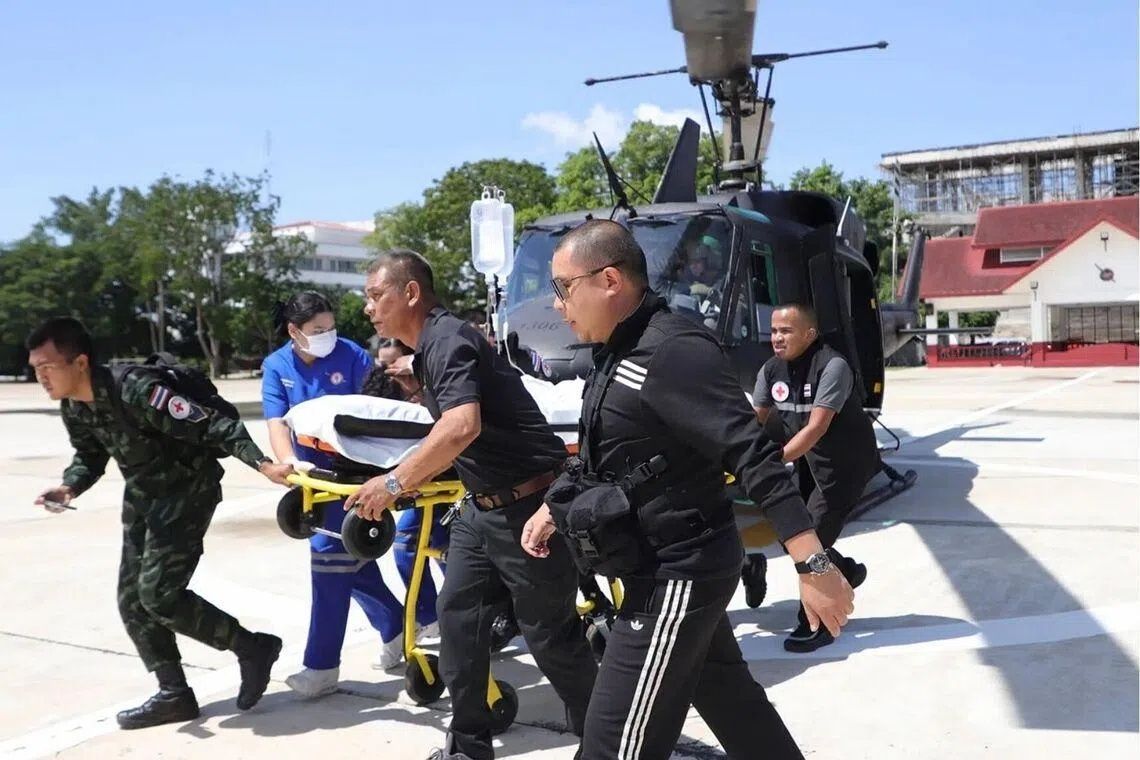
Corporal Kittisak Saksang sustained severe facial trauma from shrapnel fragments, while his colleague Corporal Poraphat Wongruaydee experienced life-threatening chest injuries resulting in pleural effusion—dangerous fluid accumulation around the lungs that necessitated emergency surgery. Though Wongruaydee retained consciousness despite his grave condition, his injuries exemplified the physical toll such attacks exact on frontline personnel. Yala Regional Hospital subsequently issued an urgent appeal for blood donations of all types to support the medical intervention required for his stabilisation and recovery. Initial care began at Thanto Hospital before helicopter evacuation transported the two critically injured officers to the provincial referral facility.
Explosive ordnance disposal teams and forensic investigators systematically examined the blast site while authorities implemented heightened security protocols across the affected area, reflecting standard responses to such incidents in the security-conscious region. The physical evidence gathering process aims to reconstruct the attack method and potentially identify perpetrators, though such investigations in Thailand's deep south frequently yield limited leads given the operational experience of armed groups in the area.
Scarcely three hours later, a second bombing materialised at 11:30 am in Pattani province's Mayo district, targeting officers from the Pattani Police Special Operations unit at Ban Khuan Yi in Moo 3 of Pado sub-district. This second attack unfolded as personnel returned from establishing a security checkpoint, suggesting possible surveillance of police movements or pre-planned targeting of predictable routines. The incident wounded five additional officers—Sergeants Anuchit, Bunyawat, Wisitphon, Aphisit and Sumit—each sustaining chest trauma consistent with blast-related injuries typical of improvised explosive devices. All five were transported to Mayo Hospital where they received treatment for their injuries.
The timing and geographic separation of the two attacks, though occurring within the same morning window, raise questions about potential coordination between militant cells operating in this border corridor. Thailand's southern insurgency has historically demonstrated capacity for sequential strikes designed to stretch emergency response capabilities and amplify psychological impact. The dual nature of Friday's violence suggests either coordinated planning or opportunistic exploitation of heightened military presence in the region.
These incidents occur amid a decades-long separatist conflict in Thailand's Pattani, Yala and Narathiwat provinces—territories with significant ethnic Malay and Muslim populations historically contentious about Thai sovereignty. The violence reflects ongoing tensions between various armed factions, Thai security forces, and civilian populations caught between allegiances and fear. Teacher protection units like those targeted in Yala represent Thai efforts to maintain educational services and government presence in contested areas, making them frequent militant targets intended to demonstrate state vulnerability.
For Malaysian readers and the broader Southeast Asian security community, Friday's attacks underscore how porous land borders and shared ethnic and religious communities with southern Thailand create cross-border dimensions to regional militancy. Groups operating across the Yala-Pattani corridor maintain loose connections with movements elsewhere in the region, though competing agendas and fractionalisation prevent unified strategic coordination. The attacks demonstrate that despite years of counterinsurgency operations and international cooperation, Thai security forces face persistent threats requiring sustained vigilance and tactical adaptation.
Authorities cordoned the secondary blast scene and launched accelerated investigative operations to identify and apprehend those responsible. However, the track record of resolving such incidents in Thailand's deep south suggests that arrests remain elusive without informant cooperation or intelligence breakthroughs. Militant networks have demonstrated resilience and regenerative capacity even as leadership elements faced elimination or incarceration in previous years.
Friday's coordinated violence represents a troubling signal that armed groups maintain operational capability and tactical patience despite heightened security measures. For Thailand's national security establishment, the incidents demand strategic recalibration of protective postures for vulnerable personnel and installations. For the region, they confirm that South Thailand's insurgency—far from resolution—continues generating security consequences affecting not only Thai stability but broader regional security architecture and cross-border stability throughout mainland Southeast Asia.
%22%2F%3E%3C%2Fpattern%3E%3C%2Fdefs%3E%3Crect%20width%3D%22100%25%22%20height%3D%22100%25%22%20fill%3D%22url(%23phaey7g)%22%2F%3E%3Crect%20width%3D%22100%25%22%20height%3D%22100%25%22%20fill%3D%22url(%23phaey7p)%22%2F%3E%3Ctext%20x%3D%2250%25%22%20y%3D%2250%25%22%20text-anchor%3D%22middle%22%20dominant-baseline%3D%22central%22%20fill%3D%22rgba(255%2C255%2C255%2C0.95)%22%20font-family%3D%22Georgia%2C%20'Times%20New%20Roman'%2C%20serif%22%20font-weight%3D%22700%22%20font-size%3D%22170%22%20letter-spacing%3D%22-0.02em%22%3EKelantan%3C%2Ftext%3E%3C%2Fsvg%3E)