Paris Vivatech has become a testing ground for transformative technologies that could reshape multiple industries across the globe. Among the innovations on display across the festival's exhibition floors are solutions addressing some of the most persistent challenges in medicine, aviation, cybersecurity and sports science. For regional companies and investors in Southeast Asia, these developments signal where global capital and innovation are concentrating, and what opportunities may emerge in the coming years.
Bone grafting remains one of medicine's paradoxes. Millions of patients worldwide undergo surgical procedures every year to repair fractures and skeletal damage, yet many of these interventions rely on extracting bone tissue from the patient's own body—a process fraught with complications. Blueprint Biomed, a Berlin-based firm, is working to eliminate this limitation by engineering artificial bone structures that perform the same function without requiring tissue harvesting from the patient. According to chief executive Aaron Herrera, this approach sidesteps the failures and secondary complications that plague conventional autologous grafting. The company's proprietary structures are fabricated atop three-dimensional printed scaffolds made from polycaprolactone, a biodegradable polyester that provides structural support while a collagen matrix integrates with surrounding tissue. Both materials naturally dissolve within the body—collagen within three months and polycaprolactone within two years—eliminating any permanent foreign material. With US$2.5 million in funding secured and clinical trials on the horizon, Blueprint Biomed aims to begin implanting these grafts in human patients by 2028, potentially disrupting a medical practice that has remained largely unchanged for decades.
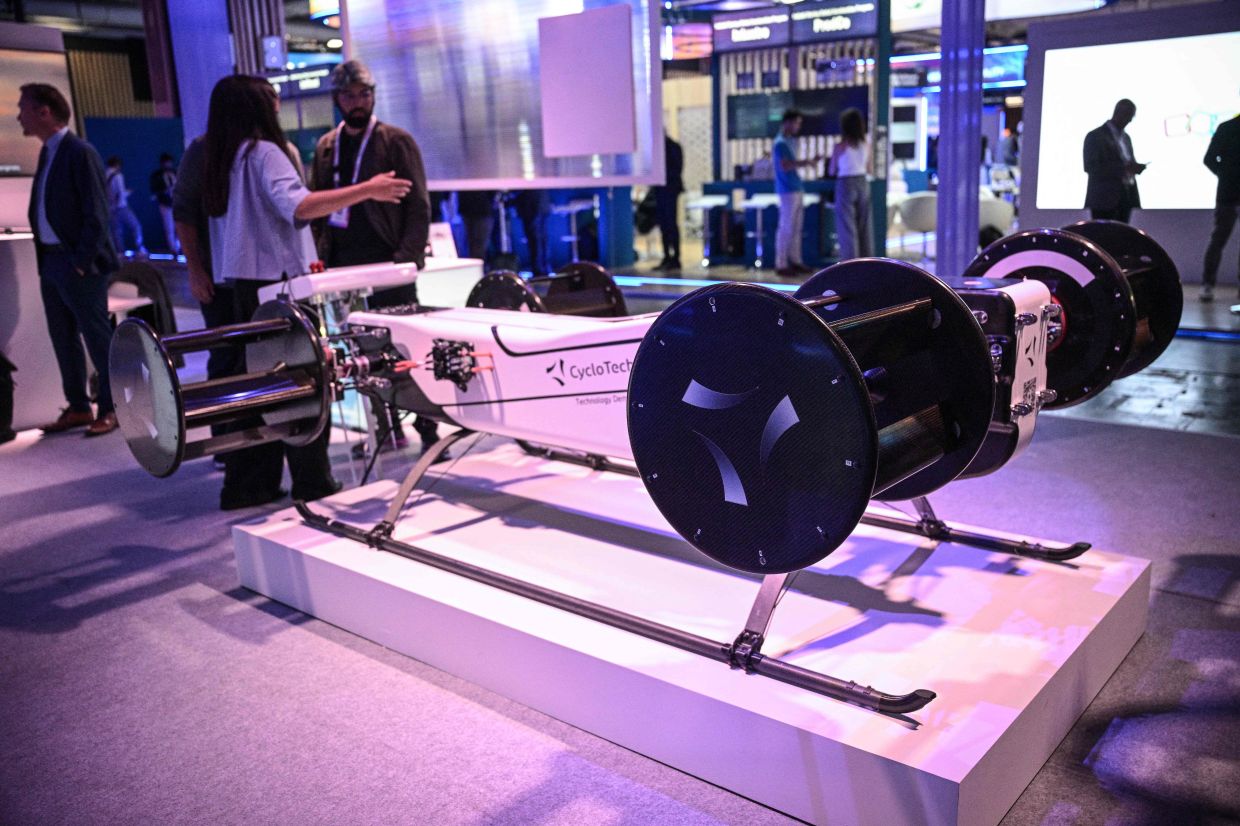
In the aerospace sector, the race for greater manoeuvrability in unmanned aircraft is driving fundamental redesigns of propulsion systems. Quadcopter drones have become ubiquitous in commercial and military applications, from coordinated light shows to surveillance operations in conflict zones like Ukraine. Yet their agility remains constrained by conventional motor designs. Austrian startup CycloTech has developed an alternative motor architecture shaped like an open cylinder with blade-like sides, offering unprecedented flexibility in flight dynamics. According to marketing chief Andrea Marchsteiner, these motors enable aircraft to hover vertically, fly forward like conventional planes, reverse direction mid-air and brake suddenly—manoeuvres impossible for existing drone designs. The practical applications span from last-mile deliveries in dense urban environments to emergency medical transport and personnel movement across challenging terrain. Military applications are also explicit. CycloTech has already raised €40 million and is actively seeking additional capital and partnerships with established aerospace manufacturers to integrate its motors into next-generation aerial platforms.
Voice authentication has long served as a biometric security layer for sensitive financial transactions and identity verification. French company Whispeak pioneered this space years before generative artificial intelligence created the mass-production risk of audio deepfakes. Today, sophisticated voice imitation technology can be deployed freely and require less than ten seconds of original audio to create convincing forgeries. This capability has forced Whispeak to pivot its business model toward defensive applications. The company now specializes in detecting fraudulent audio—identifying deepfake conversations in real time. Chief executive Florent Van Calster claims that after three years of intensive development using proprietary artificial intelligence systems, Whispeak has achieved the most accurate deepfake audio detector available globally, evidenced by first-place finishes in multiple independent competitions. Whispeak is operationalizing this technology through partnerships with established telecommunications companies, notably French operator Bouygues, to screen incoming calls and alert users when suspicious audio is detected. While the company reports error rates below one per cent on current training datasets, Van Calster acknowledges a continuous technological arms race as adversaries enhance their own voice synthesis capabilities.
Athletic performance monitoring has traditionally relied on invasive or cumbersome measurement methods. Elite competitors have long scrutinized blood biomarkers to optimize training and recovery, yet these require regular sampling and clinical analysis. PointFit, a Hong Kong startup, offers a less intrusive alternative through adhesive skin patches equipped with miniature sensors that read biomarkers—glucose, cortisol and other physiological indicators—directly from sweat. Chief executive Kenny Oktavius developed the underlying technology beginning in 2019 during his university studies. The platform generates personalized analytics by applying artificial intelligence to adjust expected results based on demographic variables and environmental factors like ambient temperature. This granular approach acknowledges that heart rate alone provides incomplete insight into physiological state—a limitation that occasionally afflicts even professional marathon runners who undergo sophisticated testing yet still experience acute medical events. PointFit has secured partnerships with Red Bull's Athlete Performance Centre and Puma's innovation division, validating the technology's relevance to elite sport. The company envisions expanding into mass-market retail, with potential distribution through global sports retailers like Decathlon and consumer electronics companies such as EssilorLuxottica.
For Southeast Asian businesses and investors, these innovations reveal several strategic patterns. First, the most heavily funded ventures operate at the intersection of established industries and emerging technologies—biomedical engineering, advanced manufacturing, artificial intelligence and biometric sensing. Second, these companies aggressively pursue partnerships with larger multinational corporations rather than competing independently, suggesting that access to distribution networks and manufacturing capacity remains critical. Third, regulatory approval timelines are extending as technologies become more complex, with most innovations targeting deployment windows of three to seven years. Finally, the concentration of innovation capital in Europe and North America remains pronounced, though the headquarters diversity—Berlin, Vienna, Paris, Hong Kong—indicates that talent and funding can materialize outside traditional innovation hubs.
For Malaysian companies contemplating entry into these sectors, several observations merit consideration. The bone grafting market remains dominated by established surgical device manufacturers, yet regional biotech ecosystems could develop specialized applications for the Southeast Asian patient population. The drone industry continues expanding in Southeast Asia for agriculture, logistics and infrastructure inspection, creating demand for next-generation propulsion systems. Voice authentication and deepfake detection represent critical security infrastructure as digital banking penetrates the region. Wearable biometric sensors align with Southeast Asia's growing athletic and wellness markets. Understanding where global capital flows will inform regional competitive positioning over the next decade.