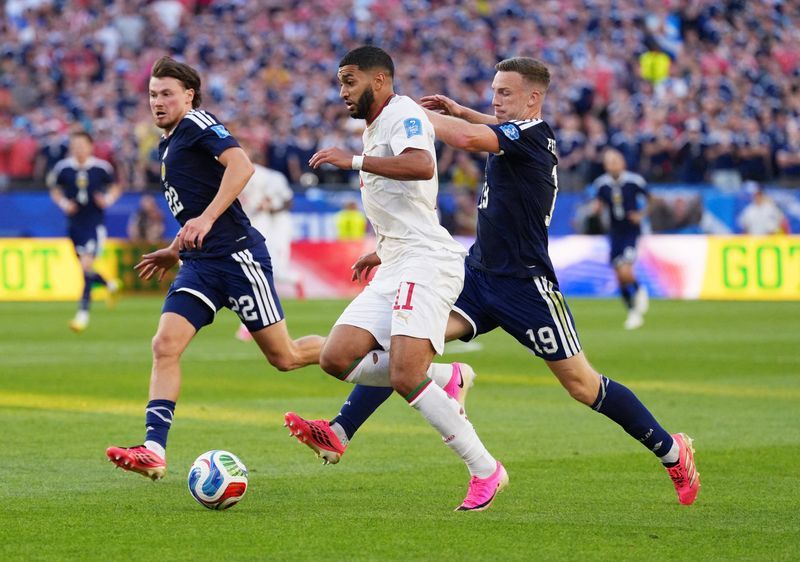
Morocco's clinical opening proved decisive as the North African side secured a commanding 1-0 victory over Scotland in Foxborough, Massachusetts, with a goal arriving with such speed that it left the Scots reeling before they could properly settle into the contest. Ismael Saibari's strike after just 71 seconds marked the quickest goal of the tournament thus far, establishing an early pattern of dominance that would define the entire encounter. The result elevates Morocco to the summit of Group C with four points from two matches, while Scotland, despite entering the fixture on the back of their first World Cup victory in 36 years, finds itself in second place with three points and facing an uphill battle to progress.
The manner in which Morocco's goal arrived illustrated the tactical vulnerability that would plague Scotland throughout the match. Brahim Diaz's cross found Saibari exploiting space behind the Scottish defence after Grant Hanley stepped out prematurely in an ill-judged attempt to squeeze the play. Saibari's composure in finishing a powerful strike emphasised Morocco's clinical approach compared to Scotland's earlier scrappy win against Haiti. The 24-year-old midfielder has now become only the second African player to score in his opening two World Cup appearances, joining Egypt's Mohamed Salah in an exclusive club and adding further lustre to a breakthrough tournament for both player and nation.
Saibari's emergence as a key figure carries particular significance given the reported completion of his medical examination with Bayern Munich, suggesting that Morocco's performances are launching players into the elite echelons of European football. His goal in the previous encounter against Brazil demonstrated his capacity to impact matches at the highest level, and against Scotland he showcased the predatory instincts that have attracted such high-profile interest. The midfielder's dual impact—both as a scorer and orchestrator—underscores how Morocco has evolved from their surprising Qatar 2022 semi-final run into a genuinely threatening proposition at this tournament.
What emerged most strikingly was the complete asymmetry in territorial and possession control throughout the ninety minutes. Scotland's confidence from their opening victory proved entirely misplaced, as they struggled to mount any coherent attacking threat until deep into the first-half stoppage time, when they finally registered their first shot of consequence. The Scots were perpetually chasing possession, with Morocco's press forcing turnovers in dangerous areas and creating shooting opportunities with alarming regularity. Bilal El Khannouss's effort over the bar in the 36th minute exemplified the ease with which Morocco carved open the Scottish defence, while Azzedine Ounahi's near-miss following a darting run down the left flank underscored how vulnerable Scotland's backline remained throughout.
The second half followed an identical pattern, with Morocco continuing to orchestrate play while Scotland became increasingly desperate in their attempts to breach a well-organised defensive unit. Saibari's deflected shot crashing against the post and El Khannouss forcing a good save from goalkeeper Angus Gunn within minutes of the restart illustrated Morocco's sustained superiority. Scotland's belated attempts to claw back into the contest lacked the creative spark necessary to trouble Mohammed Al-Owais in the Moroccan goal, and despite occasional possession in the final stages, the Scots never genuinely threatened to establish an equaliser.
Context surrounding the fixture extended beyond the ninety minutes of play, with captain Achraf Hakimi's presence generating controversy following his involvement in an ongoing rape trial. Scottish supporters made their displeasure known through vocal demonstrations, though such external matters did not prevent Morocco from focusing entirely on their on-pitch performance. Azzedine Ounahi's pre-match declaration that Morocco aimed to reach the final, which had raised eyebrows for its apparent ambition, now appears less presumptuous given the quality displayed against Scotland and the earlier creditable draw with Brazil.
The structural advantage now rests firmly with Morocco heading into their final group fixture against Haiti on Wednesday. With four points already secured and their superior goal difference providing a buffer, Morocco can afford to manage the closing stages of their campaign while remaining confident of progressing from the group. Scotland faces a significantly steeper challenge when they encounter five-time champions Brazil on the final matchday, a fixture that will demand a dramatic improvement from the performance witnessed against Morocco if the Scots harbour genuine hopes of extending their tournament stay.
The result reflects broader tactical evolution within African football, where nations such as Morocco have developed increasingly sophisticated systems capable of sustaining pressure and converting opportunities with ruthless efficiency. The 71-second goal served as an early warning that Scotland's defensive organisation required sharpening, yet the Scots never adequately adjusted their approach to counteract Morocco's relentless pressing and quick transitions. This performance against Scotland builds on Morocco's creditable showing against Brazil, suggesting that the semi-finalists from Qatar have genuinely progressed as a footballing unit rather than representing a one-tournament wonder.
For Malaysian and Southeast Asian observers, Morocco's commanding display provides insight into how smaller footballing nations can compete effectively at the highest level through tactical discipline, defensive solidity, and clinical finishing. The North Africans have demonstrated that tournament success relies not merely on individual brilliance but on collective cohesion and a clear strategic identity. As Morocco awaits their final group encounter, the Scots must confront the sobering reality that despite their early tournament victory, progression remains far from assured and will likely require a seismic upset against Brazil.