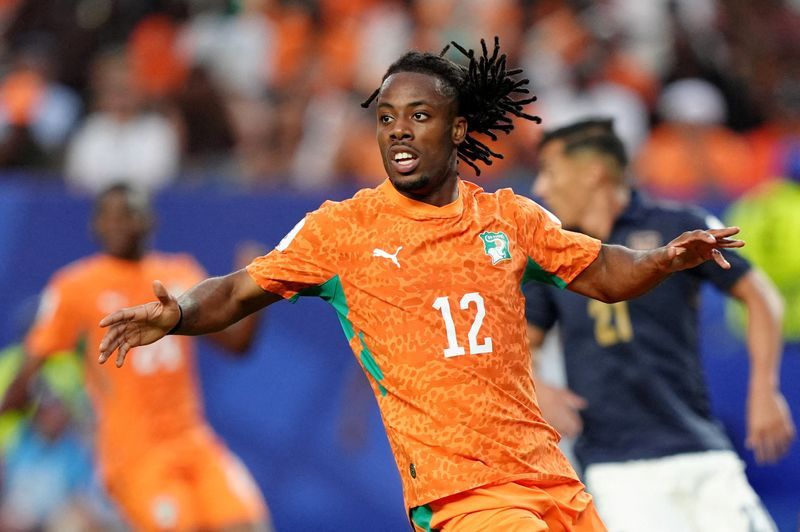
Ivory Coast forward Elye Wahi will sit out the weekend's World Cup fixture against Germany in Toronto after the Ivorian Football Federation denied him clearance to travel to Canada. The official explanation centres on administrative hurdles preventing the player's entry to Canadian territory, though the decision arrives amid scrutiny from French authorities investigating suspected match-fixing activities. The FIF announced the decision on Thursday, a day after reports surfaced linking Wahi to an ongoing corruption inquiry concerning irregular wagering patterns detected in a Ligue 1 encounter.
The betting anomalies flagged by French investigators centred on a yellow card Wahi received while representing Nice in a recent league match. Such specific incidents—individual player cautions—have become a focal point for authorities monitoring organised sports betting fraud, particularly in European football where suspicious patterns on seemingly minor events can signal coordinated criminal activity. The detection of coordinated unusual bets on this particular card triggered a formal probe that has now rippled across continents, affecting international team selection.
Ivory Coast's football federation issued a carefully worded statement emphasising its continued backing for the 21-year-old striker despite the awkward timing. The FIF stressed that it has received no formal legal notification against Wahi and maintains full confidence in his integrity, positioning the exclusion purely as an administrative matter rather than a disciplinary action. This distinction matters significantly in preserving the player's reputation while the investigation unfolds, though the practical effect remains the same: Wahi will remain in the United States rather than join his teammates in Toronto.
The administrative barrier preventing Wahi's travel represents either a genuine bureaucratic delay or, observers note, a strategic decision by authorities to prevent the player from departing France's jurisdiction while investigations proceed. Canadian immigration or visa complications at this level of urgency are relatively uncommon, raising questions about whether the stated reason aligns entirely with the underlying circumstances. The federation's phrasing suggests the onus lies with Canadian authorities, though no such statement has been issued from Canadian officials.
This exclusion comes at a delicate moment in Ivory Coast's World Cup campaign. The squad opened their Group E challenge with a 1-0 victory over Ecuador, establishing themselves as a genuine contender in their section. Germany, their opponent this weekend, has signalled its intent decisively by demolishing Curacao 7-1 in their opener, though the East African nation's defensive vulnerabilities may offer Ivory Coast opportunities to exploit.
Wahi's absence removes a dynamic attacking option from the Ivorian squad precisely when facing one of international football's established powers. At club level, the forward has been establishing himself as a promising talent in France's top division, and the timing of this investigation threatens to derail his career trajectory at a critical juncture. Being sidelined from a major international match carries reputational implications beyond the immediate sporting consequence.
The broader context involves growing vigilance across European football regarding betting-related corruption. Regulatory bodies have substantially increased monitoring of unusual wagering activity, particularly on peripheral match events like individual cards, which offer sophisticated syndicates plausible deniability compared to obvious outcomes like final scores. The Nice match in question appears to have triggered algorithmic alerts that prompted manual review, ultimately leading to the investigation now ensnaring Wahi.
For Malaysian and Southeast Asian observers, this case underscores how international football remains vulnerable to match-fixing networks despite heightened oversight. The fact that suspected corruption centred on a yellow card—ordinarily an incidental element of play—demonstrates the sophistication of modern schemes and their capacity to ensnare players who may not comprehend the betting implications of ordinary on-field incidents. Wahi's situation serves as a cautionary illustration of how inadvertent involvement in such conspiracies can materialise.
The FIF's measured response likely reflects diplomatic protocol while managing potential legal exposure. By confirming no formal proceedings have been lodged against Wahi, the federation preserves his right to play pending any actual charges, whilst simultaneously distancing the institution from any suggestion of institutional tolerance toward corruption. The statement functions as both reassurance to the player and protective documentation for the federation.
Wahi will miss competitive minutes against formidable opposition at a stage when international exposure elevates player profiles substantially. Whether the administrative barrier proves temporary or extends to subsequent matches will clarify whether this represents a practical inconvenience or something more consequential. For now, Ivory Coast proceeds without its promising forward as it pursues progression from a group where Germany represents the principal threat to qualification ambitions.