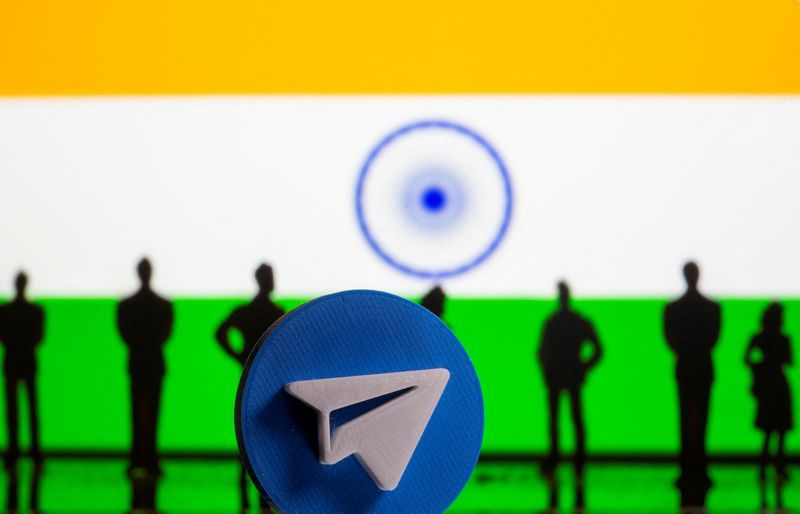
A Delhi High Court judge on Friday rejected Telegram's challenge to an unprecedented temporary suspension of the messaging platform in India, dealing a significant blow to the app's attempt to resume operations before a crucial national examination. Justice Tejas Karia ruled that the Indian government's blocking orders were procedurally sound and legally justified, effectively upholding the measure that took Telegram offline across the country within hours of its announcement earlier this week.
The ban was triggered by concerns over fraudulent activity centred on India's National Eligibility cum Entrance Test for undergraduate medical programmes, scheduled for Sunday. This examination represents a critical juncture in the Indian education calendar, as it serves as the gateway for hundreds of thousands of aspiring medical students seeking admission to the country's medical colleges. The stakes are particularly high this year following the cancellation of the previous iteration of the test after allegations surfaced that examination questions had been leaked in advance, an incident that shook public confidence in the integrity of the testing system.
India's Information Technology Ministry announced the temporary blockade to counter what it characterised as active channels operating on Telegram that were purportedly offering advance copies of examination questions for sale. The ministry's position held that regardless of whether the leaked materials were genuine or fabricated, the mere existence of such offers constituted fraud against candidates who might be deceived into purchasing them. This reasoning formed the basis for the government's extraordinary decision to shut down an application used by millions across the country.
The implementation of the ban demonstrated the efficiency with which Indian telecommunications infrastructure can respond to government directives. Within hours of the ministry's order, major telecom service providers, alongside multinational technology platforms including Google and Apple, removed Telegram from their networks and digital storefronts. The speed and comprehensiveness of the action reflected the coordinated nature of India's digital governance mechanisms, though it also raised questions about the proportionality of using such blunt instruments to address a specific compliance concern.
Telegram's presence in India is formidable, with the platform claiming more than 150 million users in the country—a figure that makes India its single largest market globally. This concentration of users amplified the impact of the ban and intensified scrutiny of the government's approach. Pavel Durov, Telegram's founder, publicly objected to the suspension, arguing that the measure punished the entire user base rather than addressing the underlying problem, and noting that examination fraud had simply migrated to alternative platforms beyond Telegram's ecosystem.
Leading up to the court decision, the relationship between Telegram and Indian authorities had deteriorated visibly. Behind-the-scenes communications between the company and the government revealed mounting tension over the platform's perceived inadequacy in addressing exam-related content. The Indian government criticised Telegram for failing to proactively identify and remove accounts advertising purported stolen examination materials, suggesting that the company had been insufficiently vigilant in policing its own infrastructure despite advance warning of the threat.
Telegram's defence in its court filings presented a sharply different narrative from the government's characterisation of events. The company characterised the government's account of their negotiations as "one-sided and inaccurate," asserting that officials had deliberately omitted details of Telegram's own proactive enforcement processes. The platform emphasised that it had removed more than 900 links containing unlawful examination-related content, suggesting substantial compliance efforts that the government had overlooked or undervalued in its public statements.
The court's decision to sustain the ban carries implications extending beyond this specific incident. For Malaysia and other Southeast Asian nations watching India's regulatory approach to technology platforms, the ruling demonstrates how governments can exercise broad powers to restrict digital services when national examinations are perceived to face integrity threats. The precedent potentially establishes a template for rapid, coordinated action against apps deemed to facilitate cheating or fraud, a consideration relevant to examination authorities across the region who face similar challenges.
The timing of the ban and court decision also underscores the vulnerability of foreign technology companies to sudden government action in India, despite their massive user bases. Telegram's inability to prevent the suspension despite its market dominance illustrates that operating at scale in India does not provide immunity from regulatory intervention when authorities determine that national interests—particularly education integrity—are at stake. The company's legal loss may prompt it and other platforms to recalibrate their content moderation strategies in anticipation of similar government pressure.
For Indian students and test-takers, the court's decision means that Telegram will remain inaccessible through the critical period surrounding Sunday's examination. While the temporary nature of the ban theoretically allows restoration of the service after June 22, the precedent of successful government action raises questions about whether other applications might face similar restrictions during future examination cycles. The broader implications for digital freedom and the appropriate balance between security and access will likely remain contested in Indian technology and legal circles.