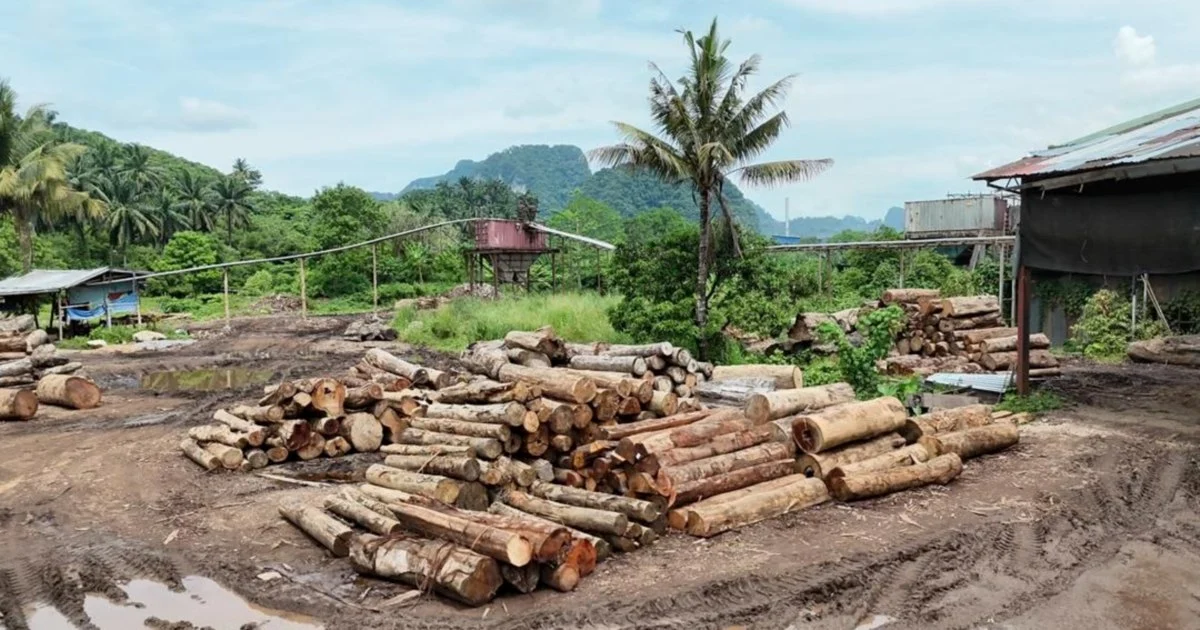
Eleven individuals, four of them Indonesian nationals, have been detained following coordinated enforcement operations conducted across Kelantan and Terengganu. The arrests came as part of what appears to be a significant crackdown on illegal timber trafficking in the northern states. Alongside the detentions, enforcement personnel successfully recovered timber stocks and associated machinery with an estimated combined value exceeding RM2.43 million. The scale of the seizure underscores the continuing challenge posed by unauthorised logging operations in Malaysia's eastern corridor.
The operations represent an escalation in efforts to combat illicit forestry activities, which have long plagued resource-rich states like Kelantan and Terengganu. Illegal timber extraction drains state revenues, damages forest ecosystems, and diverts legitimate business away from licensed operators. The involvement of foreign nationals in these networks points to transnational dimensions of the problem, with cross-border smuggling rings exploiting weak enforcement and porous boundaries. The Indonesian connection suggests these operations may form part of wider regional trafficking schemes that move contraband timber across Southeast Asia's supply chains.
Authorities have intensified surveillance and ground operations in recent years in response to alarming deforestation rates and revenue losses. Both Kelantan and Terengganu have experienced persistent encroachments on forestry reserves, with syndicates operating in relatively remote forest areas where detection remains challenging. The machinery seized in these raids likely included processing equipment used to convert felled logs into marketable products before shipment. The confiscation of such facilities disrupts the entire value chain and represents a more comprehensive disruption than simple timber seizures alone.
The detention of four Indonesians highlights how timber trafficking frequently operates as a cross-national enterprise. Workers and facilitators from neighbouring countries are often employed by smuggling rings, while processed timber may be exported through Indonesian ports or integrated into regional trade networks. This international dimension complicates enforcement, requiring coordination between Malaysian authorities and their counterparts in Indonesia. Interpol alerts and bilateral agreements have become increasingly important tools in dismantling such networks. The fact that authorities were able to apprehend foreign nationals involved in the scheme suggests intelligence gathering and monitoring had already identified their participation.
The RM2.43 million valuation encompasses both raw timber harvested in violation of forestry regulations and equipment seized at processing or storage locations. Quantifying seized contraband presents challenges, as valuations depend on timber species, dimensions, and prevailing market prices. The figure likely reflects conservative estimates based on standard market rates for tropical hardwoods commonly targeted by illegal operators. In reality, black-market sales of such timber often occur at significantly lower prices, meaning the material's actual street value may differ substantially from official assessments.
These operations must be understood within Malaysia's broader forest management framework. Kelantan and Terengganu maintain vast forestry reserves designated for sustainable harvesting under licensed arrangements. Illegal operators undercut licensed operators by avoiding fees, taxes, and environmental compliance costs, creating unfair competitive conditions. Licensed timber merchants face higher operational expenses while competing against smuggled goods. This distortion harms the legitimate forestry sector and incentivises further illicit activity. The state governments derive crucial revenue from timber concession fees and royalties that illegal operations circumvent entirely.
The environmental implications extend beyond simple tree loss. Uncontrolled logging destabilises soil integrity, increases flood and landslide risks, and destroys wildlife habitat. Forest corridors across Kelantan and Terengganu support endangered species and maintain ecosystem services that benefit downstream communities. Illegal logging fragmenting these forests creates long-term ecological costs that exceed the short-term financial losses. Rehabilitation of degraded forestland requires significant investment and extends over decades, making prevention far more economically rational than remediation.
The Southeast Asian context amplifies concerns about uncontrolled timber trafficking. The region's forests rank among Earth's most biodiverse ecosystems, yet face mounting pressure from illegal extraction. Malaysia's enforcement operations occur alongside similar crackdowns in Indonesia, Thailand, and Myanmar. However, sophisticated smuggling networks have adapted to enforcement efforts, shifting routes and concealment methods continuously. The detention of these individuals and recovery of materials demonstrate that detection remains possible, but authorities acknowledge the challenge of staying ahead of organisational sophistication.
Future enforcement effectiveness will depend on sustained resource allocation and inter-agency coordination. A single operation, however successful, represents only temporary disruption to established networks. Replacement of confiscated equipment and arrest of frontline workers occurs rapidly unless supply chains face persistent pressure. Intelligence agencies must work alongside field enforcement teams to identify funding sources, logistics networks, and end-markets. Disrupting financial flows supporting these operations proves more strategically significant than arrests alone, as replacement personnel remain readily available in impoverished regions.
The cases also underscore the importance of demand-side interventions. Markets for timber products—whether domestic construction material or export pulp—ultimately drive extraction pressures. Buyers purchasing below-market timber without verifying legitimate sourcing inadvertently sustain smuggling networks. Certification schemes and supply chain transparency initiatives aim to ensure only legally harvested timber reaches end-consumers. Malaysia's own timber certification program, though improving, requires broader adoption and enforcement to meaningfully shift market incentives away from contraband sources.
%22%2F%3E%3C%2Fpattern%3E%3C%2Fdefs%3E%3Crect%20width%3D%22100%25%22%20height%3D%22100%25%22%20fill%3D%22url(%23ph45cjvg)%22%2F%3E%3Crect%20width%3D%22100%25%22%20height%3D%22100%25%22%20fill%3D%22url(%23ph45cjvp)%22%2F%3E%3Ctext%20x%3D%2250%25%22%20y%3D%2250%25%22%20text-anchor%3D%22middle%22%20dominant-baseline%3D%22central%22%20fill%3D%22rgba(255%2C255%2C255%2C0.95)%22%20font-family%3D%22Georgia%2C%20'Times%20New%20Roman'%2C%20serif%22%20font-weight%3D%22700%22%20font-size%3D%22170%22%20letter-spacing%3D%22-0.02em%22%3EMalaysia%3C%2Ftext%3E%3C%2Fsvg%3E)