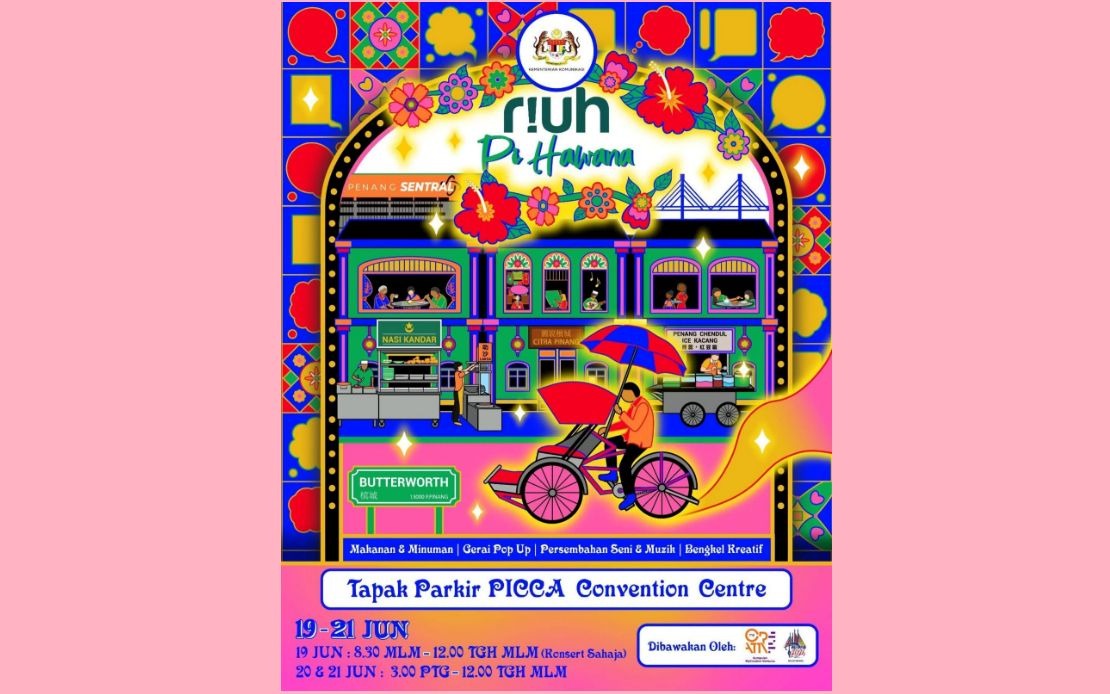
The Malaysian music scene is preparing for a significant cultural moment as rock bands Exists, Bunkface and Masdo anchor the upcoming RIUH Pi HAWANA Carnival, a three-day festival transforming the PICCA Convention Centre Parking Lot at Butterworth Arena in Penang from June 19 to 21. The event represents a rare convergence of the entertainment and journalism sectors, running simultaneously with the HAWANA 2026 Summit, a gathering organised by the Ministry of Communications to celebrate media excellence and professional integrity across Malaysia and the wider region.
The carnival's programming reflects a deliberate attempt to engage diverse audience demographics through a carefully sequenced musical calendar. Exists will inaugurate the festivities on the opening evening of June 19, with Bunkface claiming the centre stage position on June 20, and Masdo concluding the musical programme on the final evening of June 21. The organisers, MyCreative Ventures, have structured the event to accommodate both casual evening attendees and families seeking daytime activities, with Friday's performances beginning at 8.30 pm and concluding at midnight, while Saturday and Sunday programming extends from 3 pm through to midnight, broadening accessibility across different schedules and preferences.
Beyond the three headliners, the carnival has assembled an extensive supporting roster of emerging and established local artists designed to sustain audience engagement throughout the three-day duration. The performance schedule incorporates Chelsea Ng, Sakura Band, Fugo, Saint Kylo, Lucidrari and Budak Nakal Hujung Simpang, a diverse lineup spanning multiple genres and artist trajectories that collectively represents the contemporary vitality of Malaysia's independent music ecosystem. This depth of programming ensures that the carnival functions not merely as a concert series but as a comprehensive showcase of the country's creative talent pipeline.
Projections suggest the carnival will draw approximately 30,000 visitors, a substantial turnout that reflects the enduring appeal of nostalgic and retro-oriented musical experiences among Malaysian audiences. This anticipated attendance underscores the appetite for live entertainment events that combine musical performance with cultural immersion, particularly in regional centres like Penang that possess distinct artistic identities and established entertainment infrastructures.
The festival's cultural dimension extends significantly beyond live music performance. A series of interactive workshops has been integrated into the carnival framework, each designed to facilitate hands-on creative participation and skills transmission among attendees. The cyanotype printmaking and lumen photography sessions introduce participants to alternative and historical photographic processes, while stone seal carving and zine-making workshops provide accessible entry points into visual arts and self-publishing. The inclusion of Nyonya beading experiences and Boria heritage exploration activities specifically acknowledges and celebrates Penang's multicultural character and distinct regional traditions, positioning the carnival as a vehicle for cultural preservation and community pride rather than purely commercial entertainment.
The timing and positioning of RIUH Pi HAWANA Carnival alongside the HAWANA 2026 Summit creates an unprecedented platform for dialogue between entertainment and media sectors. Prime Minister Datuk Seri Anwar Ibrahim is scheduled to officiate the summit on June 20, an appearance that signals governmental recognition of both journalism's professional importance and the broader cultural ecosystem within which media operates. The summit, expected to convene approximately 1,000 media practitioners from domestic and international backgrounds, carries the thematic focus "Media Integrity strengthens Credibility", positioning the gathering as a forum for examining contemporary challenges to journalistic standards and professional practice.
This structural integration of a major national media summit with a consumer-facing cultural festival represents an innovative approach to public engagement. The carnival's family-friendly atmosphere and accessible creative workshops provide opportunities for media practitioners attending the summit to connect directly with communities they serve, while simultaneously offering general audiences insight into journalistic processes and professional concerns. Such bridging initiatives are particularly valuable in Southeast Asia, where public confidence in media institutions has become increasingly volatile and where direct interaction between practitioners and audiences can reinforce institutional legitimacy.
The festival's commercial dimensions reflect contemporary event industry practices in Malaysia. Local brands, food and beverage vendors have secured retail positions within the carnival grounds, generating economic activity for small and medium enterprises while establishing the event as a community gathering point rather than a purely imported entertainment product. This vendor integration transforms the carnival into a microeconomic ecosystem that channels consumer spending toward local businesses and content creators, an outcome increasingly valued by municipal authorities across Malaysian states seeking to balance tourism promotion with grassroots economic development.
For the Penang entertainment ecosystem specifically, the carnival's scale and programming ambition represent a validation of the state's cultural significance within Malaysia's broader creative industries landscape. Penang has increasingly positioned itself as a cultural destination rivalling Kuala Lumpur and other metropolitan centres, with dedicated creative spaces, film production incentives and arts festivals establishing infrastructure and audience expectations. The RIUH Pi HAWANA Carnival leverages this emerging reputation while simultaneously contributing to its consolidation through the assembly of nationally recognised musical acts and internationally participatory media engagement.
The festival's emphasis on retro and nostalgic musical content reflects broader consumption patterns observable across Southeast Asia, where audiences increasingly value authenticity and historical continuity in musical performance as counterweights to digital-mediated entertainment. Exists, Bunkface and Masdo, all established acts with substantial career trajectories, possess the credibility and catalogue depth to deliver precisely such nostalgic satisfaction while introducing their work to generational cohorts encountering their music for the first time through streaming or social media discovery.
Looking forward, the RIUH Pi HAWANA Carnival establishes a template for integrated cultural-institutional events that serve multiple stakeholder interests simultaneously. By anchoring entertainment programming to a professional media summit and incorporating substantive cultural workshops alongside commercial vendor activation, the event demonstrates how festivals can function beyond pure entertainment consumption to become community-building exercises with legitimate cultural preservation objectives. As Malaysian cities increasingly compete for regional recognition as cultural hubs, such multivalent approaches to festival design will likely proliferate, shaping how Southeast Asian audiences experience live entertainment and institutional engagement.