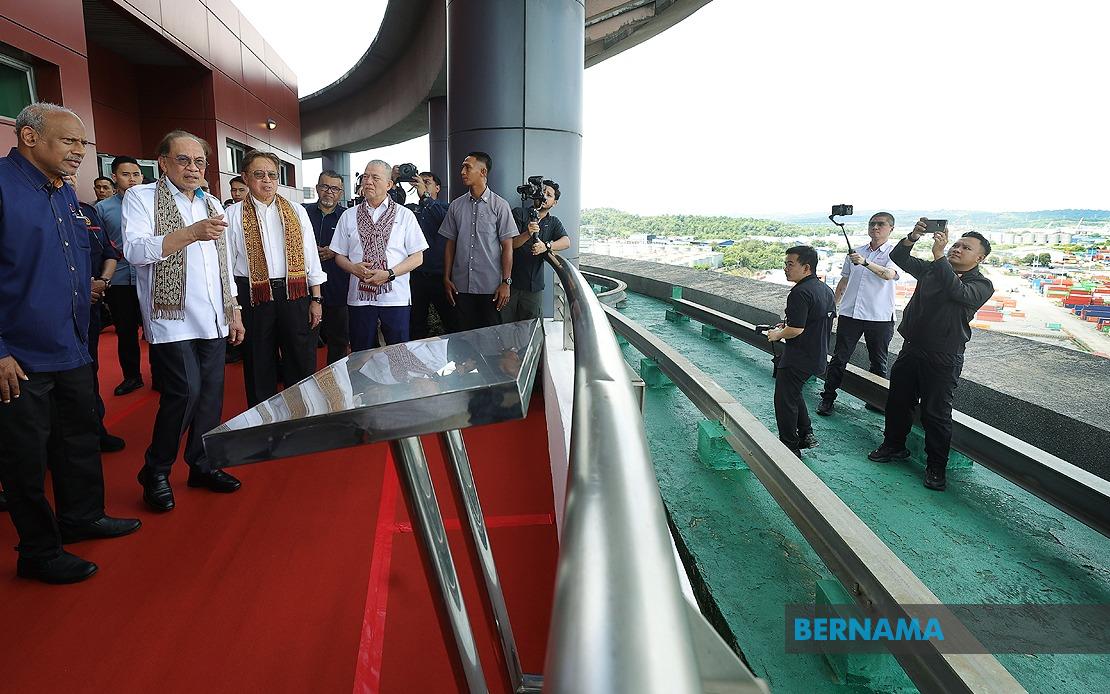
Prime Minister Datuk Seri Anwar Ibrahim has expressed the Federal Government's confidence that Sarawak possesses the requisite expertise and operational capacity to manage Bintulu Port following its transition from federal to state control. The announcement came during remarks at the Sarawak Level Gawai Dayak 2026 Dinner in Kuching on June 21, as a formal Cheque Handover Ceremony for the port's change of status took place in Bintulu the same day.
The strategic significance of Bintulu Port extends well beyond Sarawak's borders, given its critical role in serving the country's liquefied natural gas industry and its positioning as a vital hub for regional trade and commerce across Asia. The port's operations have long underpinned Malaysia's standing as a major LNG exporter, a status that remains economically consequential for federal revenues and employment throughout the country.
Anwar's endorsement hinges on his assessment that Sarawak has assembled personnel with the necessary technical and managerial expertise to sustain the port's operations without disruption. This observation carries weight given the complexity involved in managing a facility of Bintulu's scale and international profile. The transition represents a significant shift in governance structures, requiring seamless continuity in port administration and coordination with maritime authorities, shipping operators, and energy sector stakeholders.
The handover itself constitutes a notable gesture within Malaysia's federal arrangement. By ceding control of a strategically important asset to the state government, the Federal Government effectively delegates responsibility for safeguarding a critical piece of national infrastructure. The decision reflects a broader recognition of state-level capacity and autonomy, particularly relevant in Sarawak's distinctive constitutional relationship with the federation.
From a regional perspective, this transfer of authority carries implications for maritime operations across Southeast Asia. Bintulu Port's prominence in LNG export logistics means that any operational changes must be carefully managed to avoid disruptions to global energy markets and the commercial relationships Malaysia has cultivated with major customers. The state government's assumption of control will test Sarawak's ability to maintain the service standards expected by international operators and shipping lines.
The framing of the handover as a demonstration of federal confidence and friendship underscores a political dimension to the transaction. It represents an alignment between the Sarawak State Government and the current federal administration, with both entities presenting the arrangement as mutually beneficial and grounded in practical capability rather than political expediency. This rhetoric becomes particularly significant given the state's historical negotiations regarding resource control and development authority.
In operational terms, the transition requires coordination across multiple domains. Sarawak authorities must ensure continuity in port management systems, maintain compliance with international maritime standards, oversee cargo handling operations, and manage relationships with concession holders and private operators who work within the port's infrastructure. The success of this handover will largely depend on whether existing personnel and systems can function effectively under state management while adapting to any administrative or procedural changes.
The economic implications for Sarawak are substantial. Direct management of a major revenue-generating asset grants the state greater control over port-related income streams and allows for more direct integration of port operations with state-level economic development strategies. This autonomy could enable Sarawak to tailor port policies to align with state-specific development priorities and industrial ambitions, potentially positioning the port more strategically within the state's broader economic ecosystem.
Moreover, the handover reflects a broader trend in Malaysia toward devolution of certain federal responsibilities to states deemed capable of managing them. Should Sarawak demonstrate success in operating Bintulu Port, the precedent could influence discussions regarding other federally controlled assets and infrastructure. Conversely, operational challenges would invite scrutiny of the wisdom of such transfers and might affect future policy decisions regarding state capacity and resource delegation.
For Malaysian stakeholders invested in energy security and export competitiveness, the transition introduces variables that warrant monitoring. The port's operational efficiency directly influences the cost-effectiveness of LNG exports, which in turn affects Malaysia's competitive standing in global energy markets where numerous countries vie for customer contracts. Sustained reliability and service quality become paramount.
The timing of this announcement, during celebrations marking Gawai Dayak, carries symbolic resonance within Sarawak's cultural and political context. By associating the port handover with a significant state festival, the federal government signals respect for Sarawak's distinct identity and governance. This positioning may help frame the transition not merely as administrative reorganization but as recognition of Sarawak's capabilities and status within the Malaysian federation, thereby enhancing political support for the arrangement among the state's population and leadership.
Moving forward, the success of this arrangement will be measured not only by operational continuity but by Sarawak's ability to innovate within port management and potentially enhance Bintulu's competitive advantages. The handover represents both opportunity and responsibility, with implications that extend from local employment and state revenues to Malaysia's positioning as a reliable energy supplier and maritime economy within Southeast Asia.
%22%2F%3E%3C%2Fpattern%3E%3C%2Fdefs%3E%3Crect%20width%3D%22100%25%22%20height%3D%22100%25%22%20fill%3D%22url(%23phtw8wg)%22%2F%3E%3Crect%20width%3D%22100%25%22%20height%3D%22100%25%22%20fill%3D%22url(%23phtw8wp)%22%2F%3E%3Ctext%20x%3D%2250%25%22%20y%3D%2250%25%22%20text-anchor%3D%22middle%22%20dominant-baseline%3D%22central%22%20fill%3D%22rgba(255%2C255%2C255%2C0.95)%22%20font-family%3D%22Georgia%2C%20'Times%20New%20Roman'%2C%20serif%22%20font-weight%3D%22700%22%20font-size%3D%22151%22%20letter-spacing%3D%22-0.02em%22%3EMalaysian%3C%2Ftext%3E%3C%2Fsvg%3E)
%22%2F%3E%3C%2Fpattern%3E%3C%2Fdefs%3E%3Crect%20width%3D%22100%25%22%20height%3D%22100%25%22%20fill%3D%22url(%23ph2lji3g)%22%2F%3E%3Crect%20width%3D%22100%25%22%20height%3D%22100%25%22%20fill%3D%22url(%23ph2lji3p)%22%2F%3E%3Ctext%20x%3D%2250%25%22%20y%3D%2250%25%22%20text-anchor%3D%22middle%22%20dominant-baseline%3D%22central%22%20fill%3D%22rgba(255%2C255%2C255%2C0.95)%22%20font-family%3D%22Georgia%2C%20'Times%20New%20Roman'%2C%20serif%22%20font-weight%3D%22700%22%20font-size%3D%22320%22%20letter-spacing%3D%22-0.02em%22%3ECare%3C%2Ftext%3E%3C%2Fsvg%3E)
%22%2F%3E%3C%2Fpattern%3E%3C%2Fdefs%3E%3Crect%20width%3D%22100%25%22%20height%3D%22100%25%22%20fill%3D%22url(%23ph3rh1xg)%22%2F%3E%3Crect%20width%3D%22100%25%22%20height%3D%22100%25%22%20fill%3D%22url(%23ph3rh1xp)%22%2F%3E%3Ctext%20x%3D%2250%25%22%20y%3D%2250%25%22%20text-anchor%3D%22middle%22%20dominant-baseline%3D%22central%22%20fill%3D%22rgba(255%2C255%2C255%2C0.95)%22%20font-family%3D%22Georgia%2C%20'Times%20New%20Roman'%2C%20serif%22%20font-weight%3D%22700%22%20font-size%3D%22320%22%20letter-spacing%3D%22-0.02em%22%3EIran%3C%2Ftext%3E%3C%2Fsvg%3E)