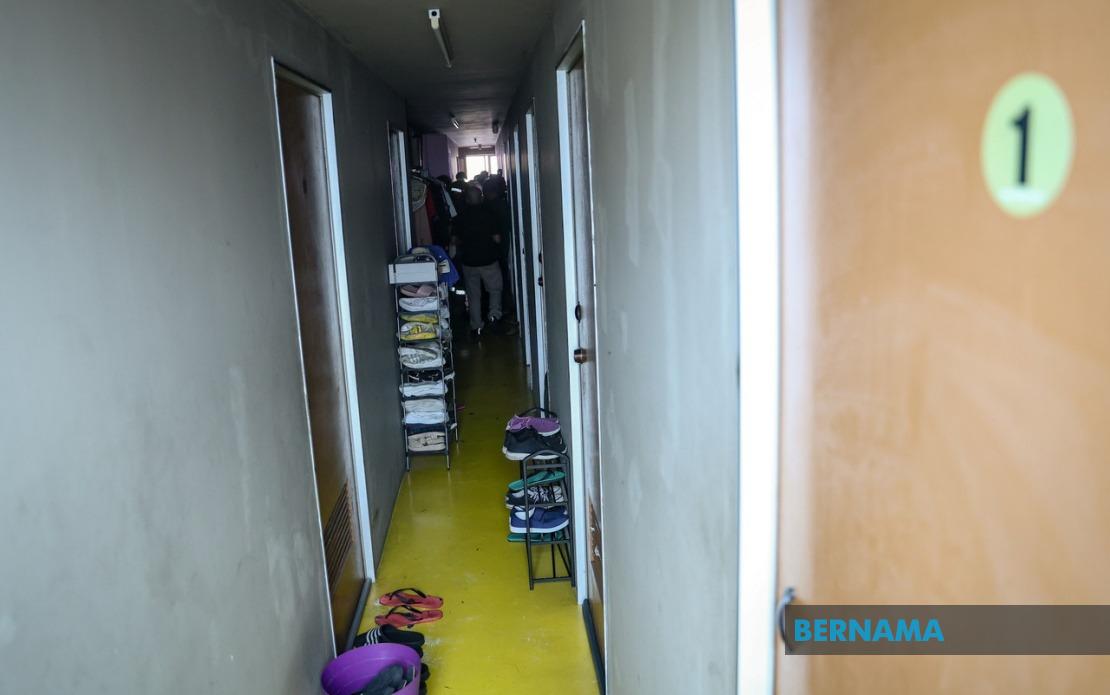
The Fire and Rescue Department of Johor (JBPM) has intensified its campaign against unsafe housing practices in Johor Bahru through a coordinated enforcement operation targeting nine premises that have been illegally converted into dense rental accommodation. The initiative, carried out on July 30, represents a significant escalation in efforts to protect vulnerable residents living in spaces known colloquially as 'rumah sarang burung'—a phrase that translates literally to 'bird's nest houses'—reflecting the cramped, multi-occupancy nature of these dwellings. Senior Assistant Fire Commissioner Siti Rohani Nadir, who leads the Johor department, emphasized that the operation was fundamentally about safeguarding lives rather than punishing property owners, though it signals growing regulatory resolve to address a persistent urban housing problem across Malaysia.
The term 'rumah sarang burung' has become increasingly common in major Malaysian cities, particularly in lower-income areas where rental costs have spiraled beyond the reach of many working-class families. These conversions typically involve transforming single shophouses or larger residential units into numerous small rooms, each often no larger than seven square metres, creating conditions that fire safety officials consider dangerously overcrowded. The Larkin area operation revealed one particularly extreme case: a converted shophouse that had been subdivided into approximately 15 separate rental rooms, each accommodating resident families. Such density not only violates building codes but creates severe risks in the event of fire, as occupants struggle to evacuate through insufficient exits and firefighting efforts become severely hampered by the building's fragmented interior layout.
The enforcement drive follows a decision by the dedicated 'Rumah Sarang Burung' Task Force to sharply increase inspections of high-risk premises, recognizing that fire accidents in such spaces could result in catastrophic loss of life. Officials conducting the raids examined critical safety infrastructure including emergency exit availability, the presence and functionality of fire suppression systems, and the number of people actually occupying each space—metrics that many converted premises systematically fail to meet. The department has prepared separate violation notices under the Fire Services Act 1988 for each identified breach, though Siti Rohani stressed that enforcement actions aim to prompt compliance rather than generate punitive outcomes. The operation was conducted collaboratively with the Royal Malaysia Police and Johor Bahru City Council (MBJB), demonstrating that multiple government agencies recognize the severity of this housing and safety issue.
The enforcement operation also highlights a critical regulatory gap in Malaysia's approach to informal housing markets. Many property owners conducting these conversions deliberately bypass the formal approval process, viewing the bureaucratic requirements and associated costs as obstacles to maximizing rental income. By operating outside official channels, they avoid any inspection regime and accumulate profits from desperate renters. This underground economy thrives precisely because conventional housing—both private rental and public housing schemes—remains financially inaccessible to significant portions of Malaysia's urban workforce. The JBPM's intervention implicitly acknowledges that regulatory action alone cannot solve the underlying problem: there are simply too many Malaysians earning modest incomes who find decent, legally compliant housing beyond their financial capacity.
The human impact of this housing crisis crystallizes in the story of Diana, a 52-year-old resident of one of the inspected premises who has lived in a cramped rental room for two years. As a member of the People's Volunteer Corps (RELA), Diana earns approximately RM2,000 monthly, from which she allocates RM500 for rent to support her family. Her housing situation reflects a systemic failure: despite her employment and attempts to secure public housing through official applications, she was rejected for subsidized accommodation and cannot afford market-rate rentals in safer, properly regulated buildings. For Diana and thousands like her across Malaysian cities, the 'rumah sarang burung' represents not a choice but a necessity born of economic constraint and bureaucratic inflexibility. Her case underscores why fire safety enforcement, while absolutely essential, must be accompanied by meaningful expansion of affordable housing supply and genuine accessibility to public housing programs.
The phenomenon of converted shophouses serving as ultra-dense rental housing extends beyond Johor Bahru, representing a nationwide challenge for Malaysian urban planners and policymakers. Cities including Kuala Lumpur, Penang, and Selangor contain similar informal housing arrangements, many operating with minimal regulation or safety oversight. The fire risks are substantial and quantifiable: confined spaces with multiple occupants, limited exits, blocked emergency routes, and absence of proper fire detection systems create conditions where a single incident could kill dozens. Yet simultaneously, these spaces serve an essential economic function within Malaysia's housing market, providing the only affordable option for millions of urban residents whose wages have failed to keep pace with property price inflation. This tension—between legitimate safety concerns and the reality that residents like Diana have nowhere else to go—frames the core challenge for Malaysian policymakers.
The JBPM's emphasis on improvement rather than punishment reflects a pragmatic recognition that heavy-handed enforcement without alternative solutions merely displaces the problem. Property owners facing substantial fines may simply close their operations, pushing residents into even more dangerous informal arrangements or forcing families into homelessness. Effective policy responses must therefore combine reasonable fire safety standards with systematic expansion of affordable housing stock and accelerated processing of public housing applications for low-income households. Several Malaysian states have begun piloting such integrated approaches, coupling enforcement with incentive programs encouraging owners to convert premises to compliant standards and rent at controlled rates. These models suggest that safety and accessibility need not be mutually exclusive if governments commit sufficient resources and political will.
The broader regulatory landscape in Malaysia has increasingly recognized that informal housing markets require specialized policy responses. Traditional building codes and approval processes, designed for formal development, often prove unsuitable for addressing the realities of existing informal conversions. Some local authorities have begun developing streamlined certification pathways allowing property owners to bring converted premises into compliance without prohibitive renovation costs. Johor Bahru City Council's participation in the JBPM enforcement operation suggests the council may be considering such approaches, potentially leveraging the crackdown not merely as enforcement but as a data-gathering exercise to understand the scope and nature of non-compliant premises across the municipality. This information could inform future policy design aimed at bringing informal housing into the regulatory framework while maintaining affordability.
The operation also reflects emerging pressure from Malaysia's insurance and property sectors, where fire losses in informal housing create broader economic impacts. Insurance claims following major incidents in 'rumah sarang burung' premises can exceed the value of the buildings themselves, while loss of life and injury generate significant social costs and reputational damage to municipalities perceived as unable to maintain basic safety standards. These economic and reputational factors have increasingly motivated local authorities to address informal housing proactively. Moreover, as Malaysia positions itself as a developed nation, maintaining visible urban areas where families live in seven-square-metre rooms without proper fire safety creates a counternarrative to official development messaging, potentially influencing both domestic policy priorities and international perceptions of Malaysia's governance quality.
Moving forward, the JBPM's initiative signals that Malaysian authorities intend to intensify safety enforcement in the informal housing sector, yet the underlying housing shortage that sustains demand for 'rumah sarang burung' remains unaddressed. Success will ultimately require policymakers to treat housing affordability not as a peripheral social issue but as central to urban safety, public health, and social stability. The fire safety crackdown in Johor Bahru serves as both a necessary intervention and an uncomfortable reminder of Malaysia's persistent failure to ensure that working families like Diana's can access safe, adequate housing through normal market and government channels. Until that fundamental problem is tackled with the same urgency and resources now directed at enforcement, such operations will address symptoms rather than underlying causes, and residents will continue occupying spaces that no safety standard should permit.

