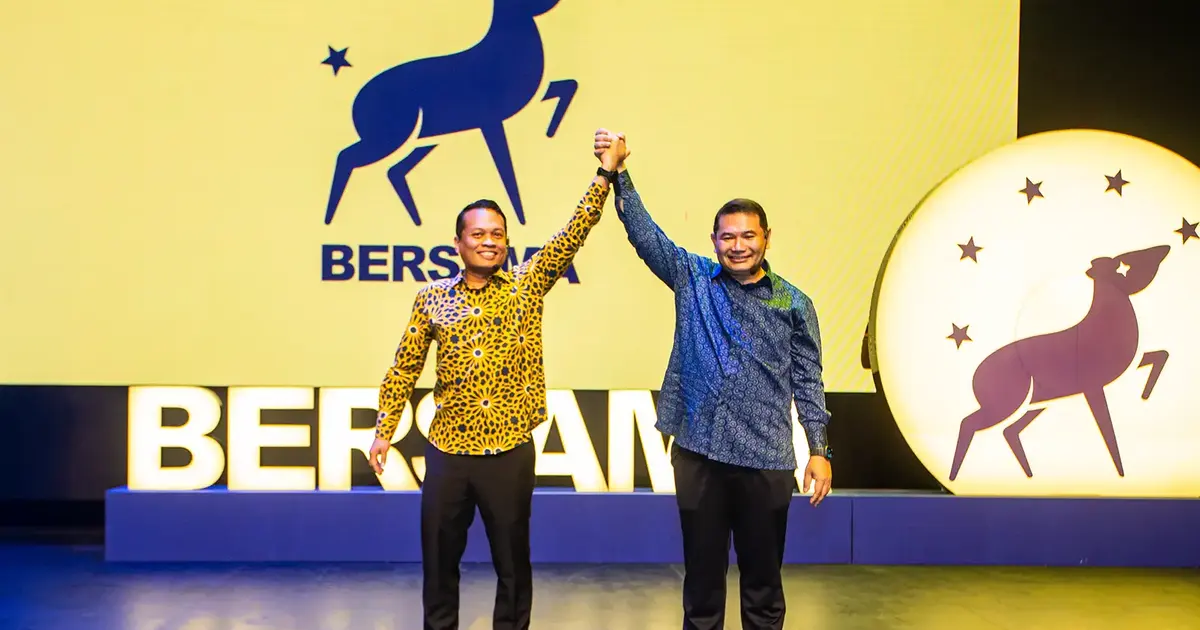
Bersama is experiencing a surge of interest from retired senior government officials eager to represent the party in the forthcoming Johor and Negeri Sembilan state elections, party president Rafizi Ramli announced this week. The development signals growing momentum for the younger political entity as it seeks to expand its presence beyond its established strongholds.
Rafizi's statement underscores a notable recruitment drive that targets experienced administrators and policy-makers with decades of institutional knowledge and credibility. By tapping into this reservoir of former bureaucratic talent, Bersama appears to be positioning itself as a governance-focused alternative that can appeal to voters seeking candidates with proven administrative expertise. This approach contrasts sharply with traditional party recruitment models that often rely on political networks and grassroots activism alone.
The attraction of former civil servants to Bersama carries particular significance in the Malaysian political landscape, where institutional credibility and competent governance remain central voter concerns. These retired officials bring technical expertise, understanding of state-level administrative machinery, and established networks within government structures—assets that newer or smaller parties typically struggle to accumulate. Their willingness to contest suggests confidence in Bersama's electoral prospects and policy direction.
Johor and Negeri Sembilan represent strategically important territories for Bersama's expansion. Johor, as Malaysia's second-most populous state and an economic powerhouse, offers substantial electoral prizes and national political significance. Negeri Sembilan, meanwhile, occupies a crucial position as part of the central economic corridor and has consistently demonstrated electoral competitiveness. Success in either state would substantially elevate Bersama's profile and influence within the broader political framework.
The responsive interest from former senior administrators reflects broader shifts in Malaysian political dynamics. Voters increasingly demand competence-focused candidates with track records in service delivery and institutional management. Retired civil servants satisfy this expectation more readily than candidates lacking such backgrounds. This trend has accelerated following recent electoral cycles, where governance performance became a decisive factor in electoral outcomes across multiple states.
Rafizi's disclosure also highlights Bersama's maturation as a political force. Since its formation, the party has worked to establish itself as a serious parliamentary player rather than a fringe movement. Securing candidacies from individuals with substantial professional standing and public service credentials represents tangible progress toward mainstream political legitimacy. Such candidates typically command respect within their communities and possess existing platforms for voter engagement.
The recruitment of former bureaucrats into electoral contests raises intriguing questions about institutional perspectives on contemporary politics. These individuals have witnessed governance from the inside and understand both possibilities and constraints within Malaysia's federal system. Their decision to seek electoral office suggests they believe parliamentary participation offers a viable mechanism for implementing policy visions they developed during their official careers.
For Johor specifically, adding candidates with government experience could influence electoral narratives around administrative competence and developmental vision. The state faces particular challenges around urban management, infrastructure coordination, and economic diversification that demand sophisticated policy approaches. Candidates with bureaucratic backgrounds can credibly address these technical matters alongside broader political messaging.
Negeri Sembilan's political dynamics similarly benefit from candidate quality considerations. As a smaller state where individual candidates carry greater electoral weight, the recruitment of respected administrators could shift competitive calculations. The state's position within the Klang Valley economic zone creates specific governance demands that former senior civil servants can articulate effectively to voters concerned about regional development priorities.
Bersama's success in attracting such candidates also reflects changing perceptions about party viability and electoral competitiveness. Several years ago, major retired administrators might have hesitated to associate with younger political entities lacking established power bases. The shifting pattern suggests growing confidence that Bersama possesses genuine prospects for meaningful electoral performance and potential influence within state governments.
The broader implications extend beyond immediate electoral considerations. If retired bureaucrats successfully transition into electoral politics through Bersama, it could establish a model that other parties attempt to replicate. This development might gradually reshape candidate selection practices across Malaysian politics, potentially elevating emphasis on technical expertise and administrative accomplishment over traditional political criteria.
Rafizi's enthusiasm about the recruitment responses indicates Bersama views this development as strategically crucial for upcoming state elections. Party leaders clearly recognize that candidate quality directly impacts electoral performance and post-election governance capacity. Building a slate of experienced former officials creates internal capacity for sophisticated policy work and constituent service while projecting external images of competence and professional seriousness.
As Bersama prepares for state-level contests, the injection of former senior civil service talent represents a calculated investment in institutional credibility and electoral competitiveness. Whether these candidates ultimately succeed electorally will substantially influence Bersama's trajectory and potentially reshape broader patterns of candidate recruitment across Malaysian politics.