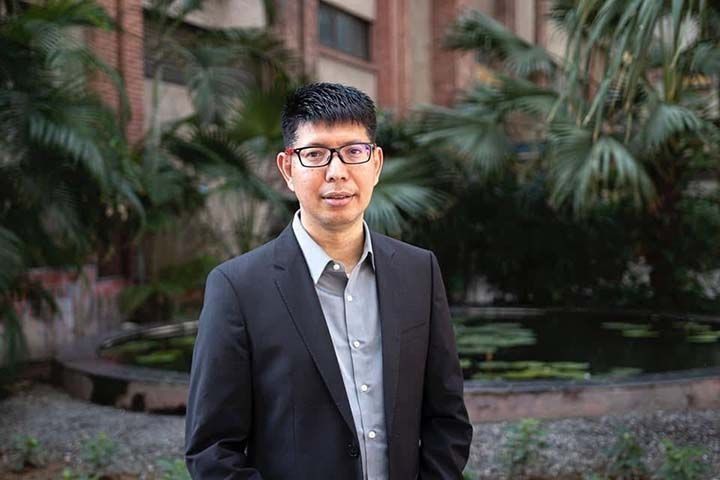
An American scholar specialising in Myanmar affairs has been detained in southwestern China while travelling to attend an academic workshop, according to the think tank he established. Min Zin, executive director of the Institute for Strategy and Policy (ISP)-Myanmar, was taken into custody in Kunming on June 3 under suspicion of espionage and endangering national security, prompting international calls for his immediate release.
The ISP-Myanmar issued a statement emphasising that Min Zin's sole purpose in travelling to Kunming was to participate in an academic forum, and categorically rejected what it described as groundless allegations against him. The think tank's statement underscored the importance of allowing research organisations to operate freely without fear of intimidation or arbitrary detention. The US State Department similarly refuted the accusations, with a spokesperson confirming that American consular officials had visited Min Zin and that the department was actively engaging with Chinese authorities to provide appropriate assistance.
China's foreign ministry, when questioned by international media, reaffirmed its position that Min Zin was suspected of engaging in espionage activities and stated it would handle the case according to its laws. The detention occurred weeks before Myanmar's junta leader Min Aung Hlaing embarked on a significant state visit to China, underlining the strategic importance Beijing places on its relationship with Naypyidaw's military government.
Min Zin's background reveals a long history of engagement with Myanmar's political movements. As a former student activist, he participated in the democracy uprising of 1988, a pivotal moment in the country's struggle for freedom and democratic governance. He went on to study political science at the University of California, Berkeley, where he developed expertise in Myanmar's complex political landscape and economic challenges.
Following the February 2021 military coup that ousted the elected government led by Aung San Suu Kyi, Min Zin and others established or relocated the ISP to conduct research and analysis on the consequences of the takeover. The think tank's work has become increasingly significant as Myanmar spirals deeper into conflict and humanitarian crisis. Based outside the country, the ISP has published extensively on the armed uprising that emerged following the coup, the political transition process, economic deterioration, and the crucial dimension of Myanmar-China bilateral relations.
The military's seizure of power in February 2021 triggered nationwide protests that rapidly evolved into an armed insurgency. Pro-democracy rebel groups, many of them newly formed, have joined forces with established ethnic armed organisations operating along Myanmar's borders to mount sustained military resistance against the junta. This conflict has resulted in tens of thousands of deaths, displaced millions, and created one of Southeast Asia's most serious humanitarian emergencies in recent years.
China has emerged as the military junta's most significant external supporter, maintaining robust diplomatic, economic, and military ties despite international criticism of Myanmar's human rights record and the conduct of its armed forces. The detention of Min Zin, a scholar whose research directly addresses Myanmar-China relations and the country's political dynamics, raises questions about Beijing's tolerance for independent analysis and scholarly scrutiny of its regional partnerships and the consequences of its support for Myanmar's military regime.
The timing of Min Zin's detention is particularly noteworthy given Min Aung Hlaing's imminent state visit to China. The visit was expected to reinforce the strategic partnership between the two nations and demonstrate Beijing's commitment to supporting the junta despite international isolation. By detaining a prominent Myanmar scholar and analyst based in the United States, China may be sending a signal about its displeasure with certain narratives concerning its role in Myanmar or its expectations regarding academic discourse on sensitive bilateral matters.
For Malaysia and other Southeast Asian nations, the case illustrates the complexity of balancing engagement with China while maintaining standards of academic freedom and respect for international norms. ASEAN countries, which have expressed concern about Myanmar's instability while attempting to maintain dialogue with the junta, must navigate carefully between their strategic interests and their commitment to upholding principles of freedom of expression and scholarly inquiry. The detention also raises implications for regional think tanks and researchers investigating Myanmar's crisis, China's influence in Southeast Asia, and the interconnections between these dynamics.
The ISP-Myanmar's ability to continue its research and policy work from overseas positions it as an important voice documenting Myanmar's ongoing transformation and international dimensions. Academic institutions like ISP provide crucial analysis that governments, international organisations, and civil society rely upon to understand complex regional situations. The challenge to Min Zin's detention highlights broader questions about whether China will permit rigorous scholarly examination of its regional role and whether independent analysts can safely operate while studying Southeast Asian states with close Beijing ties.
As the detained scholar's case develops, it will likely influence how researchers and think tanks in the region approach sensitive topics involving China's strategic interests and regional influence. The outcome could set precedents for academic freedom in an increasingly tense geopolitical environment where great power competition intersects with local conflicts and research priorities.