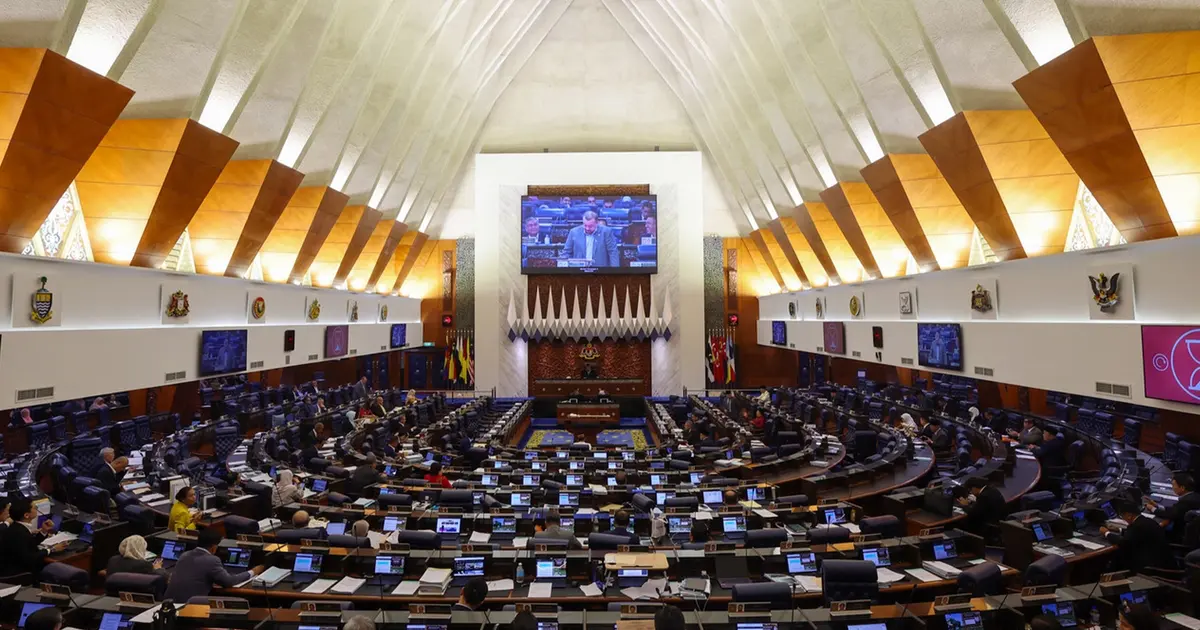
Malaysia's Dewan Rakyat is set to resume sitting from Monday with four major legislative proposals requiring parliamentary attention, foremost among them a constitutional amendment designed to restrict the prime minister's tenure to a maximum of 10 years. The proposed bill represents another push to establish firmer constitutional guardrails around executive power, an effort that gained prominence following political instability during the preceding parliamentary session when lawmakers were unable to muster the necessary two-thirds supermajority to advance the measure.
The term-limit proposal carries significant implications for Malaysia's political system and reflects broader regional conversations about executive accountability and institutional checks. By capping prime ministerial service at a decade, the amendment would ostensibly prevent any individual from accumulating excessive executive authority while creating predictable succession timelines that could theoretically reduce political uncertainty. This mirrors constitutional reforms undertaken across democracies worldwide, from presidential democracies in the Philippines and Indonesia to Westminster-derived systems grappling with similar questions about power concentration.
The failure of the previous attempt to secure a two-thirds majority highlighted deep divisions within the ruling coalition and opposition blocs regarding constitutional reform. In Malaysia's parliamentary system, fundamental constitutional changes require not merely a simple majority but explicit support from 148 of 222 MPs, a threshold that demands substantial cross-party consensus. The narrow defeat or inability to achieve this supermajority suggests either insufficient political will among major factions or deliberate obstruction by groups viewing the term limit as disadvantageous to their interests.
For Malaysian politics, the renewed parliamentary consideration of this bill signals that the push for institutional constraints on executive power remains a priority issue for certain political constituencies. The measure appeals to reformers concerned about personalised governance and the concentration of patronage networks around individual prime ministers. Simultaneously, it faces resistance from those who argue that Malaysia's constitutionally limited executive, already constrained by a hereditary monarchy and collective cabinet accountability, requires no additional restrictions that could paradoxically weaken governmental effectiveness during crises.
The broader legislative agenda encompassing three additional major bills reflects Parliament's attempt to address multiple dimensions of governance reform and policy adjustment. The nature of these companion proposals remains significant for understanding the parliament's overall direction this session. Whether they address electoral reform, institutional transparency, budgetary frameworks, or social policy will shape how observers assess the government's commitment to substantive parliamentary work beyond symbolic constitutional gestures.
The timing of this reconvened sitting occurs within Malaysia's broader context of coalition dynamics and power-sharing arrangements that have characterised national governance since 2020. The complex interplay between federal and state-level political alignments, combined with varying interests among component parties within the Pakatan Harapan-led and splinter factions, creates an intricate voting landscape where securing supermajorities demands careful coalition management and negotiation.
From a regional perspective, Malaysia's deliberation over executive term limits resonates with Southeast Asian debates about constitutionalism and democratic durability. Neighbouring Thailand faces recurrent constitutional instability, Singapore maintains concentrated executive authority within constrained democratic frameworks, and Indonesia has experimented with presidential term restrictions and their consequences. Malaysia's relatively stable handling of this question through constitutional amendment rather than extrajudicial means reflects institutional maturity worth noting.
The specific ten-year tenure cap merits scrutiny as a policy choice. International comparative experience suggests that fixed term limits can prevent entrenchment but may also create lame-duck periods where outgoing leaders face diminished political influence. The particular duration chosen—a decade—allows for multiple electoral cycles in Malaysia's five-year parliamentary terms, potentially permitting two consecutive administrations of one individual, which some might argue insufficiently constrains power concentration while others view as reasonable given Malaysia's electoral volatility.
For Malaysian voters and political observers, the Monday sitting represents another opportunity to assess parliamentary effectiveness in balancing competing interests and advancing structural reforms. The success or failure in achieving the two-thirds majority on the term-limit bill will signal whether recent negotiations between coalition parties have strengthened prospects for consensus, or whether constitutional reform remains hostage to tactical political positioning.
The complementary legislative agenda suggests Parliament intends engaging substantively with multiple policy dimensions rather than functioning merely as a rubber stamp. Public expectations regarding parliamentary productivity have intensified since Malaysia's democratic renaissance began in 2018, creating pressure on lawmakers to demonstrate that institutional deliberation and legislative craftsmanship matter in shaping national directions.
Monday's convening therefore merits close attention from observers tracking Malaysia's institutional development, constitutional evolution, and the practical mechanisms through which democratic systems manage power transitions and executive accountability. The outcomes will illuminate not only the immediate fate of the term-limit proposal but broader truths about consensus-building capacity within Malaysian politics and the structural possibilities for advancing governance reforms when substantial cross-party consensus remains elusive.

%22%2F%3E%3C%2Fpattern%3E%3C%2Fdefs%3E%3Crect%20width%3D%22100%25%22%20height%3D%22100%25%22%20fill%3D%22url(%23ph4dnbsg)%22%2F%3E%3Crect%20width%3D%22100%25%22%20height%3D%22100%25%22%20fill%3D%22url(%23ph4dnbsp)%22%2F%3E%3Ctext%20x%3D%2250%25%22%20y%3D%2250%25%22%20text-anchor%3D%22middle%22%20dominant-baseline%3D%22central%22%20fill%3D%22rgba(255%2C255%2C255%2C0.95)%22%20font-family%3D%22Georgia%2C%20'Times%20New%20Roman'%2C%20serif%22%20font-weight%3D%22700%22%20font-size%3D%22170%22%20letter-spacing%3D%22-0.02em%22%3EMalaysia%3C%2Ftext%3E%3C%2Fsvg%3E)