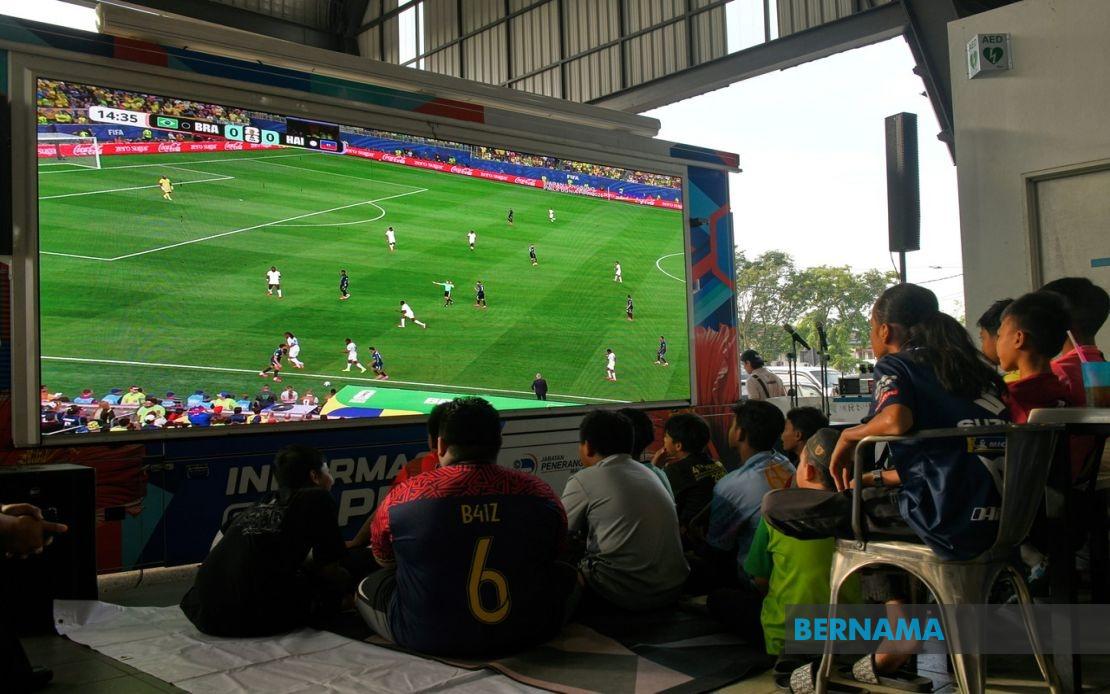
The Malaysian government's decision to provide free access to the 2026 FIFA World Cup through Radio Televisyen Malaysia and Unifi TV is delivering tangible economic benefits to food and beverage operators across the country, Communications Minister Datuk Fahmi Fadzil said on Wednesday. Speaking in Butterworth after attending a World Cup viewing event at the Seberang Jaya Public Market, Fahmi emphasized that the broadcasting initiative represents a meaningful cost reduction for restaurant owners who traditionally bear substantial licensing and transmission fees when screening matches to customers.
Feedback from the Malaysian Muslim Restaurant Owners Association, which has conveyed its approval to the ministry, underscores the significant savings the free broadcasts are generating for the sector. One trader shared with Fahmi that the 2026 tournament marks the first occasion in over twenty years he has been able to screen World Cup matches without incurring licensing expenses—a striking testament to how streaming rights and broadcast fees have historically constrained smaller businesses from participating in the global sporting spectacle.
The accessibility of matches through multiple platforms—RTM's traditional television channel, its digital portal RTMKlik, and the Unifi TV streaming service—ensures that both commercial establishments and ordinary households can follow the tournament without financial barriers. This multi-channel approach reflects a deliberate government strategy to democratize access to premier sporting content, particularly during a period when households are managing inflationary pressures across various sectors of the economy.
Fahmi's visit to the public market served purposes beyond announcing the broadcasting initiative. He spent time observing the first half of the Brazil versus Haiti match alongside members of the public and engaged directly with stallholders to understand their operational challenges and competitive pressures. This ground-level engagement allowed him to gather unfiltered intelligence about current trading conditions and the specific difficulties vendors face in maintaining profitability.
The traders conveyed to Fahmi multiple concerns requiring attention from both state and federal authorities. He indicated that he would escalate these inputs to Prime Minister Datuk Seri Anwar Ibrahim and Penang Chief Minister Chow Kon Yeow, suggesting that the feedback encompasses issues extending beyond sporting broadcasts to encompass broader economic governance.
A recurring theme in discussions with traders centred on the lingering economic consequences of geopolitical instability in West Asia. While international conflict remains geographically distant, its inflationary ripple effects have reached Malaysian supply chains and consumer prices, creating headwinds for businesses already navigating thin margins in the competitive food service sector. The rising costs of imported goods and transportation fuel continue to compress profitability even as demand faces pressure from consumer reluctance to increase spending.
Fahmi advocated for a broader cultural shift among elected representatives, encouraging more ministers, Members of Parliament, and state assemblymen to conduct periodic visits to ground-level business environments. Such direct engagement, he argued, provides invaluable perspective on the realities facing ordinary citizens and entrepreneurs—intelligence that cannot be effectively gathered through conventional administrative channels or statistical reports alone.
The World Cup broadcasting initiative represents an example of how government policy can provide targeted relief in specific sectors without requiring substantial budgetary appropriations. By leveraging existing broadcasting infrastructure and making content freely available, the authorities have created a win-win scenario: restaurants and hawker stalls can attract customers through World Cup entertainment without paying commercial licensing fees, while the general public gains access to premium sporting content regardless of subscription service availability or personal disposable income.
For Malaysian food and beverage operators, the ability to screen World Cup matches free of charge could translate into meaningful customer traffic during tournament periods. In 2026, when the tournament unfolds across North America, Malaysian time zones may align more favorably with matches than previous tournaments, potentially driving higher viewership and corresponding foot traffic to establishments screening the games. The competitive advantage accruing to businesses able to offer World Cup viewing without passing costs to customers could reshape customer behavior patterns during the month-long tournament.
The broader implications extend to considerations of digital equity and inclusive access to cultural phenomena that increasingly define global entertainment consumption. In Malaysia's diverse, multi-income society, the removal of financial barriers to World Cup participation—whether as active viewers in commercial spaces or passive consumers at home—affirms a principle that premium sporting events need not become exclusively the preserve of wealthier households and establishments able to afford broadcast rights.
Fahmi's comments also implicitly acknowledge that the cost-of-living pressures facing ordinary Malaysians and small business operators remain acute enough to warrant government action targeting relief in specific, high-visibility domains. The World Cup initiative, while modest in budgetary terms, demonstrates responsiveness to the economic anxieties influencing public sentiment and business confidence as the nation navigates persistent inflation and external economic shocks.
Moving forward, the success of this broadcasting initiative may inform future government policies regarding access to major sporting events and entertainment content. Should the 2026 World Cup prove popular through RTM and Unifi TV, stakeholders may advocate for similar free-access arrangements for other premium tournaments, from continental football championships to major cricket events that command substantial audiences across Asia.

%22%2F%3E%3C%2Fpattern%3E%3C%2Fdefs%3E%3Crect%20width%3D%22100%25%22%20height%3D%22100%25%22%20fill%3D%22url(%23ph4dnbsg)%22%2F%3E%3Crect%20width%3D%22100%25%22%20height%3D%22100%25%22%20fill%3D%22url(%23ph4dnbsp)%22%2F%3E%3Ctext%20x%3D%2250%25%22%20y%3D%2250%25%22%20text-anchor%3D%22middle%22%20dominant-baseline%3D%22central%22%20fill%3D%22rgba(255%2C255%2C255%2C0.95)%22%20font-family%3D%22Georgia%2C%20'Times%20New%20Roman'%2C%20serif%22%20font-weight%3D%22700%22%20font-size%3D%22170%22%20letter-spacing%3D%22-0.02em%22%3EMalaysia%3C%2Ftext%3E%3C%2Fsvg%3E)