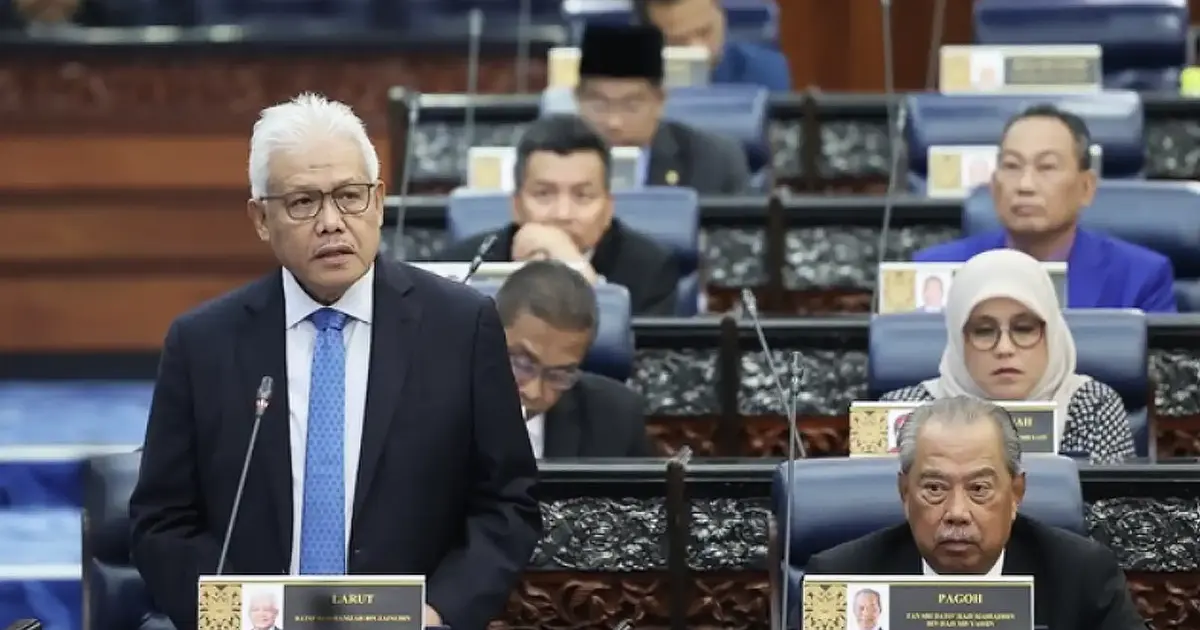
Malaysia's parliamentary opposition realignment has taken tangible form on the floor of the Dewan Rakyat, where seating arrangements serve as visual markers of political standing and coalition hierarchy. Hamzah has now resumed the coveted front-bench seat traditionally occupied by the opposition leader, a symbolic repositioning that signals evolving relationships within the broader anti-government coalition. The shift comes as part of wider reconfiguration within opposition ranks, reflecting both tactical adjustments and internal power dynamics that have characterised Malaysian politics since the last general election.
The most notable consequence of this reorganisation has been the displacement of Bersatu president Muhyiddin Yassin, whose previous proximity to the opposition leader's post has now been significantly diminished. Muhyiddin has been moved eight positions back from his former prominent location on the front row, a notable demotion that extends beyond mere physical distance to encompass questions about his political authority and the trajectory of Bersatu's role within the opposition coalition. This repositioning effectively restructures the visual hierarchy within Parliament, where proximity to the opposition leader has long carried symbolic weight regarding influence and strategic positioning.
The seating realignment reflects the complex interplay of coalition mathematics that continues to define Malaysian parliamentary politics. Opposition unity has repeatedly proven fragile, with various factions jockeying for influence and attempting to steer policy direction according to their own ideological and strategic preferences. Hamzah's return to the front bench represents a consolidation of his position as a central figure within the opposition structure, though the durability of such arrangements remains perpetually subject to the volatile nature of Malaysian political alliances. These movements often precede or follow substantive shifts in coalition strategy or internal negotiations regarding policy direction and electoral positioning.
Bersatu's repositioning warrants particular scrutiny given the party's evolving relationship with other opposition components and its broader political strategy. As president of a party that has oscillated between governmental and opposition status in recent years, Muhyiddin's movement down the seating order potentially signals diminished leverage in coalition negotiations or reflects decisions made collectively by opposition leadership regarding representation and messaging priorities. The distance between the opposition leader and Bersatu's head now inscribed in Parliament's physical layout may mirror deeper conversations occurring behind closed doors regarding strategic direction and coalition cohesion.
For Malaysian observers accustomed to reading parliamentary symbolism, such seating changes carry implications extending well beyond ceremonial considerations. Opposition effectiveness frequently depends upon maintaining unified messaging and coordinated legislative strategy, elements that are typically negotiated among senior leadership figures. The front bench traditionally represents the most visible and vocal contingent, with those positions commanding media attention and serving as primary interlocutors with government during parliamentary exchanges. Hamzah's restoration to this position amplifies his visibility and reinforces his role as a primary voice articulating opposition positions across parliamentary debates and public discourse.
The broader context of opposition coalition dynamics in Southeast Asia suggests that such internal reorganisations often presage more substantial political realignments. Malaysia's opposition has navigated numerous challenges since the 2022 general election, from managing ideological differences between secular and Islamist factions to addressing questions about electoral viability and governmental readiness. Seating arrangements within Parliament frequently serve as proxy indicators for these deeper strategic questions, with prominent positioning conferring both opportunities and responsibilities upon the parties occupying such spaces. The current reconfiguration therefore merits examination not merely as logistical adjustment but as potential indicator of shifting coalition priorities and internal negotiations.
The implications for Malaysia's parliamentary opposition extend into the practical realm of legislative influence and media management. Opposition spokespeople positioned prominently on the front bench enjoy greater opportunity to direct questions toward government during question time, raise points of order, and command journalistic attention during parliamentary proceedings. Hamzah's return therefore potentially enhances the opposition's capacity to maintain consistent pressure on government measures and maintain public visibility regarding policy alternatives and critiques of governmental performance. Conversely, Muhyiddin's repositioning may reflect decisions by coalition leadership to adjust communication strategy or recognise shifting internal power balances within the broader anti-government coalition.
Regional observers monitoring Malaysian political developments will likely interpret these organisational shifts within the context of broader electoral cycles and coalition positioning ahead of potential future elections. Opposition movements across Southeast Asia frequently undergo similar internal reorganisations as parties seek to optimise their strategic positioning and message consistency. The Malaysian case illustrates how even symbolic gestures such as seating arrangements reflect substantive questions about leadership, coalition cohesion, and strategic direction that determine whether opposition movements can effectively challenge incumbent governments or risk fragmentation through internal contradictions.
For Malaysian voters attempting to understand shifting political alignments, parliamentary seating provides tangible evidence of coalition dynamics otherwise conducted privately among party leadership. The movement of prominent figures within the parliamentary chamber offers windows into relationships and hierarchies that would otherwise remain opaque. Hamzah's advancement and Muhyiddin's demotion within the front-bench configuration therefore represent readable signals within the coded language of parliamentary politics, suggesting evolution in how the opposition intends to present itself to both government and electorate as it navigates the complex landscape of Malaysian coalition politics.
%22%2F%3E%3C%2Fpattern%3E%3C%2Fdefs%3E%3Crect%20width%3D%22100%25%22%20height%3D%22100%25%22%20fill%3D%22url(%23ph4hbbfg)%22%2F%3E%3Crect%20width%3D%22100%25%22%20height%3D%22100%25%22%20fill%3D%22url(%23ph4hbbfp)%22%2F%3E%3Ctext%20x%3D%2250%25%22%20y%3D%2250%25%22%20text-anchor%3D%22middle%22%20dominant-baseline%3D%22central%22%20fill%3D%22rgba(255%2C255%2C255%2C0.95)%22%20font-family%3D%22Georgia%2C%20'Times%20New%20Roman'%2C%20serif%22%20font-weight%3D%22700%22%20font-size%3D%22320%22%20letter-spacing%3D%22-0.02em%22%3EUS%3C%2Ftext%3E%3C%2Fsvg%3E)
%22%2F%3E%3C%2Fpattern%3E%3C%2Fdefs%3E%3Crect%20width%3D%22100%25%22%20height%3D%22100%25%22%20fill%3D%22url(%23ph3e48rg)%22%2F%3E%3Crect%20width%3D%22100%25%22%20height%3D%22100%25%22%20fill%3D%22url(%23ph3e48rp)%22%2F%3E%3Ctext%20x%3D%2250%25%22%20y%3D%2250%25%22%20text-anchor%3D%22middle%22%20dominant-baseline%3D%22central%22%20fill%3D%22rgba(255%2C255%2C255%2C0.95)%22%20font-family%3D%22Georgia%2C%20'Times%20New%20Roman'%2C%20serif%22%20font-weight%3D%22700%22%20font-size%3D%22320%22%20letter-spacing%3D%22-0.02em%22%3EPAS%3C%2Ftext%3E%3C%2Fsvg%3E)
%22%2F%3E%3C%2Fpattern%3E%3C%2Fdefs%3E%3Crect%20width%3D%22100%25%22%20height%3D%22100%25%22%20fill%3D%22url(%23ph5u2f8g)%22%2F%3E%3Crect%20width%3D%22100%25%22%20height%3D%22100%25%22%20fill%3D%22url(%23ph5u2f8p)%22%2F%3E%3Ctext%20x%3D%2250%25%22%20y%3D%2250%25%22%20text-anchor%3D%22middle%22%20dominant-baseline%3D%22central%22%20fill%3D%22rgba(255%2C255%2C255%2C0.95)%22%20font-family%3D%22Georgia%2C%20'Times%20New%20Roman'%2C%20serif%22%20font-weight%3D%22700%22%20font-size%3D%22151%22%20letter-spacing%3D%22-0.02em%22%3EPerikatan%3C%2Ftext%3E%3C%2Fsvg%3E)