The HAWANA 2026 Summit in Butterworth is anchoring itself not just in the future of Malaysian journalism but in its documented past, with a comprehensive photo exhibition that traces eight years of the National Journalists' Day celebration and the human stories behind one of the profession's most important welfare initiatives. The gallery, divided into two complementary sections, offers both a chronological review of HAWANA's evolution since its inaugural 2018 event and a powerful visual record of how Tabung Kasih@HAWANA has made tangible differences in the lives of media practitioners struggling with illness or financial difficulty.
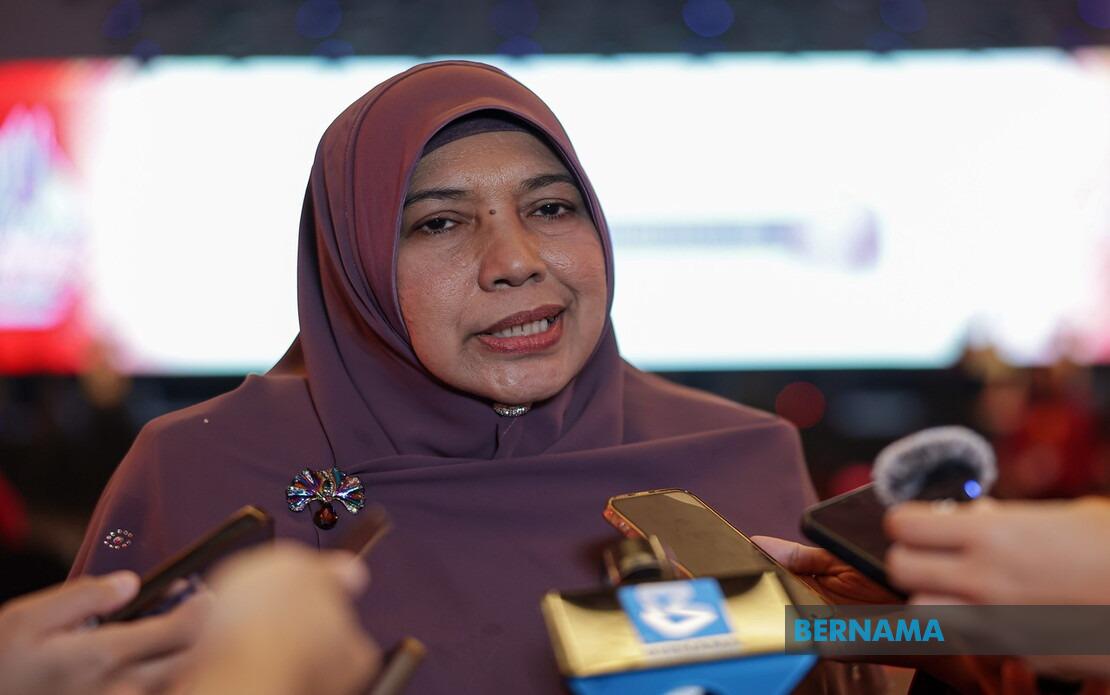
Datin Paduka Nur-ul Afida Kamaludin, who heads Bernama as chief executive officer and chairs the HAWANA 2026 Working Committee, framed the exhibition as more than nostalgic retrospective. She positioned it as a strategic platform to illuminate Bernama's substantive contributions as secretariat of the welfare fund and lead organiser of the summit—work that typically happens away from the spotlight. The exhibition fundamentally reorients attention from the news industry's public-facing role toward the institutional backbone that sustains professional solidarity within journalism itself. For Malaysian readers and media professionals, this visibility matters because it demonstrates how industry bodies can operate systematic support mechanisms even as they manage information flows for the broader public.
The curatorial approach reflects deliberate intentionality. Each photograph in the display carries bilingual captions in Malay and English, a decision made by Bernama's Photo Desk editor Mohamad Bakri Darus to ensure accessibility across Malaysia's diverse readership and to remove language barriers that might otherwise obscure the exhibition's documentary value. This accessibility principle extends beyond mere translation; it embodies an inclusive vision of who belongs in journalism's historical record and whose stories deserve preservation in visual form.
The exhibition's dual narrative structure allows visitors to trace HAWANA's geographical and thematic development. Previous editions have unfolded across five Malaysian cities—Kuala Lumpur hosted the inaugural 2018 summit and returned in 2025, Melaka welcomed journalists in 2022, Ipoh, Perak anchored the 2023 celebration, and Kuching, Sarawak hosted the most recent iteration in 2024. This expanding geographical footprint suggests deliberate efforts to decentralise the event and ensure regional media communities feel represented in a celebration ostensibly national in scope. For journalists working in Borneo or northern peninsular Malaysia, inclusion in HAWANA's rotating venues signals recognition of their professional status and contributions to Malaysia's information ecosystem.
The substantive programming captured in photographs reveals HAWANA's comprehensive approach to professional development and community building. The summit consistently features Strategic Partner Meetings that presumably connect industry stakeholders; Media Forums where practitioners exchange ideas and address sectoral challenges; the HAWANA-DBP Pantun Festival that celebrates Malaysian language and cultural expression through the classical poetic form; carnival and exhibition spaces that extend beyond journalism itself; and sports programming that emphasises the physical and social wellness dimensions of professional life. This multifaceted structure suggests HAWANA operates on the premise that journalism is not merely an intellectual or technical pursuit but a holistic human endeavour requiring cultural nourishment, physical wellbeing, and community belonging.
Tabung Kasih@HAWANA emerges from the photographic record as perhaps the summit's most ethically significant component. The visual documentation of aid recipients—presented with appropriate dignity and contextualization—transforms abstract notions of professional solidarity into concrete evidence of mutual support. In Malaysian journalism, where employment precarity affects freelancers and smaller publication staff with particular severity, such visible welfare infrastructure provides both practical assistance and psychological reassurance that the profession maintains mechanisms to support those facing hardship. The exhibition's decision to centre recipient stories rather than burying them in footnotes elevates welfare provision from charitable afterthought to core professional value.
For Malaysian journalism observers and industry participants, the timing of this comprehensive documentary exhibit carries strategic significance. HAWANA 2026 will be officiated by Prime Minister Datuk Seri Anwar Ibrahim, lending governmental visibility and validation to what remains fundamentally a professional sector initiative. The exhibition functions partly as institutional testimony—evidence presented to political leadership and the broader public that Malaysia's journalism community maintains robust self-regulatory and mutual-support mechanisms, operates with professional standards, and continues evolving to meet contemporary challenges. In a media environment sometimes characterised by tension between press freedom advocates and government interests, such exhibitions help establish journalistic institutions as stable, organised entities worthy of respect and autonomy.
Moreover, the photo gallery serves an archival function for the Malaysian journalism profession itself. By crystallising HAWANA's history in visual form, Bernama creates an accessible repository that future journalists can consult to understand how their profession organised itself, which issues it prioritised, and how it supported vulnerable members. This historical consciousness proves valuable as journalism continues navigating technological disruption, economic contraction in traditional media business models, and shifting audience expectations. Visual documentation of professional solidarity in previous eras provides both inspiration and practical examples for sustaining such bonds under contemporary pressures.
The exhibition also implicitly addresses the invisibility that often characterises behind-the-scenes professional infrastructure. Mohamad Bakri Darus observed that the display demonstrates how HAWANA itself helps the journalism industry while illustrating media's broader embeddedness within society. By making visible the secretariat work, the welfare administration, and the institutional architecture supporting HAWANA, the exhibition counters the perception that professional services materialise through individual effort alone. This transparency about collective infrastructure carries lessons beyond journalism—it models how professional sectors can document their own governance and mutual-support mechanisms in ways accessible to both insiders and concerned publics.
Regional context matters for understanding HAWANA's significance. Southeast Asian journalism faces common challenges across borders—economic pressures on traditional media, digital disruption, debates about press freedom and political relationships, and questions about professional sustainability and training. Malaysia's institutionalisation of a dedicated National Journalists' Day, complete with welfare fund and rotating summit venues, represents one regional approach to these challenges. Documenting this approach through comprehensive photography creates a record that Malaysian practitioners can reference, that regional journalism organisations might study, and that demonstrates one nation's commitment to honouring and supporting its information professionals.
As Prime Minister Datuk Seri Anwar Ibrahim prepares to officiate the HAWANA 2026 Summit at the PICCA Convention Centre @ Arena Butterworth, the accompanying exhibition transforms the event from a momentary gathering into a documented milestone in Malaysian journalism's institutional history. The gallery's careful curation, bilingual accessibility, and decision to centre both celebratory history and welfare recipient stories create a composite portrait of a profession attempting to sustain itself through collective endeavour. For Malaysian journalists and the broader public interested in understanding how professional sectors organise themselves, the exhibition offers transparent evidence of institutional commitment to professional standards, ethical practice, and mutual care.