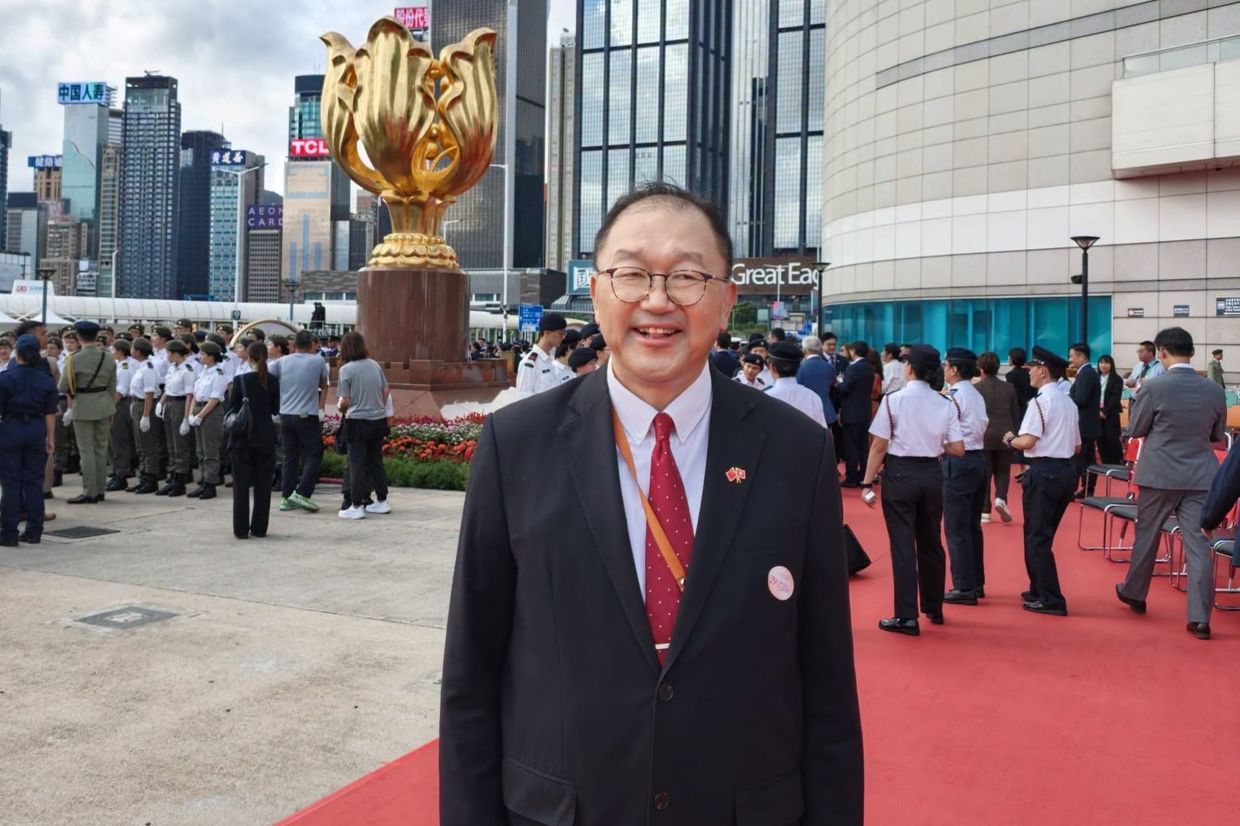
William Wong Kam-fai, a Hong Kong Legislative Council member, has become the first legislator to relinquish his seat due to a scandal in more than a quarter-century, following his arrest on suspicion of operating a vehicle under the influence and leaving the scene of a traffic collision. The 66-year-old lawmaker formally announced his resignation on Friday, just days after an incident on Monday evening when his vehicle struck two parked cars on a university campus.
In a statement released alongside his resignation announcement, Wong acknowledged the gravity of his actions and expressed remorse for the disruption caused to both the legislature and the broader community. He indicated that the decision to step down immediately was made after careful deliberation, with his primary concern being the protection of the Legislative Council's operational continuity. Wong emphasised his reluctance to discuss the matter further in detail, citing the ongoing police investigation as justification for his restraint, while pledging to contribute to Hong Kong society through alternative channels in the future.
The incident that precipitated Wong's departure occurred late on Monday night when he lost control of his vehicle near staff quarters, resulting in a collision with a parked automobile that subsequently struck a second vehicle. The immediate aftermath saw Wong taken into custody on suspicion of drink-driving and the hit-and-run offence. Legco President Starry Lee Wai-king formalised receipt of Wong's resignation letter on Friday, releasing a statement that commended his tenure and acknowledged his contributions to the legislature and the city as a whole.
Wong's position extended beyond his legislative responsibilities. As a member of the Chinese People's Political Consultative Conference, China's foremost political advisory body, he held significant influence within the nation's governance apparatus. His simultaneous roles as an academic and administrator at an educational institution added further complexity to his professional standing. The university moved swiftly to respond to the scandal, immediately suspending Wong from administrative duties while the criminal investigation remained ongoing, citing its commitment to maintaining high standards of staff conduct and professional integrity.
Political analysts and establishment figures have largely validated Wong's decision to resign, framing it as a pragmatic choice that mitigates reputational damage to both the individual and the institution. Lau Siu-kai, a consultant for the semi-official Chinese Association of Hong Kong and Macau Studies, characterised the resignation as the optimal course of action to shield the legislature from further controversy. He argued that retaining the position could have invited criticism of the "patriots administering Hong Kong" principle that underpins the current governance framework. By resigning promptly, Wong has shielded both himself and the legislative body from prolonged reputational harm, thereby preserving the overall stability of the political system.
Lau further assessed that Wong would likely resign from his CPPCC membership as well, noting that central authorities would probably accept such a resignation given the severity of the incident, despite the rarity of formal expulsions from the advisory body. Tam Yiu-chung, Hong Kong's former sole representative to the National People's Congress Standing Committee, concurred with this assessment, emphasising that the stringent conduct standards expected of legislators rendered resignation the most appropriate response to such a serious transgression.
The departure of Wong from the legislature is unlikely to generate significant operational complications for the institution. Analysts note that Wong represented the Election Committee constituency rather than a functional constituency, which must articulate the interests of specific economic or professional sectors. This distinction means that his absence will have minimal impact on the legislature's capacity to function or represent specialised interests. The question of whether a by-election will be held to fill his vacant seat remains with the government, and legal requirements do not mandate such a poll.
Precedent suggests that the government enjoys considerable discretion in this matter. The previous Election Committee constituency legislator to depart, Stephen Wong Yuen-shan, left his seat in late 2022 to assume a government position as think tank chief, yet no by-election materialised during his entire tenure, with the seat remaining vacant for approximately three years. Constitutional Affairs Minister Erick Tsang Kwok-wai indicated in 2024 Legco proceedings that financial considerations would be weighed when deciding whether to conduct a by-election, suggesting that cost-benefit analysis plays a role in such determinations.
Wong's resignation marks a historic moment in Hong Kong's legislative history. The previous lawmaker to resign over a scandal was Gary Cheng Kai-nam, who departed in September 2000, shortly after securing election to the chamber. Cheng's tenure was marred by revelations of undisclosed business relationships, unauthorised transmission of confidential government documents to a business associate, and personal indiscretions. He subsequently received an 18-month custodial sentence in 2001 after conviction on four separate charges encompassing bribery, misconduct in public office, false accounting, and theft.
The 26-year span between Cheng's departure and Wong's resignation underscores the rarity of such departures in Hong Kong's legislative context. This extended interval reflects both the relative stability of the legislature's membership and the stringent vetting procedures now in place following the 2020 electoral reforms that introduced stricter security measures and patriotism requirements. Wong's case therefore represents not merely a personal scandal but a notable moment in the legislative body's recent history, illustrating both the higher ethical expectations placed on contemporary lawmakers and the mechanisms through which such expectations are enforced.

