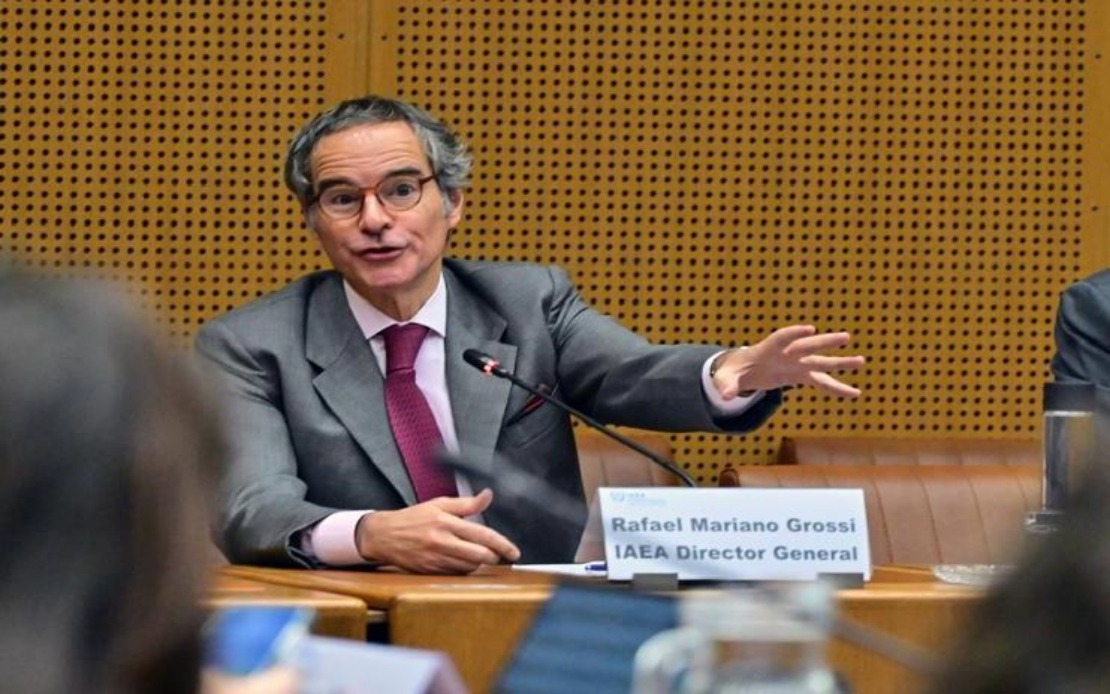
International Atomic Energy Agency Director General Rafael Mariano Grossi has made a compelling case for sustained diplomatic engagement at a pivotal moment in negotiations between the United States and Iran. Speaking ahead of direct talks scheduled to commence in Burgenstock, Switzerland, Grossi stressed that this window of opportunity demands unwavering commitment to multilateral dialogue and peaceful resolution of long-standing tensions between the two nations.
The timing of Grossi's intervention carries particular significance given the fragile nature of international nuclear diplomacy. The IAEA chief, speaking through X social media platform, reminded all parties that diplomatic channels, once damaged, prove extraordinarily difficult to repair. His message underscores a fundamental reality in global nuclear affairs: technical disputes over uranium enrichment levels and atomic facilities ultimately demand political solutions forged through persistent, good-faith negotiations.
The Swiss government has positioned itself as an indispensable neutral broker in these proceedings. Ignazio Cassis, Switzerland's Foreign Minister, held separate meetings with both Grossi and Iranian Foreign Minister Abbas Araghchi to assess the diplomatic landscape and ensure all parties understood their respective positions. Switzerland's historical role as a venue for sensitive international negotiations—from Cold War arms control talks to more recent nuclear agreements—makes it a natural gathering place when global powers require carefully orchestrated dialogue away from domestic political pressures.
Preceding the Switzerland engagement, US President Donald Trump and Iranian President Masoud Pezeshkian signed the Islamabad Memorandum of Understanding on Wednesday, a preliminary agreement that laid groundwork for these imminent direct talks. This bilateral framework, established at the highest political levels, signals to observers that both Washington and Tehran view continued engagement as preferable to escalation, despite profound disagreements over Iran's nuclear programme and broader regional security concerns.
For Malaysian policymakers and observers in Southeast Asia, these developments warrant close attention. The success or failure of US-Iran negotiations carries implications extending far beyond bilateral relations. Any destabilisation in the Middle East can disrupt global energy markets, affect shipping routes through critical waterways, and influence international security architecture in ways that ripple throughout Asia-Pacific regions. Malaysia, as a major importer of crude oil and a country with significant maritime trade, remains vulnerable to energy price shocks or geopolitical instability originating from Middle Eastern tensions.
The IAEA's distinctive role in these talks cannot be overstated. As the world's foremost independent authority on nuclear matters, the agency provides technical expertise and verification mechanisms that lend credibility to any eventual agreement. Grossi's emphasis on the IAEA's constructive involvement suggests that future arrangements will likely include robust international oversight, which typically appeals to sceptical parties on both sides seeking assurance that the other side honours its commitments.
Switzerland's commitment to supporting multilateral diplomacy, as acknowledged by Grossi, reflects a broader international consensus that complex transnational problems demand inclusive, rules-based approaches. In an era when unilateral action and great power competition increasingly dominate geopolitical discourse, Switzerland's patient facilitation of dialogue between adversaries represents an alternative model of problem-solving that many smaller nations, including Malaysia, recognise as increasingly rare and valuable.
The convergence of these diplomatic efforts—the preliminary Islamabad memorandum, the IAEA's technical input, Swiss mediation, and now direct talks—suggests serious momentum toward resolving differences. Yet obstacles remain formidable. Previous iterations of nuclear negotiations between the US and Iran have foundered on issues of verification, sanctions relief, regional security guarantees, and political will sustaining agreement despite domestic opposition in both capitals.
For the broader Asian community, the trajectory of these negotiations matters considerably. A successful outcome might reduce global tensions and stabilise energy markets. Conversely, a breakdown in talks could precipitate renewed confrontation, military buildups, and economic uncertainty affecting trade patterns and investment flows throughout Southeast Asia. Malaysian businesses with exposure to Middle Eastern markets or global supply chains sensitive to energy prices face genuine stakes in whether diplomacy succeeds.
Grossi's call for giving diplomacy every opportunity represents more than diplomatic protocol. It reflects realistic assessment that military options carry catastrophic risks—not merely for the immediate parties but for innocent populations and economies across continents. The IAEA chief's intervention lends scientific credibility to the proposition that only through sustained, transparent engagement can the international community address legitimate security concerns while preventing proliferation risks.
As delegations prepare for substantive discussions in Burgenstock, the international community watches closely. The outcome will test whether adversaries separated by decades of mistrust can construct durable agreements serving mutual interests. For Malaysia and Southeast Asia, that test matters profoundly, transcending abstract principles of international law to touch concrete interests in energy security, maritime safety, and regional stability that shape prosperity and security for millions across the region.

%22%2F%3E%3C%2Fpattern%3E%3C%2Fdefs%3E%3Crect%20width%3D%22100%25%22%20height%3D%22100%25%22%20fill%3D%22url(%23ph38dg7g)%22%2F%3E%3Crect%20width%3D%22100%25%22%20height%3D%22100%25%22%20fill%3D%22url(%23ph38dg7p)%22%2F%3E%3Ctext%20x%3D%2250%25%22%20y%3D%2250%25%22%20text-anchor%3D%22middle%22%20dominant-baseline%3D%22central%22%20fill%3D%22rgba(255%2C255%2C255%2C0.95)%22%20font-family%3D%22Georgia%2C%20'Times%20New%20Roman'%2C%20serif%22%20font-weight%3D%22700%22%20font-size%3D%22151%22%20letter-spacing%3D%22-0.02em%22%3EMalaysian%3C%2Ftext%3E%3C%2Fsvg%3E)