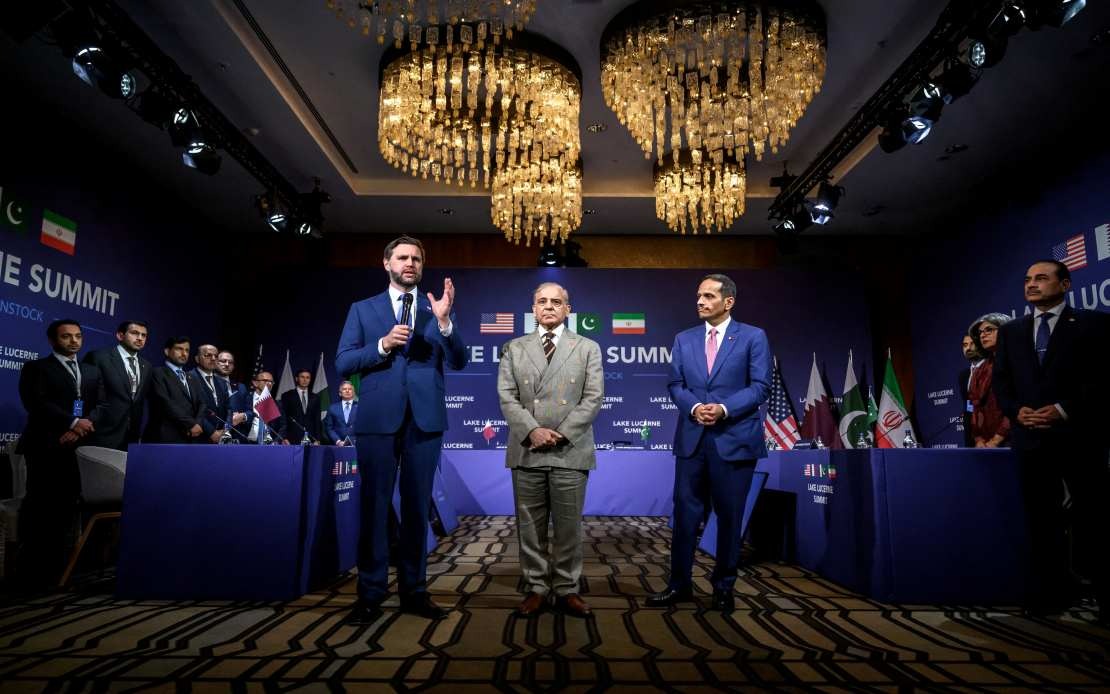
Diplomatic efforts between Iran and the United States have formally begun in Switzerland, marking a significant development in ongoing West Asian tensions. The initial round of four-party talks, which included mediators from Qatar and Pakistan, concluded on Sunday following approximately 80 minutes of discussions. The negotiations represent the first substantive engagement between the two nations under a memorandum of understanding reached just days earlier, with both delegations arriving at the venue early to prepare for the technical discussions.
The talks are taking place at Bürgenstock in Switzerland, where high-level representatives from each side have gathered to work toward peace. On the American side, Vice President JD Vance is leading the delegation, while Iran has dispatched Parliament Speaker Mohammad Bagher Qalibaf and Foreign Minister Abbas Araghchi to oversee the country's negotiating position. The presence of such senior figures underscores the significance both nations place on these discussions and their commitment to resolving months of regional conflict that has threatened stability throughout the Middle East.
Qatar's announcement of the talks coming shortly after their initiation suggested coordinated timing aimed at maintaining momentum in the diplomatic process. The mediation roles assigned to both Qatar and Pakistan reflect the broader involvement of regional players in seeking resolution to the conflict. Pakistan's participation is particularly noteworthy given its historical engagement with both Iran and broader Western interests in South Asian geopolitics, positioning it as a credible neutral party capable of facilitating communication between the adversaries.
The memorandum of understanding signed on Wednesday constitutes the foundation upon which these talks are built. This agreement, though not yet detailed in full public disclosure, appears to focus on multiple critical issues affecting regional stability and international commerce. Most significantly, the accord addresses the reopening of the Strait of Hormuz, one of the world's most vital maritime chokepoints through which enormous quantities of global oil supplies transit daily. Any prolonged closure or disruption to shipping in these waters carries immediate economic consequences for nations far beyond the Middle East, including Malaysia and other Southeast Asian economies heavily dependent on energy imports.
The interim nature of the agreement suggests that these initial discussions represent preliminary steps toward a more comprehensive settlement. The suspension of talks after roughly 80 minutes to permit internal consultations by each delegation indicates that negotiators are likely grappling with complex technical details and substantive disagreements. Such consultation breaks are standard diplomatic practice when delegations need to confer with their respective governments before committing to positions or concessions on matters of national importance.
For Southeast Asian observers and policymakers, these negotiations carry several layers of significance. Regional stability in the Middle East directly influences energy prices and shipping security affecting the entire Indo-Pacific region. Malaysia, as both a significant energy consumer and a major trading nation with considerable maritime commerce passing through crucial sea lanes, maintains vested interests in the successful resolution of West Asian conflicts. Disruptions to oil supplies or maritime routes can rapidly translate into inflationary pressures and economic uncertainty across Southeast Asia.
The silence regarding the timeline for subsequent negotiation rounds suggests either genuine uncertainty about progress or deliberate opacity intended to avoid raising expectations prematurely. Neither side appears eager to declare premature victory or establish artificial deadlines that might collapse under pressure. This measured approach contrasts sharply with some previous diplomatic initiatives in the region, where grandstanding and public pronouncements sometimes complicated quiet backroom negotiations.
The technical focus of these talks, as distinguished from broader political discussions, indicates that negotiators are working on implementing mechanisms and verification procedures rather than debating fundamental principles. This distinction matters considerably because it suggests both parties have moved beyond the question of whether peace is desirable and are now grappling with the practical minutiae of how agreements would be monitored, enforced, and maintained. Such discussions typically involve military officers, logistics specialists, and technical experts alongside traditional diplomats.
The involvement of Qatar and Pakistan as mediators reflects the reality that direct negotiations between Iran and the United States, despite decades of diplomatic relations in earlier eras, remain fraught with historical tension and mutual suspicion. Mediators help bridge communication gaps, build confidence, and provide face-saving mechanisms when either side needs to adjust positions. The neutral ground of Switzerland provides symbolic and practical advantages, offering secure facilities while maintaining distance from both nations' immediate spheres of influence.
Regional implications extend beyond immediate bilateral concerns. Other Middle Eastern actors, including Arab Gulf states with varying relationships to both Iran and Western powers, are likely monitoring these discussions closely. The success or failure of these talks could reshape regional alignments and influence decisions about defense spending, military posturing, and economic integration patterns across the broader region and into Asia.
For Malaysian policymakers and regional analysts, these developments warrant careful attention. The trajectory of Iran-US relations affects not only energy security and maritime trade but also broader questions about how major powers manage great-power competition and regional disputes. Should these talks succeed, they might establish precedents for managing other regional conflicts in Southeast Asia itself. Conversely, if they falter, the resulting escalation could have far-reaching consequences for global stability and regional prosperity.
The coming weeks will prove critical in determining whether this diplomatic initiative gains traction or becomes another false start in a relationship marked by decades of estrangement. The continuation of talks, the substance of agreements reached, and the mechanisms established for ongoing verification will all merit close monitoring by Southeast Asian governments seeking to understand how these developments might influence their own interests and security landscape.

%22%2F%3E%3C%2Fpattern%3E%3C%2Fdefs%3E%3Crect%20width%3D%22100%25%22%20height%3D%22100%25%22%20fill%3D%22url(%23ph5bjwng)%22%2F%3E%3Crect%20width%3D%22100%25%22%20height%3D%22100%25%22%20fill%3D%22url(%23ph5bjwnp)%22%2F%3E%3Ctext%20x%3D%2250%25%22%20y%3D%2250%25%22%20text-anchor%3D%22middle%22%20dominant-baseline%3D%22central%22%20fill%3D%22rgba(255%2C255%2C255%2C0.95)%22%20font-family%3D%22Georgia%2C%20'Times%20New%20Roman'%2C%20serif%22%20font-weight%3D%22700%22%20font-size%3D%22226%22%20letter-spacing%3D%22-0.02em%22%3EHamzah%3C%2Ftext%3E%3C%2Fsvg%3E)