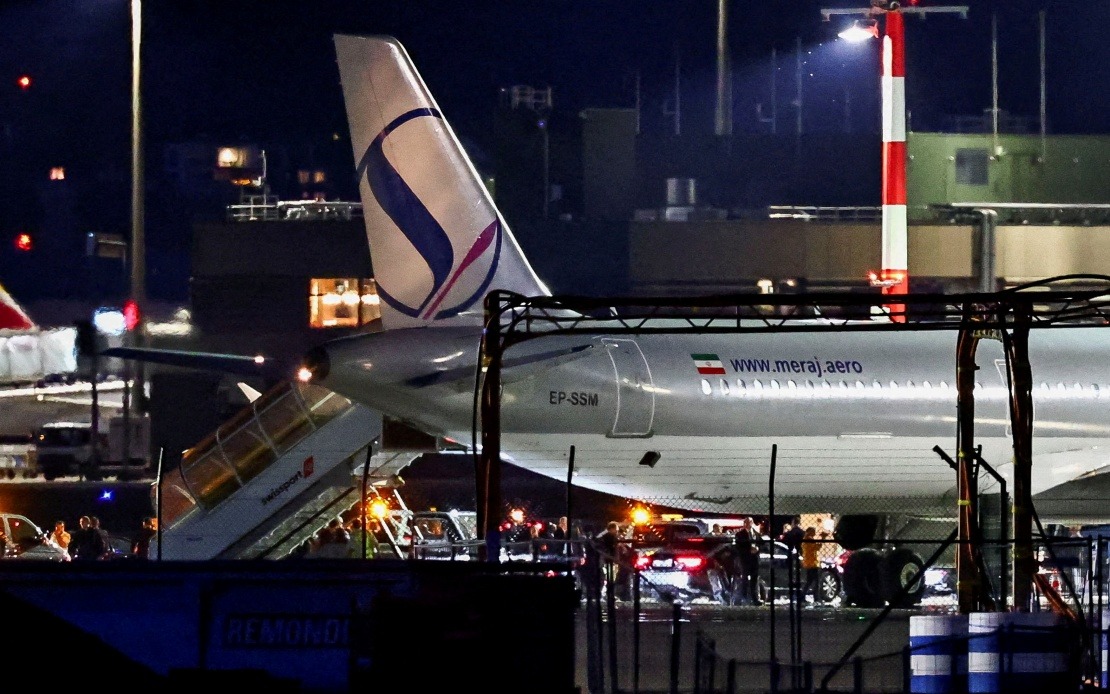
Iran has made clear that negotiations currently underway with the United States in Switzerland will prioritise the realisation of specific memorandum conditions before proceeding to broader discussions on a comprehensive accord. According to Iranian Foreign Ministry spokesman Ismail Baghaei, these preliminary talks must focus on three immediate objectives: establishing a permanent cessation of armed conflict across all theatres, removing American restrictions on Iranian petroleum sales, and releasing frozen Iranian financial holdings.
The Iranian position reflects a structured approach to diplomatic engagement, with Baghaei emphasising that advancement toward a final agreement cannot proceed without first satisfying foundational provisions. This sequencing is not arbitrary but embedded in the memorandum's Article 13, which explicitly conditions movement to final-stage negotiations on prior implementation of Articles 1, 4, 5, 10, and 11. Tehran's insistence on this framework suggests that Iranian negotiators view the memorandum as a binding document establishing clear prerequisites rather than a loose understanding subject to flexible interpretation.
Article 1 stands out as particularly significant in Tehran's current priorities. This provision addresses the cessation of warfare across all frontiers, with explicit mention of conflicts in Lebanon. The Iranian Foreign Ministry's emphasis on this article underscores the regional dimension of these negotiations—they are not solely bilateral concerns but involve broader Middle Eastern security architecture. The reference to Lebanon indicates that Iranian officials consider their own military capabilities and those of allied forces in the region as integral to the negotiation framework, suggesting that any settlement must encompass non-state actors and proxy forces rather than merely state-to-state arrangements.
The lifting of sanctions on Iranian oil represents a critical economic component of these talks. Article 10, which addresses petroleum export waivers and related financial services, carries substantial weight for Iran's economic recovery. The global oil market remains sensitive to Iranian supply, particularly given current geopolitical tensions and the reliance of several Asian economies on Middle Eastern energy sources. For Malaysian readers, Iranian oil sanctions relief could influence regional energy pricing and supply dynamics, making these negotiations relevant to Southeast Asian economic interests.
Parallel to sanctions relief, Iran is pressing for the unfreezing of its assets held abroad under provisions of Article 11. This issue transcends mere economics; frozen assets represent Iran's access to capital necessary for domestic reconstruction and international commerce. The mutual procedures referenced by the Foreign Ministry suggest negotiations involve establishing mechanisms and timelines for asset release, indicating that implementation is technical and procedural rather than immediately executable.
Articles 4 and 5 establish the security architecture underlying the proposed settlement. These provisions envision mutual non-aggression, withdrawal of American naval forces from proximate regions, and restoration of commercial shipping through the Strait of Hormuz. The Strait's status carries particular significance for global trade, as approximately one-third of world maritime petroleum traffic transits these waters. Any American military withdrawal from the region would represent a substantial geopolitical reorientation, explaining why these articles require careful negotiation and phased implementation.
The restoration of safe navigation through the Strait of Hormuz, coupled with regional discussions on its future governance, suggests that Iran seeks both freedom of movement for its own vessels and a voice in managing this crucial waterway. The phrase "regional discussions on its future administration" indicates that Tehran views itself as a legitimate stakeholder in the Strait's governance structure rather than merely a riparian state subject to international arrangements determined elsewhere. This reflects Iran's broader aspiration to be treated as a significant regional power rather than a subordinate party in Middle Eastern affairs.
Baghaei's emphasis that talks are "focused on implementing" these articles rather than negotiating them suggests that the memorandum itself is already agreed in principle. Current discussions therefore concentrate on mechanics—how provisions translate into concrete actions, timelines for implementation, verification procedures, and contingencies for non-compliance. This distinction between negotiating terms and implementing agreed terms is crucial for understanding the talks' purpose and trajectory.
For Southeast Asian observers, these negotiations merit attention beyond academic interest. The region's prosperity depends significantly on stable Middle Eastern relations and unobstructed maritime commerce through critical chokepoints like the Strait of Hormuz. Any agreement reducing US-Iran tensions could stabilise energy markets, facilitate shipping, and prevent escalatory cycles that might draw regional powers into broader conflicts. Conversely, failure to implement agreed provisions could trigger renewed tensions, military buildups, and renewed sanctions that reverberate through global trade networks upon which ASEAN economies depend.
The Iranian Foreign Ministry's public delineation of negotiating priorities also serves a domestic political function. By publicly outlining prerequisites for final agreements, Iranian officials demonstrate to domestic constituencies that their government is pursuing maximalist positions rather than accepting unfavourable terms. This public positioning establishes political space for implementation of agreements when they arrive, as officials can claim they have achieved stated objectives.
The timeframe for implementing these provisions remains uncertain. Baghaei's statement does not specify when the current implementation-focused negotiations might transition to final agreement discussions, suggesting either that timelines are still being negotiated or that implementation itself may occur gradually over months or years. This gradual approach allows both parties to verify compliance and adjust course if problems emerge, reducing risks associated with rapid normalisation.
Success of these negotiations carries implications extending far beyond Iran and America. A stabilised relationship could influence Syrian political developments, affect Hezbollah's operational capabilities, influence Iraqi state reconstruction, and reshape Gulf security arrangements. For Malaysia and Southeast Asia, the outcome could determine whether Middle Eastern energy supplies remain abundant and affordable or whether renewed tensions produce price volatility and supply disruptions affecting regional economies.

%22%2F%3E%3C%2Fpattern%3E%3C%2Fdefs%3E%3Crect%20width%3D%22100%25%22%20height%3D%22100%25%22%20fill%3D%22url(%23ph38dg7g)%22%2F%3E%3Crect%20width%3D%22100%25%22%20height%3D%22100%25%22%20fill%3D%22url(%23ph38dg7p)%22%2F%3E%3Ctext%20x%3D%2250%25%22%20y%3D%2250%25%22%20text-anchor%3D%22middle%22%20dominant-baseline%3D%22central%22%20fill%3D%22rgba(255%2C255%2C255%2C0.95)%22%20font-family%3D%22Georgia%2C%20'Times%20New%20Roman'%2C%20serif%22%20font-weight%3D%22700%22%20font-size%3D%22151%22%20letter-spacing%3D%22-0.02em%22%3EMalaysian%3C%2Ftext%3E%3C%2Fsvg%3E)