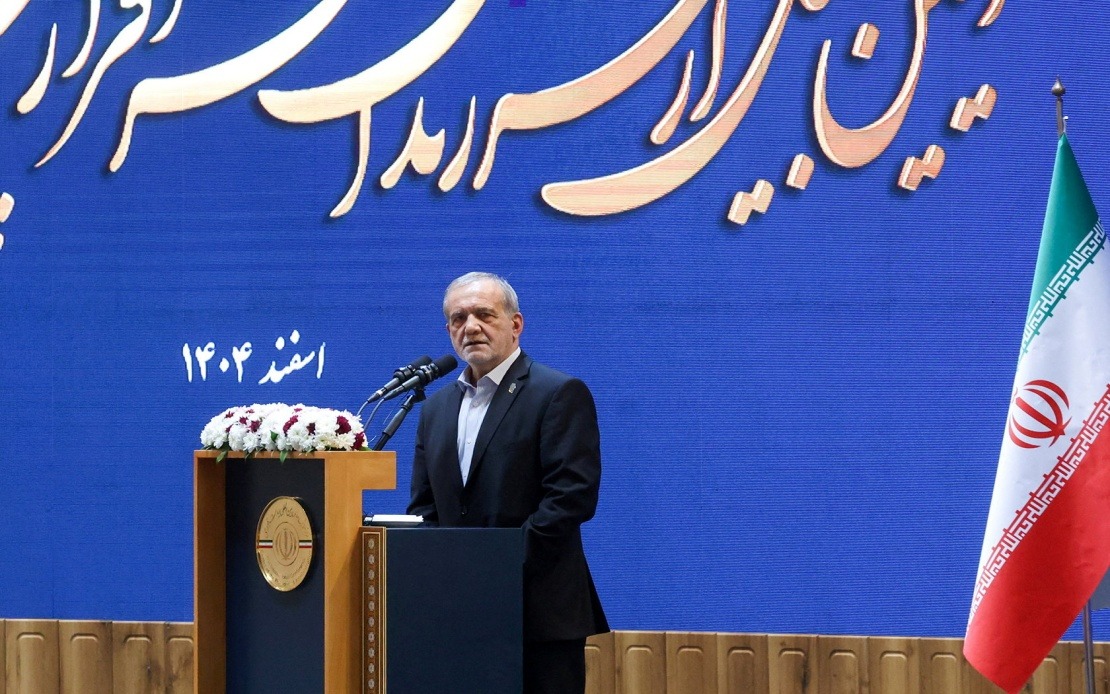
Iranian President Masoud Pezeshkian has indicated that his government may be prepared to issue a formal written declaration renouncing the development of nuclear weapons, a development that could represent meaningful progress in protracted discussions over Iran's nuclear programme. The statement, made in Tehran on June 21, suggests a degree of flexibility from the Iranian leadership as negotiations with United States representatives continue in Switzerland, where both parties are attempting to forge a comprehensive long-term settlement following their recent memorandum of understanding.
The framework agreement that underpins the current diplomatic efforts stipulates that a final accord addressing Iran's nuclear activities must be concluded within 60 days. This timeline underscores the urgency both nations attach to resolving one of the most contentious issues in international relations over the past two decades. Pezeshkian's comments regarding a potential written undertaking come as negotiators work to navigate the technical and political complexities that have historically stalled previous attempts at permanent settlement.
While Pezeshkian's remarks suggest openness to formalising Iran's nuclear intentions, the president did not explicitly confirm whether such a written declaration constitutes part of the active negotiation strategy currently being pursued in Switzerland. This ambiguity reflects the delicate balancing act required in such discussions, where public statements must be carefully calibrated to preserve negotiating leverage while maintaining credibility with domestic constituencies and international observers. The distinction between rhetorical willingness and formal commitment remains significant in diplomatic contexts.
The Iranian leadership has repeatedly emphasised that its position on weapons of mass destruction is grounded in religious principle rather than pragmatic constraint. Pezeshkian referenced the position of former supreme leader Ali Khamenei, who was killed in US-Israeli strikes at the beginning of the recent conflict, noting that Khamenei had rejected the development of such weapons on theological grounds. This framing attempts to position Iran's stance as principled and consistent rather than merely tactical or contingent upon external pressure.
For Malaysia and other Southeast Asian nations observing these developments, Iran's nuclear posture carries implications for regional stability and the broader international non-proliferation architecture. Malaysia, as a signatory to the Nuclear Non-Proliferation Treaty, has invested diplomatically in maintaining a rules-based global order regarding nuclear materials. Any breakthrough in Iran's case could either strengthen international confidence in non-proliferation mechanisms or, conversely, establish precedents that complicate future efforts to constrain nuclear ambitions elsewhere.
The financial dimension of the emerging settlement cannot be overlooked. Pezeshkian has indicated that releasing US$6 billion in Iranian assets currently frozen in Qatar represents an immediate benefit to Iran under the agreement framework. This unfreezing of assets signals recognition from the US that sanctions relief constitutes a material incentive for Iranian compliance with nuclear restrictions. The restoration of such capital would provide Tehran with significant economic breathing room, though the amounts remain modest relative to Iran's broader financial isolation.
The Iranian government's consistent public assertion that it does not seek nuclear weapons acquisition reflects a strategic communications approach designed to frame future declarations as confirmatory rather than concessional. By establishing a historical record of denial, Tehran attempts to portray any written commitment as formalising existing policy rather than abandoning previously held positions. This narrative framing matters considerably for domestic political consumption, where acknowledging constraint imposed by external actors carries different implications than reaffirming longstanding principle.
Pezeshkian's expression of confidence in the ongoing negotiations and his characterisation of agreements reached thus far as substantially favouring Iranian interests suggest the Iranian leadership views current discussions as substantively different from previous negotiation cycles. Whether this optimism reflects genuine substantive progress or represents negotiating positioning remains uncertain. However, the willingness to discuss written commitments on nuclear matters indicates that both parties perceive sufficient common ground to continue intensive engagement.
The convergence of these developments occurs against a backdrop of significant regional instability and international complexity. The death of former supreme leader Ali Khamenei fundamentally altered Iran's domestic and foreign policy landscape, potentially opening space for diplomatic approaches that previous leadership configurations resisted. Successor arrangements within Iran's governance structure may create different incentive structures and decision-making dynamics than existed previously, though continuity in institutional interests persists regardless of personnel changes.
For Malaysian policymakers and analysts, monitoring Iran's nuclear trajectory remains relevant to broader questions about non-proliferation effectiveness and the conditions under which adversarial relationships can be managed through diplomatic and commercial incentives. The extent to which these negotiations succeed will influence how other nations facing sanctions pressures evaluate cooperation with international oversight regimes. The precedent established in Iran's case will reverberate across multiple jurisdictions and policy domains.
The specification of 60 days for finalising comprehensive arrangements creates a hard deadline that may either concentrate negotiating efforts productively or precipitate deadline-driven compression that undermines achieving genuine consensus. Previous Iran nuclear negotiations have demonstrated how temporal pressures interact with substantive complexity to produce either rushed agreements vulnerable to subsequent challenge or extended negotiations that test participant commitment. The current timeline will test whether both parties prioritise concluding an accord or securing terms each considers sufficiently favourable to justify agreement.


%22%2F%3E%3C%2Fpattern%3E%3C%2Fdefs%3E%3Crect%20width%3D%22100%25%22%20height%3D%22100%25%22%20fill%3D%22url(%23ph38dg7g)%22%2F%3E%3Crect%20width%3D%22100%25%22%20height%3D%22100%25%22%20fill%3D%22url(%23ph38dg7p)%22%2F%3E%3Ctext%20x%3D%2250%25%22%20y%3D%2250%25%22%20text-anchor%3D%22middle%22%20dominant-baseline%3D%22central%22%20fill%3D%22rgba(255%2C255%2C255%2C0.95)%22%20font-family%3D%22Georgia%2C%20'Times%20New%20Roman'%2C%20serif%22%20font-weight%3D%22700%22%20font-size%3D%22151%22%20letter-spacing%3D%22-0.02em%22%3EMalaysian%3C%2Ftext%3E%3C%2Fsvg%3E)