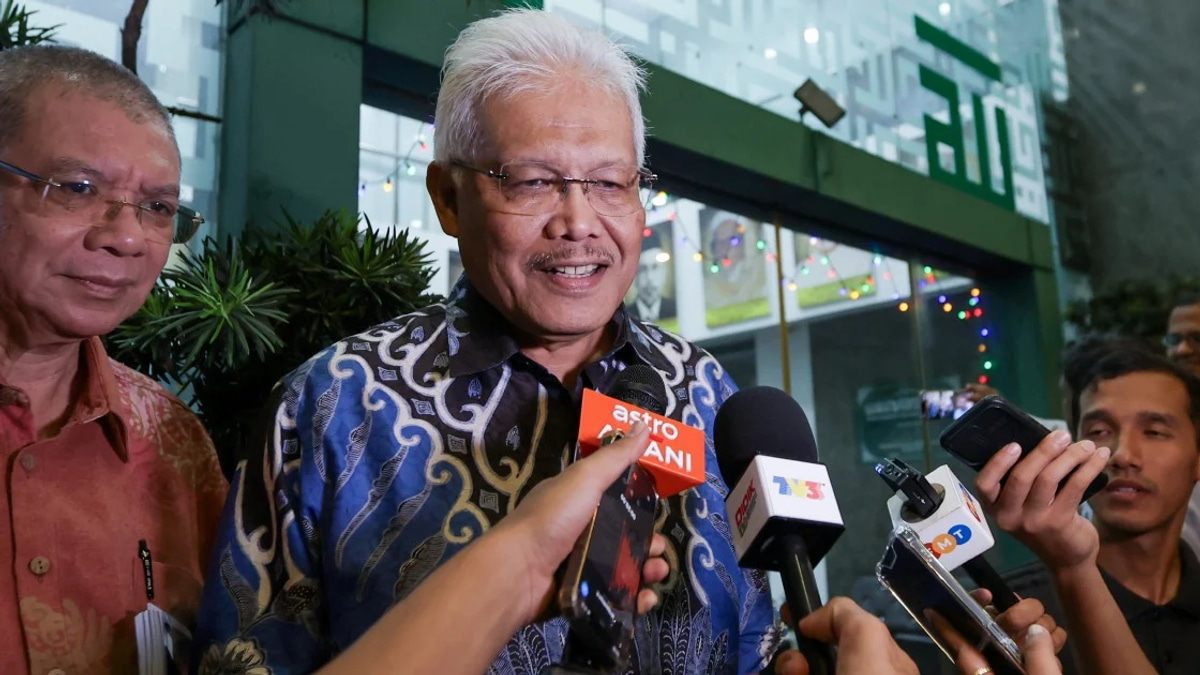
Johor's participation in the Human Resource Development Corporation ecosystem has expanded significantly, with 13,425 employers now registered on the platform as of the end of last year. This substantial enrolment has created a tangible impact across the state, with nearly 480,000 workers benefiting from coordinated training and skills development programmes facilitated through the HRD Corp framework. Human Resources Minister Datuk Seri R. Ramanan, speaking at the Johor edition of HRD Corp's 'Pocket Talk' roadshow at Starhill Golf & Country Club in Kempas, underscored the scale of this institutional commitment to workforce development across Malaysia's southern industrial heartland.
The financial dimensions of this participation reveal a system generating substantial resources for skills enhancement. In the previous calendar year, employers and participating organisations contributed RM208.21 million through the HRD Corp levy mechanism. The framework ensures substantial reinvestment in training delivery, with RM183.96 million of collected levies channelled directly back to employers to fund employee development programmes. This recycling of funds creates an incentive structure that rewards registered organisations for their commitment to continuous workforce improvement, effectively subsidising the cost of upskilling initiatives across the private and semi-public sectors operating in Johor.
Beyond levy-based funding, HRD Corp has deployed additional financial support mechanisms to accelerate skills development across the state. The corporation disbursed RM191.5 million in direct financial assistance during the period under review, reaching 232,072 individual beneficiaries in Johor. This complementary funding stream targets specific populations and initiatives that might otherwise struggle to access training resources, including workers transitioning between industries, displaced employees, and individuals seeking credentialled qualifications in high-demand sectors. The combination of employer-funded and centrally-allocated support creates a multi-layered approach to workforce development.
Ramanan's remarks reflected a philosophical shift in how success within the HRD Corp ecosystem is measured and evaluated. Rather than fixating on financial throughput or administrative metrics, the minister emphasised that the true indicator of programme effectiveness lies in the sustained career advancement and economic security experienced by individual workers. This perspective acknowledges that training initiatives, regardless of budgetary scale, must ultimately translate into genuine employment prospects, higher earning potential, and improved job satisfaction for participants. The framing suggests a recognition that workforce development cannot be assessed purely through accounting metrics but requires longitudinal tracking of participant outcomes.
The timing of these remarks coincides with heightened focus on Johor's economic trajectory and its strategic positioning within Southeast Asia's industrial landscape. The state has emerged as a destination for significant foreign and domestic investment, driven partly by its geographical proximity to Singapore and its developing infrastructure. As major employers establish operations or expand footprints in Johor, demand for workers with advanced technical and management competencies continues to accelerate. The HRD Corp registration figures and training participation data suggest that local institutions are responding to this talent requirement, though potential supply-demand mismatches remain a concern for policymakers.
A particular focus within this development narrative centres on the Johor-Singapore Special Economic Zone, a collaborative infrastructure initiative designed to deepen economic integration between the two neighbouring territories. This project creates demand for a workforce capable of operating in sophisticated manufacturing, logistics, and services environments that often require multiple skill certifications and linguistic competencies. Ramanan's reference to strengthening local talent specifically to meet JS-SEZ employment demands indicates that HRD Corp's training portfolio is being strategically aligned with emerging economic opportunities. For Malaysian workers, successful participation in zone-related employment represents access to higher-wage positions and exposure to international best practices in their respective fields.
The 'Pocket Talk' roadshow itself represents an important pedagogical intervention within Malaysia's human resource development ecosystem. Branded as 'From Policy to the People', the initiative attempts to bridge the notorious information gap between government schemes and grassroots communities who might benefit from such programmes but lack awareness of their existence or eligibility criteria. By bringing Human Resources Ministry representatives and HRD Corp officials directly into community settings rather than expecting workers to navigate government offices, the roadshow acknowledges existing barriers to access that have historically limited programme uptake among informal sector workers, small enterprise employees, and other marginalised labour groups.
For Malaysia's broader development strategy, Johor's HRD Corp figures hold significance extending beyond state boundaries. As one of Malaysia's largest states and an economic engine driving regional growth, Johor's workforce development trajectory influences national productivity metrics and labour market competitiveness. The state's ability to continuously upgrade worker skills determines whether domestic companies can successfully transition toward higher-value manufacturing and services activities, a necessary precondition for sustained middle-income status progression. The 13,425 registered employers represent a substantial institutional commitment to this transition, though questions persist regarding whether training quality and relevance match actual labour market demands.
The emphasis on supporting gig workers and non-traditional employment arrangements within HRD Corp's mandate reflects evolving labour market realities. Malaysia's gig and platform economy has expanded substantially, creating a substantial workforce that typically lacks the structured employer relationships and benefits associated with traditional employment. Extending HRD Corp's support mechanisms toward these workers acknowledges both their growing numerical significance and their acute vulnerability to technological disruption and income volatility. Training and skills certification become particularly critical for gig workers seeking to diversify income streams or transition toward more stable arrangements.
Looking forward, several questions merit consideration regarding the sustainability and effectiveness of Johor's HRD Corp ecosystem. While registration and participation figures appear impressive in absolute terms, the ratio of registered employers to total Johor enterprises remains unknown, suggesting potential untapped capacity for further programme expansion. Additionally, the extent to which training outcomes translate into actual employment advancement, wage improvements, and career satisfaction among the nearly 480,000 beneficiaries warrants rigorous longitudinal investigation. Such data would provide policymakers with evidence necessary to refine programme design and resource allocation.
The integration of HRD Corp activities within broader Johor economic development planning also merits closer examination. As the state attracts increasing foreign direct investment and navigates positioning within emerging Asian supply chains, workforce development institutions must maintain agility to respond to rapidly evolving skill requirements. This may require more frequent curriculum updates, stronger connections between training providers and employer associations, and investment in emerging technical fields such as advanced manufacturing, renewable energy, and digital transformation. The figures released by Minister Ramanan represent a snapshot of current institutional capacity, but future competitiveness depends upon continuous adaptation and innovation within Malaysia's human resource development framework.