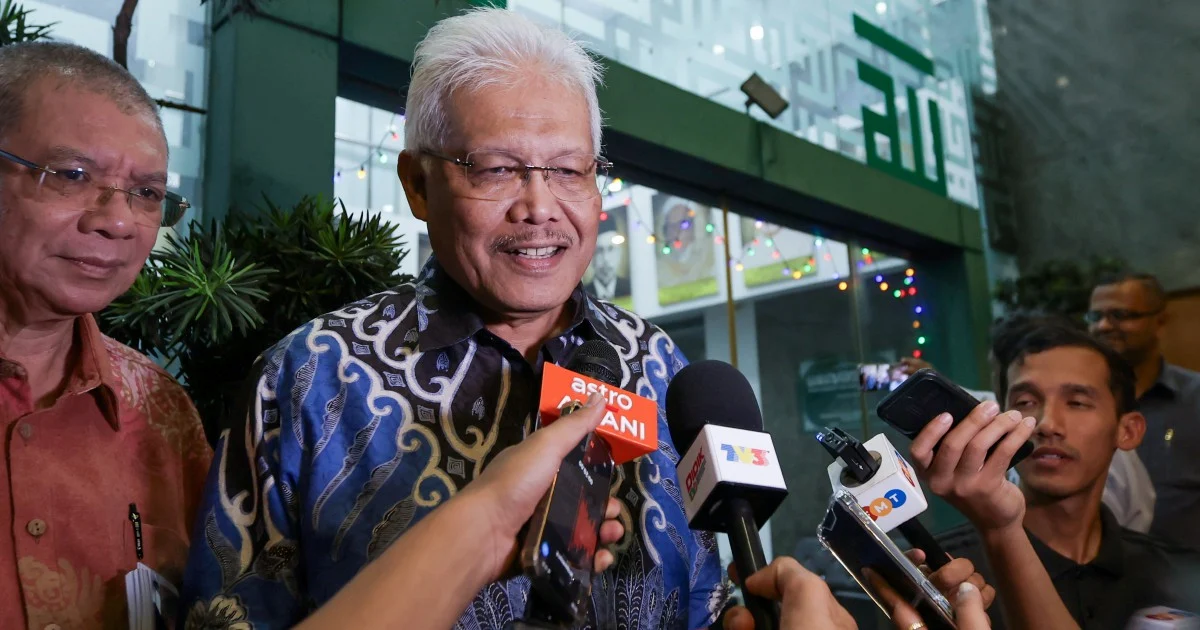
Perikatan Nasional has completed the formal procedural step required to reinstall Datuk Seri Hamzah Zainudin as opposition leader in the Dewan Rakyat, with PN chief whip Datuk Seri Takiyuddin Hassan submitting the necessary notification to the Speaker's office on Monday. The move formalises the coalition's decision and triggers the official recognition of Hamzah in the parliamentary leadership post, a position that carries significant procedural authority and resources within the legislative chamber.
The reappointment represents a consolidation of PN's parliamentary standing following what appears to have been an internal reorganisation or temporary transition period within the opposition coalition. Hamzah's return to the opposition leader role underscores the relative stability of PN's position in the Dewan Rakyat, where the bloc maintains sufficient numbers to claim the formal opposition status and the corresponding speaking rights and committee memberships that accompany the designation. This procedural formality, while routine in appearance, carries weight in parliamentary governance as it establishes the official leadership hierarchy recognised by the Speaker's office.
For Malaysian parliamentarians and observers, understanding the opposition leader position's significance requires recognition of its institutional role. Unlike mere faction leadership, the formally designated opposition leader commands preferential speaking time during debates, leads questioning of government policy, and holds considerable symbolic weight in orchestrating parliamentary scrutiny. The designation also carries budgetary allocations for research and administrative support, making it a substantive rather than merely ceremonial position.
PN's assertion of opposition leadership reflects the coalition's current parliamentary configuration. The bloc, comprising Bersatu, PAS, and smaller parties, has maintained cohesion around this designation, distinguishing itself from other non-government Members of Parliament who may sit independently or in smaller groupings. This structural clarity matters for parliamentary procedure, as the Speaker must recognise a single opposition leader to govern debate rules and committee allocations.
Takiyuddin's role as chief whip—the party mechanism responsible for maintaining discipline and coordinating parliamentary tactics—places him as the logical intermediary for submitting formal notifications. Chief whips typically handle such administrative requirements, positioning themselves as the official conduit between their coalition and the parliament's administrative machinery. His submission follows established protocol for such designations.
The timing and mechanics of this reappointment may signal shifts within PN's internal dynamics. Coalition leadership structures occasionally require recalibration when circumstances change, whether due to membership adjustments, electoral performance shifts, or strategic repositioning. Hamzah's reappointment suggests PN has resolved any questions about its parliamentary representation and leadership.
For the broader Malaysian political landscape, the opposition leader's role has evolved significantly in recent years. Previously, this designation fell routinely to the largest opposition party without contestation. Contemporary politics has seen more fluid arrangements, with coalitions like PN sometimes competing with independent MPs or smaller groupings for formal recognition. PN's successful assertion of opposition leadership indicates the coalition maintains sufficient internal cohesion and numerical strength to sustain this claim.
Hamzah, a seasoned parliamentarian with experience across multiple administrations, brings familiarity with the Speaker's office protocols and the expectations attached to opposition leadership. His reappointment likely reflects PN's confidence in his ability to manage the role's demanding schedule, which encompasses parliamentary strategy, media engagement, and coordination among diverse coalition members with sometimes divergent interests.
The submission to the Speaker's office follows a template established through decades of parliamentary practice. Once the notification receives formal acceptance, Hamzah's authority as opposition leader becomes crystallised in the parliamentary record, enabling him to exercise prerogatives that extend beyond informal influence. These include the right to pose supplementary questions during designated opposition questioning time and the ability to shape the parliamentary agenda around priority concerns his coalition wishes to spotlight.
For Malaysian readers tracking parliamentary dynamics, this development reflects the ongoing evolution of opposition politics in Southeast Asia's longest-serving parliamentary democracy. With government formation mechanisms increasingly flexible and coalition arrangements more fluid than historical patterns suggested, procedural formalities like opposition leader appointments take on heightened importance in clarifying parliamentary relationships and power structures.
PN's consolidated claim to opposition status also carries implications for how the coalition can coordinate scrutiny of government initiatives. A formally recognised opposition leader commands greater organisational capacity to orchestrate questioning, coordinate messaging among coalition members, and claim media attention for alternative policy positions. These capabilities matter not merely for parliamentary theatrics but for substantive governance, as effective opposition scrutiny can influence how governments refine policies before implementation.
The reappointment notification represents administrative confirmation of political reality rather than creating new circumstances. PN clearly occupies the opposition benches with sufficient parliamentary numbers to justify formal recognition as the principal opposition force. Takiyuddin's submission simply renders this arrangement official, enabling Hamzah to exercise the full panoply of opposition leader prerogatives with unambiguous parliamentary recognition.