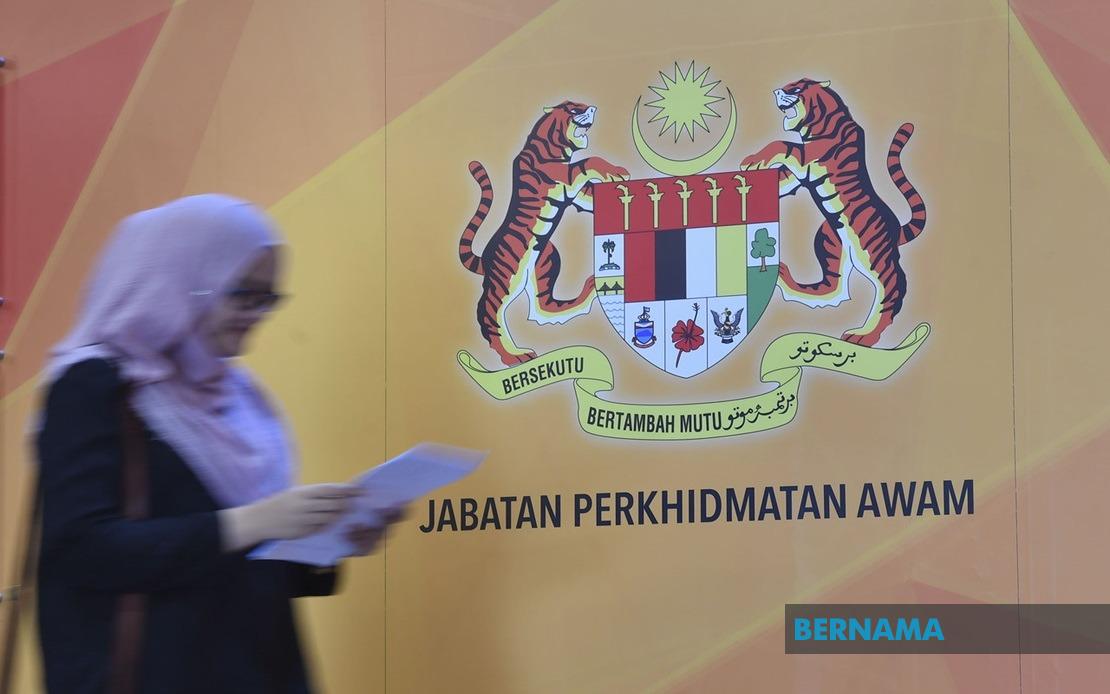
The Public Service Department, or JPA, has announced a significant educational opportunity for students graduating from secondary school in 2026, opening 640 sponsorship positions aimed at nurturing the nation's academic talent. This expansion represents the department's ongoing dedication to identifying and supporting high-achieving Malaysians who will contribute to the country's development agenda and strengthen its standing on the international stage. The initiative reflects broader government priorities under the MADANI framework, which emphasises building a skilled workforce capable of addressing contemporary challenges and advancing Malaysia's economic and social objectives.
The sponsorship offerings are structured across four distinct programmes, each designed to serve different educational pathways and aspirations. The National Sponsorship Programme provides 30 slots, while the Special Programme targeting Japan, Korea, France and Germany allocates 140 positions. The Special Programme for Domestic SPM Graduates makes available 200 slots for students choosing to study within Malaysia, and the JPA-MARA Special Programme (PKJM) offers the largest cohort with 270 sponsorship places. This tiered approach ensures that capable students have multiple entry points regardless of whether they aspire to international exposure or prefer to develop their expertise at home.
The fields covered by these sponsorships span critical sectors essential for Malaysia's future competitiveness. Engineering, science and technology dominate the offerings, reflecting the nation's push toward innovation and digital transformation. However, the programmes also recognise the importance of social sciences, acknowledging that Malaysia needs balanced human capital development across multiple disciplines. This comprehensive approach contrasts with narrower schemes that focus exclusively on STEM fields, demonstrating JPA's understanding that sustainable development requires expertise in humanities, economics, policy-making and other non-technical domains.
Students selected for sponsorship will gain access to premier educational institutions worldwide, with partnership agreements spanning the United States, Australia, Japan, South Korea, France, Germany, the United Kingdom and New Zealand. This geographic diversity provides recipients with exposure to different educational systems, research methodologies and cultural perspectives. For Malaysian students, studying at these institutions offers not only academic advancement but also professional networking opportunities and exposure to global best practices that they can subsequently bring back to Malaysia. Simultaneously, the domestic sponsorship track ensures that high-performing students have pathways to excellence without requiring overseas relocation, recognising both the financial and personal considerations that influence educational decisions.
A notable feature of the 2026 sponsorship cycle is the implementation of the Academic Merit-Based Convertible Loan (PBUA), introduced by JPA in June 2025. This financing mechanism represents a shift in how the department supports scholars, moving beyond traditional fully-funded grants to a model that emphasises individual responsibility and academic accountability. Under the PBUA framework, sponsorship recipients receive financial support conditional upon maintaining strong academic performance, creating incentive structures that align with quality outcomes. The convertible loan element suggests that exceptional performers may have portions of their financial obligations waived, rewarding sustained excellence throughout their tertiary education.
The financing innovation warrants closer examination for Malaysian observers. The PBUA model reflects international trends in higher education financing, where governments increasingly expect beneficiaries to share investment responsibility. This approach differs from earlier sponsorship schemes that provided outright grants without repayment expectations. For recipients, the convertible loan feature introduces both opportunity and obligation: superior academic performance can reduce or eliminate debt, but underperformance carries financial consequences. This structure incentivises serious engagement with studies while managing public expenditure on education—a balancing act that governments across Southeast Asia continue to navigate.
Application results became accessible beginning June 19, with candidates able to check outcomes through JPA's designated online portal from 10 am until 5 pm on June 22. This compressed window reflects the administrative efficiency required to process hundreds of applications and communicate outcomes to successful and unsuccessful candidates alike. The accessibility of results through digital systems represents standard practice in contemporary government services, though the tight timeline means applicants should monitor announcements carefully to avoid missing the deadline for checking results.
For successful applicants, the sponsorship represents a transformative opportunity that extends beyond financial support. Recipients gain status as government-sponsored scholars, a designation that often carries expectations of subsequent service to public institutions or sectors identified as national priorities. Many scholarship schemes globally include service bonds, requiring graduates to work for government departments or specified sectors for fixed periods, effectively converting educational investment into workforce development. While the announcement does not explicitly detail post-graduation obligations, Malaysian students should clarify such expectations before accepting sponsorship, as they substantially affect career trajectories.
The timing of this sponsorship cycle aligns with Malaysia's broader human capital strategy and regional competition for talented graduates. Neighbouring economies offer competing scholarship opportunities, and JPA's expansion to 640 slots demonstrates recognition that Malaysia must remain competitive in attracting and developing its brightest students. Countries like Singapore, Thailand and Vietnam have similarly aggressive scholarship programmes designed to funnel top talent into government and strategic industries. By expanding sponsorship availability, Malaysia signals commitment to retaining and cultivating domestic talent rather than ceding high-achieving students to other nations' educational systems.
For secondary school students currently in lower forms planning their academic trajectories, this sponsorship availability should inform subject selection and academic preparation. Excellence in science and mathematics becomes particularly valuable given engineering and technology's prominence in sponsorship coverage, though students with strong humanities records should not assume such fields are undervalued. The diversity of destination countries suggests that language proficiency and cross-cultural communication skills also carry weight, as students must function effectively in different educational environments. Parents and educators should encourage well-rounded development alongside disciplinary specialisation.
The sponsorship initiative also carries implications for educational equity within Malaysia. By offering multiple pathways through different programmes and maintaining domestic study options, JPA attempts to ensure that sponsorship access is not limited to urban centres with intensive tuition availability or families able to afford academic preparation. However, historical patterns in merit-based selection sometimes advantage students from better-resourced schools and backgrounds. JPA's commitment to excellence through the PBUA model could inadvertently reinforce existing disparities if selection processes do not adequately account for contextual differences in educational opportunity across Malaysia's diverse regions.
Looking ahead, the 640-slot allocation establishes baseline capacity for government-sponsored tertiary education, but demand significantly exceeds supply given that roughly 400,000 students complete SPM annually. This means that even successful applicants represent less than 0.2 percent of the cohort, making sponsorship highly competitive and reserved for the academically exceptional. Students and families should view sponsorship as a meaningful but unlikely outcome and simultaneously prepare alternative pathways through other scholarship schemes, educational loans and private funding options. The JPA sponsorship represents one component within Malaysia's broader higher education financing ecosystem, rather than a primary funding source for most students.