The Malaysia Agriculture, Horticulture and Agrotourism Show (MAHA) 2026 is set to become a landmark event for the regional agricultural sector, with Agriculture and Food Security Minister Datuk Seri Mohamad Sabu announcing that the biennial exhibition will for the first time welcome a substantial contingent of foreign exhibitors. This strategic expansion reflects growing recognition that agriculture increasingly demands cross-border collaboration and knowledge exchange to address shared challenges in food production and supply chain resilience.
Countries that have formally committed to participating include Brazil, China, the United States, Japan, South Korea, and Hungary, alongside China's Guangxi region. Additional commitments are expected, with Uzbekistan signalling its intent to join and several other nations still in advanced discussions. The scale and geographic diversity of international participation underscore the event's emergence as a significant platform for global agricultural dialogue and commerce within the Southeast Asian context.
Datuk Seri Mohamad framed the international expansion within the broader framework of food security interdependence. He emphasised that no nation can independently resolve all its food challenges, and that when disasters disrupt agricultural production in one country, neighbouring and trading partners must be positioned to provide support. This philosophical underpinning reveals how MAHA 2026 serves not merely as a trade fair but as a mechanism for building resilience networks across the Asia-Pacific region—a consideration of particular relevance to Malaysia, which imports significant volumes of agricultural commodities and faces its own vulnerabilities to climate shocks and supply disruptions.
The participation of developed agricultural economies such as the United States, Brazil, and South Korea will expose Malaysian farmers, agribusiness entrepreneurs, and agricultural policymakers to cutting-edge production techniques and technologies. Agriculture and Food Security Ministry secretary-general Datuk Isham Ishak highlighted that the international presence creates learning opportunities for local participants seeking to upgrade their knowledge of contemporary farming methods and agricultural innovations. For a nation gradually transitioning toward higher-value agricultural production and seeking to reduce dependency on imports, such exposure to global best practices carries substantial strategic value.
Beyond knowledge transfer, MAHA 2026 will incorporate structured business-matching sessions designed to facilitate direct commercial transactions between Malaysian and foreign exhibitors. These sessions will enable local agricultural producers and value-added food processors to establish export pathways and secure supply relationships with international buyers. Conversely, Malaysian distributors and retailers will have curated access to foreign agricultural products and services, potentially widening consumer choice and creating competitive pressures that drive efficiency improvements across the local supply chain.
The event's structural design emphasises reciprocal commercial benefits. Local participants gain visibility in international markets and opportunities to negotiate bulk supply agreements, technology partnerships, or joint venture arrangements with foreign counterparts. Simultaneously, international exhibitors access a concentrated market of Malaysian agricultural stakeholders, retail buyers, and food industry professionals, reducing their marketing costs compared to establishing permanent regional offices. This mutual advantage structure increases the likelihood of substantive business outcomes rather than superficial trade show attendance.
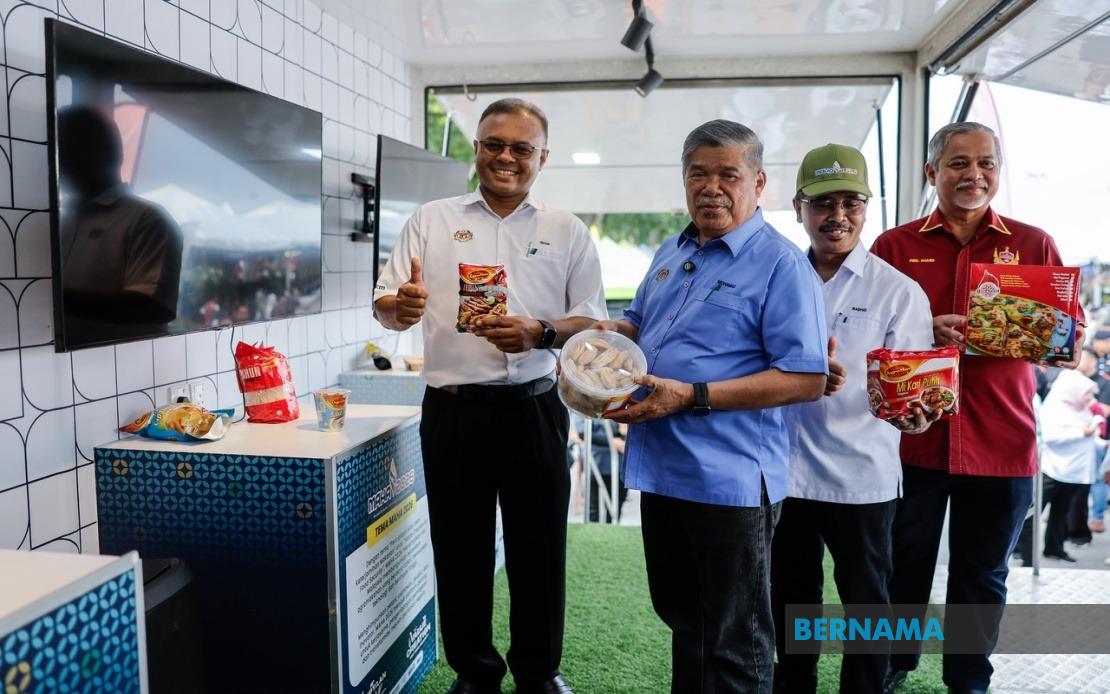
Parallel to the MAHA 2026 announcement, Datuk Seri Mohamad launched the Surveillance and Intervention Supply Demand Agrofood (SISDA), a data-driven monitoring system that addresses long-standing challenges in agricultural market transparency and stability. SISDA integrates big data analytics and machine learning algorithms to track supply volumes, demand patterns, and price movements across Malaysia's agrifood sector in near-real time. This technological infrastructure permits government agencies to identify emerging bottlenecks, predict supply shortages, and implement targeted interventions before consumer price spikes or farmer income collapses occur.
The SISDA platform represents a modernisation of Malaysia's historically ad-hoc approach to agricultural market management. By automating data collection and analysis, the system reduces response times in government food policy decisions and provides transparency that benefits both producers and consumers. Farmers gain advance notice of market conditions that affect crop planning decisions, while consumers benefit from stable pricing enabled by accurate supply forecasting. For retail and institutional food buyers, SISDA offers predictability essential for inventory planning and cost control.
Integrating SISDA into the broader MAHA 2026 framework creates synergies between external market opening and internal supply chain intelligence. As international exhibitors demonstrate advanced technologies and competing products, domestic producers equipped with SISDA insights can make informed decisions about which international partnerships or technologies merit investment. Conversely, foreign participants gain access to aggregated Malaysian market data, reducing their own risks in identifying customer segments and supply opportunities. This convergence of trade facilitation and data infrastructure positions MAHA 2026 as more than a promotional event—it becomes a mechanism for structural modernisation of Malaysia's agricultural economy.
For Malaysian visitors, MAHA 2026 will serve as a comprehensive marketplace where agricultural innovation, both imported and homegrown, converges with real-time market intelligence. Smallholder farmers can explore mechanisation solutions demonstrated by international suppliers while understanding which technologies align with current and projected market demand. Agrotourism operators can benchmark their offerings against international competitors and identify niche market segments. Value-added food producers can discover input suppliers and equipment manufacturers previously inaccessible through conventional procurement channels.
The strategic timing of MAHA 2026 also reflects Malaysia's positioning within regional agricultural trade dynamics. With ASEAN trade agreements progressively liberalising agricultural commerce, Malaysian producers face intensifying competition from Thailand, Vietnam, and Indonesia. Simultaneously, demand for Malaysian products in developed markets depends on adoption of international quality and safety standards that MAHA's international contingent exemplifies. By hosting a globally integrated agricultural exhibition, Malaysia signals confidence in its ability to compete on regional and international stages, while creating a platform for local stakeholders to accelerate adaptation to changing market structures.
The success of MAHA 2026 will likely be measured not just by visitor attendance or transaction volumes, but by the durability of business relationships and technology partnerships initiated during the event. Policymakers should anticipate that international participants will evaluate Malaysia's agricultural regulatory environment, infrastructure quality, and business climate alongside the exhibition experience. Positive impressions may translate into increased investment in Malaysian agricultural ventures or expansion of existing regional operations. Conversely, shortcomings in logistics, payment systems, or regulatory clarity could deter longer-term engagement, suggesting that preparation extending beyond the exhibition floor itself remains essential to realising the full potential of internationalising MAHA.