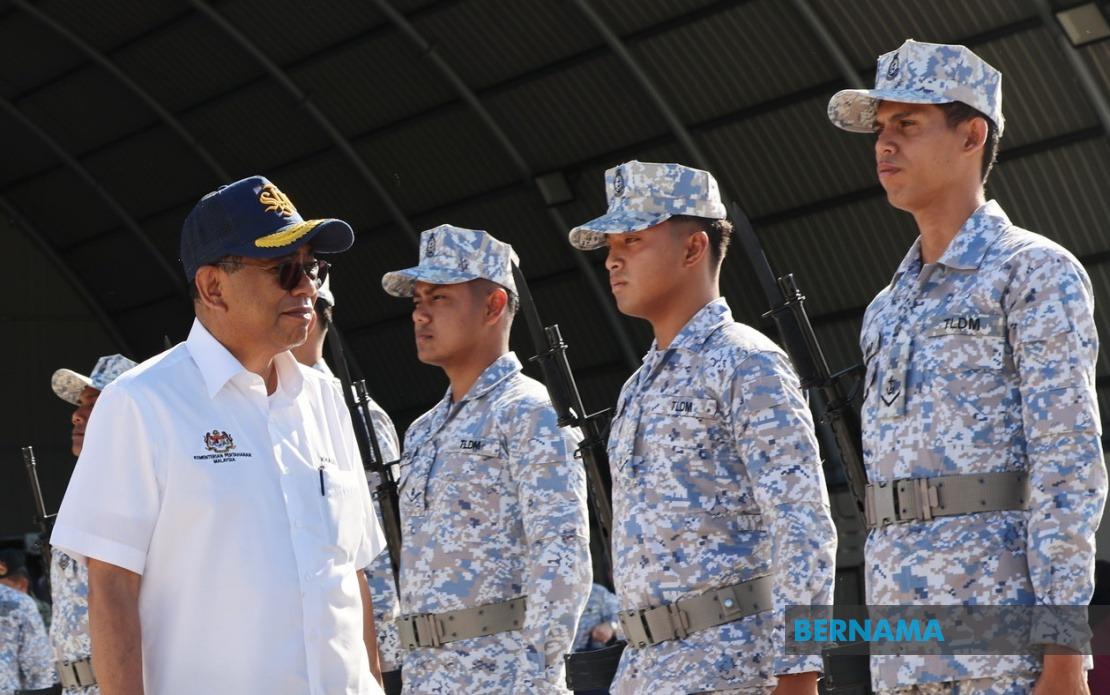
Malaysia is accelerating its military infrastructure programme at Layang-Layang Island, a strategically vital outpost in the South China Sea, with Defence Minister Datuk Seri Mohamed Khaled Nordin announcing plans to install an advanced air defence radar system operational by 2029. The move represents a significant investment in fortifying the Royal Malaysian Navy's LIMA Station, signalling Kuala Lumpur's determination to maintain its presence in one of the world's most contested maritime zones where overlapping territorial claims remain unresolved.
Located approximately 270 kilometres from Labuan in Sabah and covering just 35 hectares, Layang-Layang Island has served as the country's forward operating base in the South China Sea since its establishment on April 17, 1984. Beyond its defensive role, LIMA Station functions as a critical hub for intelligence gathering, logistical support for naval vessels, and coordination with the Malaysian Maritime Enforcement Agency. The island's strategic value extends beyond military considerations—it represents a physical manifestation of Malaysia's sovereignty claims in an area where geopolitical tensions periodically surface.
The South China Sea remains one of Asia's most complex security challenges, with competing claims from China, Vietnam, and the Philippines creating an environment of persistent diplomatic tension and occasional military posturing. Malaysia's approach has historically emphasised a measured presence without aggressive escalation, a policy that the Defence Minister reiterated during his recent operational visit to the island. By enhancing detection capabilities through air defence radar integration alongside the existing maritime surveillance systems, Malaysia seeks to monitor activities more comprehensively while maintaining what it characterises as a non-provocative stance.
The air defence radar installation represents only one component of a broader infrastructure modernisation strategy. Site preparation work will commence ahead of the system's full deployment, requiring careful coordination between defence agencies and construction specialists. This phased approach allows for technical assessments and potential adjustments before the radar becomes fully operational in 2029. The timeline reflects the complexity of operating in such a remote location where weather conditions, supply chain logistics, and engineering challenges present substantial obstacles.
Beyond surveillance capabilities, the Defence Ministry plans comprehensive improvements addressing personnel welfare and operational sustainability. These include upgrades to water and electricity supply systems, enhanced food provisions, expanded accommodation facilities, and improved logistical support. Such developments recognise that maintaining effective military operations depends equally on technological sophistication and the wellbeing of service personnel stationed far from mainland Malaysia. The island's isolated location creates unique challenges for recruitment and retention, making quality-of-life improvements essential for sustained operational effectiveness.
The modernisation strategy incorporates emerging technologies that extend Malaysian surveillance reach without requiring permanent human presence in vulnerable locations. Unmanned systems and advanced monitoring platforms will complement traditional radar infrastructure, providing enhanced maritime domain awareness across broader ocean areas. These capabilities address a fundamental operational gap—the vast distances involved in monitoring the South China Sea relative to available naval resources. For Malaysia, technological force multiplication offers a cost-effective approach to asserting presence and maintaining situational awareness.
The Defence Ministry has also identified Layang-Layang Island's significant research potential as deserving systematic exploitation. The marine ecosystem surrounding the island, including coral reef sustainability and biodiversity conservation, presents valuable research opportunities that could justify international scientific collaboration. By positioning the island as a research hub in addition to its military role, Malaysia creates opportunities for advancing environmental knowledge while simultaneously reinforcing its territorial presence through civilian scientific activities. This dual-use approach demonstrates sophisticated strategic thinking about how military infrastructure can serve broader national interests.
Integrating research activities with defence operations requires coordination between military authorities, environmental agencies, and higher education institutions. Malaysia's maritime economy expansion depends partly on understanding and sustainably managing South China Sea marine resources. Research conducted from Layang-Layang Island could contribute significantly to fisheries management, biodiversity protection, and climate-related oceanic studies. This integration positions the island as more than a strategic military asset, transforming it into a multifunctional national resource centre with implications for environmental policy and economic development.
For Southeast Asian observers, Malaysia's infrastructure investment carries broader implications regarding regional security dynamics. The upgrade demonstrates confidence in long-term stability despite geopolitical uncertainties, and signals that Malaysia intends maintaining its claims through continuous, patient presence rather than confrontational posturing. The approach contrasts with more aggressive territorial assertion strategies, potentially offering a model of pragmatic sovereignty maintenance that respects international law while unambiguously establishing effective control.
The 2029 timeline for radar operationalisation aligns with broader defence modernisation cycles affecting multiple Southeast Asian nations. Vietnam, Indonesia, and the Philippines have similarly invested in surveillance and naval capabilities, reflecting shared concerns about maritime security and resource protection. Malaysia's incremental approach—combining defensive infrastructure, technological upgrades, research initiatives, and personnel welfare improvements—reflects strategic patience and recognition that South China Sea stability depends on sustained commitment rather than dramatic military escalation.
The Defence Ministry's comprehensive strategy demonstrates how island infrastructure serves multiple strategic objectives simultaneously. Military effectiveness, personnel sustainability, research advancement, and diplomatic messaging converge at locations like Layang-Layang Island. By continuing development without provocative actions, Malaysia maintains its position as a responsible maritime stakeholder committed to sovereignty while respecting international norms. The success of this approach over decades, combined with planned upgrades, suggests Malaysia views persistent, well-resourced presence as the optimal strategy for protecting its national interests in contested waters where legal claims remain unresolved and geopolitical competition continues evolving.

