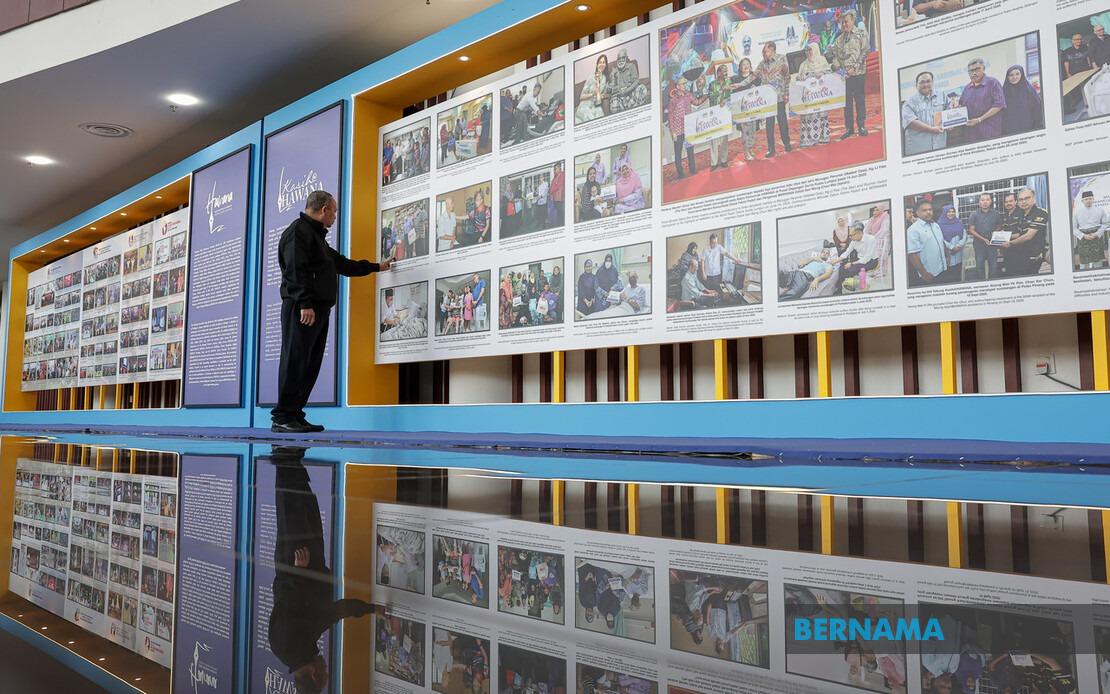
Penang is hosting a landmark gathering of Malaysia's media community this week as the National Journalists' Day (HAWANA) 2026 celebration unfolds across Butterworth, bringing together industry bodies and practitioners to examine the profession's evolution and strengthen journalistic standards. The multi-day event represents more than ceremonial recognition—it reflects the sector's determination to tackle fundamental questions about sustainability, credibility and relevance in an era of rapid technological change.
Preceding tomorrow's main ceremony, the Malaysian Federation of Media Clubs (GKMM) convened its Malaysia Media Retreat 2.0, drawing participants from 15 media clubs spanning the nation. The gathering served dual purposes: reinforcing professional bonds among journalists and editors scattered across Malaysia's diverse media landscape, while simultaneously evaluating the federation's trajectory since its formal establishment on October 24, 2022. For an organisation still in its relative infancy, the retreat provided crucial space to assess institutional progress and chart strategic direction as the sector navigates transformative pressures.
Mohamad Fauzi Ishak, GKMM's president, emphasised that such collaborative platforms strengthen the federation's cohesion while offering opportunities to reflect on achievements and challenges accumulated since the organisation's founding. He noted that the retreat would inform discussions at GKMM's upcoming third annual general meeting, scheduled to proceed without electoral proceedings, suggesting the body has moved beyond foundational questions toward consolidated governance. The presence of Communications Minister Datuk Fahmi Fadzil, alongside senior figures from Bernama including Chief Executive Officer Datin Paduka Nur-ul Afida Kamaludin and Editor-in-Chief Arul Rajoo Durar Raj, underscored government commitment to supporting media industry development and professional standards.
The Malaysian Press Institute (MPI) anchored its contribution to HAWANA 2026 through a thought-provoking town hall session held at Han Chiang University College of Communication, posing a provocative question to participants: "2035: Will Journalists Still Exist?" This framing, though seemingly alarmist, reflects genuine uncertainties permeating the global journalism profession as artificial intelligence systems increasingly automate content production, algorithmic platforms reshape information distribution, and reader preferences migrate toward digital-first consumption. The question goes beyond mere employment anxiety; it addresses whether traditional journalistic functions—investigative reporting, editorial gatekeeping, public interest advocacy—will survive in recognisable forms.
Industry heavyweights assembled for the town hall, including MPI president Datuk Yong Soo Heong, New Straits Times Press (NSTP) deputy group managing editor for News and Current Affairs Farrah Naz Abd Karim, and Media Prima News and Current Affairs group editor Azhari Muhidin. These senior editorial figures represent Malaysia's largest media conglomerates, whose newsrooms face immediate pressures from digital disruption. Their participation acknowledged that journalism's future cannot be determined by individual outlets working in isolation; rather, the sector must develop collective responses to shared existential challenges. The town hall format permitted candid discussion of artificial intelligence's implications for reporting workflows, fact-checking procedures, and the human editorial judgment that distinguishes professional journalism from algorithmic content curation.
Tonight's launch of the three-day RIUH @ HAWANA Carnival at PICCA Convention Centre @ Butterworth Arena signals that HAWANA 2026 extends beyond insular professional discussions to engage the broader public. This carnival component acknowledges that journalism's credibility crisis cannot be resolved through industry self-talk alone; rebuilding public trust requires transparent dialogue about how news is gathered, verified and presented. Malaysian readers, like audiences globally, have grown increasingly sceptical of media institutions, necessitating direct engagement demonstrating professional commitment to accuracy and fairness.
Tomorrow's main ceremony will feature Prime Minister Datuk Seri Anwar Ibrahim as the presiding dignitary, signalling the government's recognition of media's societal importance. The gathering, anticipated to draw approximately 1,000 journalists and media professionals from within Malaysia and internationally, positions HAWANA 2026 as the nation's paramount forum for acknowledging journalism's contributions while addressing sector-wide concerns. The deliberate positioning of Malaysia's top political leadership underscores that media independence and professionalism rank among national priorities, not peripheral industry matters.
The overarching theme—"Media Integrity, Foundation of Credibility"—directly confronts the erosion of institutional trust affecting newsrooms across Southeast Asia. Integrity here encompasses multiple dimensions: factual accuracy, transparent sourcing, clear separation between news and opinion, and resistance to partisan or commercial capture. For Malaysian practitioners operating in a complex media environment encompassing state broadcasters, private conglomerates, and digital startups, this emphasis on foundational principles provides common ground transcending corporate rivalries and commercial competition.
The Malaysian Media Council (MMC) has scheduled engagement sessions with practitioners attending from Malaysia's northern region, recognising that meaningful dialogue requires localised interaction beyond centralised conferences. Regional media clubs often face distinct challenges—resource constraints in smaller markets, language considerations, varying regulatory environments—that national organisations must acknowledge and address. By incorporating regional perspectives into HAWANA 2026's programming, organisers demonstrate understanding that journalism's future depends on strengthening the entire sector, not merely flagship outlets based in Kuala Lumpur.
Wider Southeast Asian context matters significantly here. Neighbouring countries including Thailand, Indonesia, and the Philippines grapple with similar pressures from digital disruption, artificial intelligence, and shrinking advertising revenues that sustained traditional media business models. Malaysia's deliberate confrontation of these challenges through structured industry reflection and dialogue potentially positions the nation as a regional leader in thoughtfully adapting journalism to technological change while preserving professional standards and public-interest orientation.
The concentration of diverse programming—retreats, town halls, networking sessions, carnival activities—over several days reflects recognition that media sector transformation requires sustained engagement rather than one-time conference attendance. Journalists, editors and media leaders scattered across Malaysia encounter different working conditions, economic pressures, and professional challenges depending on their employers and locations. Bringing them together permits knowledge-sharing about effective responses to digitalisation, exploration of emerging business models, and mutual support networks that strengthen individual resilience amid industry-wide uncertainty.
%22%2F%3E%3C%2Fpattern%3E%3C%2Fdefs%3E%3Crect%20width%3D%22100%25%22%20height%3D%22100%25%22%20fill%3D%22url(%23ph4hbbfg)%22%2F%3E%3Crect%20width%3D%22100%25%22%20height%3D%22100%25%22%20fill%3D%22url(%23ph4hbbfp)%22%2F%3E%3Ctext%20x%3D%2250%25%22%20y%3D%2250%25%22%20text-anchor%3D%22middle%22%20dominant-baseline%3D%22central%22%20fill%3D%22rgba(255%2C255%2C255%2C0.95)%22%20font-family%3D%22Georgia%2C%20'Times%20New%20Roman'%2C%20serif%22%20font-weight%3D%22700%22%20font-size%3D%22320%22%20letter-spacing%3D%22-0.02em%22%3EUS%3C%2Ftext%3E%3C%2Fsvg%3E)
%22%2F%3E%3C%2Fpattern%3E%3C%2Fdefs%3E%3Crect%20width%3D%22100%25%22%20height%3D%22100%25%22%20fill%3D%22url(%23ph3e48rg)%22%2F%3E%3Crect%20width%3D%22100%25%22%20height%3D%22100%25%22%20fill%3D%22url(%23ph3e48rp)%22%2F%3E%3Ctext%20x%3D%2250%25%22%20y%3D%2250%25%22%20text-anchor%3D%22middle%22%20dominant-baseline%3D%22central%22%20fill%3D%22rgba(255%2C255%2C255%2C0.95)%22%20font-family%3D%22Georgia%2C%20'Times%20New%20Roman'%2C%20serif%22%20font-weight%3D%22700%22%20font-size%3D%22320%22%20letter-spacing%3D%22-0.02em%22%3EPAS%3C%2Ftext%3E%3C%2Fsvg%3E)
%22%2F%3E%3C%2Fpattern%3E%3C%2Fdefs%3E%3Crect%20width%3D%22100%25%22%20height%3D%22100%25%22%20fill%3D%22url(%23ph5u2f8g)%22%2F%3E%3Crect%20width%3D%22100%25%22%20height%3D%22100%25%22%20fill%3D%22url(%23ph5u2f8p)%22%2F%3E%3Ctext%20x%3D%2250%25%22%20y%3D%2250%25%22%20text-anchor%3D%22middle%22%20dominant-baseline%3D%22central%22%20fill%3D%22rgba(255%2C255%2C255%2C0.95)%22%20font-family%3D%22Georgia%2C%20'Times%20New%20Roman'%2C%20serif%22%20font-weight%3D%22700%22%20font-size%3D%22151%22%20letter-spacing%3D%22-0.02em%22%3EPerikatan%3C%2Ftext%3E%3C%2Fsvg%3E)