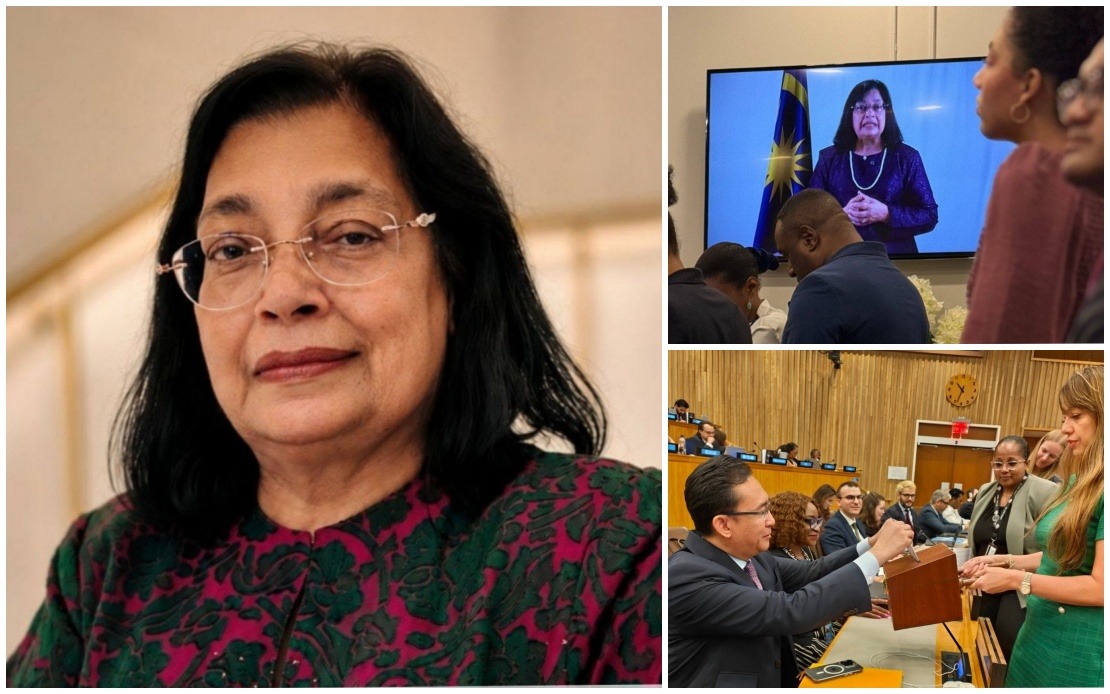
Malaysia has achieved a significant diplomatic victory at the United Nations, with Datuk Yasmeen Muhamad Shariff winning election to the Committee on the Rights of the Child for the 2027–2031 term. The election, held at UN Headquarters in New York on Tuesday during the 21st Meeting of States Parties to the Convention on the Rights of the Child, saw Yasmeen securing 136 votes from the 189 States Parties present and voting—the highest tally in the election. Her selection underscores the international community's recognition of Malaysia's commitment to child protection and welfare on the global stage.
This is not Yasmeen's maiden appointment to the prestigious committee. She previously served as a member during the 2013–2017 term, making her re-election a testament to the impact of her work and the respect she commands among UN member states. The fact that she garnered the strongest support among all candidates reflects the confidence placed in her by the international community. Her expertise and track record in advancing children's rights have clearly resonated with voting nations, positioning Malaysia as a credible voice in global child protection discussions.
As a committee member, Yasmeen will function as an independent expert serving in her personal capacity rather than as a government representative. This distinction is important for the committee's work, as it allows members to provide impartial analysis and recommendations on child rights issues without direct governmental constraints. Her role will encompass monitoring how countries implement the Convention on the Rights of the Child, engaging in constructive dialogue with States Parties to address implementation challenges, and promoting a rights-based approach to global issues affecting children. These functions position the committee at the intersection of advocacy, oversight, and practical policy development.
The committee's work carries particular significance in today's context. Children globally face mounting challenges ranging from armed conflict and displacement to the digital exploitation facilitated by technology and the lasting impacts of pandemic disruptions on education and mental health. The committee's mandate to promote a rights-based approach to these complex, interconnected problems makes the positions highly consequential. By securing a seat held by an expert of Yasmeen's calibre, Malaysia ensures that Southeast Asian perspectives and experiences with child welfare issues will be represented in these critical deliberations.
The Foreign Ministry's statement emphasised that Yasmeen's election reflects international recognition of Malaysia's broader efforts to advance children's rights domestically. The ministry characterised this diplomatic success as validation of the country's inclusive policies, legal reforms, and programmes designed to enable every child to fulfil their potential. This framing is significant because it connects Malaysia's international standing on child rights to its domestic policy frameworks, suggesting that the country's international credibility stems from substantive commitment rather than mere diplomatic positioning.
Malaysia's continued engagement with the convention and its commitment to constructive international cooperation on child protection matters remain central to the ministry's messaging. The Foreign Ministry stated that Malaysia will persist in engaging with all stakeholders to address current challenges affecting children, positioning the country not merely as a participant in global discussions but as an active contributor to solutions. This language reflects Malaysia's broader foreign policy approach of emphasising multilateralism and cooperative engagement on humanitarian issues.
The ministry also acknowledged the critical role of the Ministry of Women, Family and Community Development in facilitating Yasmeen's successful nomination. This institutional coordination highlights how Malaysia's successful international campaigns often depend on collaborative effort across government agencies, each bringing relevant expertise and networks. The Women, Family and Community Development ministry's involvement underscores the connection between child rights advocacy and broader family and community policy, reflecting an integrated approach to social protection.
Yasmeen's re-election arrives at a moment when global attention to children's rights continues to intensify. International bodies increasingly recognise that protecting children requires coordinated action across multiple policy domains—education, health, justice, protection from violence, and participation in decisions affecting their lives. The committee's role in monitoring state implementation and promoting dialogue positions it as a crucial mechanism for holding countries accountable while simultaneously fostering collaborative problem-solving. Experts serving on such committees effectively bridge the gap between international standards and domestic implementation.
For Malaysia specifically, having a highly-respected expert on the committee enhances the country's soft power in the region and globally. It signals to other nations that Malaysia takes child protection seriously and possesses expertise worthy of international recognition. In Southeast Asia, where child welfare challenges range from labour exploitation to trafficking to educational disparities, having Malaysian voices on global decision-making bodies can amplify regional concerns and bring Southeast Asian perspectives to international dialogues that might otherwise be dominated by voices from wealthier nations.
The election results also carry implications for Malaysia's broader UN engagement strategy. Strong electoral performances in UN body elections enhance a country's diplomatic standing and influence in subsequent negotiations on other matters. Yasmeen's commanding vote total suggests that Malaysia has successfully cultivated international relationships and reputation that translate into concrete diplomatic support. This success provides momentum for potential future candidacies and demonstrates Malaysia's capacity to mobilise UN membership support around substantive figures.
Looking forward, Yasmeen's term beginning in 2027 will coincide with ongoing global debates about child rights in rapidly changing contexts. Issues such as artificial intelligence and child safety, climate change impacts on children, and post-pandemic recovery in education and mental health will likely feature prominently in the committee's work. Her expertise will be valuable in helping the international community navigate these emerging challenges while maintaining focus on foundational child protection principles. Malaysia's success in securing her re-election ensures the country will maintain a seat at the table where these crucial conversations occur.

