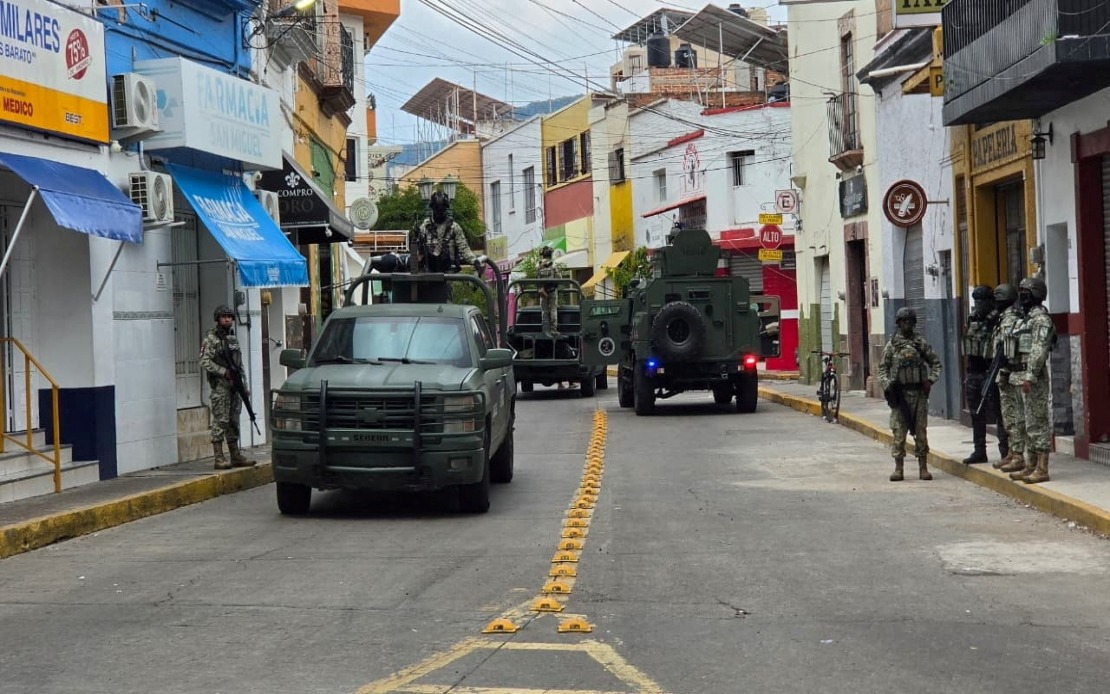
Mexico's government has secured a significant victory in its fight against organised crime with the arrest of Ramon Angel, a suspected high-ranking operative within the Jalisco New Generation Cartel (CJNG), on charges of orchestrating the killing of Uruapan Mayor Carlos Manzo. Security Minister Omar Garcia disclosed the development through a social media post on Thursday, revealing that months of intelligence gathering and coordinated law enforcement work culminated in Angel's detention following a joint operation involving police, special forces and military units.
The assassination of Manzo on November 1, 2025, during Mexico's Day of the Dead celebrations, sent shockwaves through the nation and catalysed a sweeping investigation that has thus far resulted in 31 arrests spanning cartel members and elements within the late mayor's own protective detail. The killing transformed Manzo into a potent symbol of the endemic political violence that continues to plague Mexico, particularly in states like Michoacan where drug trafficking organisations have entrenched themselves through decades of territorial dominance and systematic intimidation.
Garcia identified Angel, operating under the alias "El R1," as the principal strategist behind what the government characterises as a "cowardly" crime. Angel holds a commanding position within the CJNG's operational hierarchy, functioning as a leader of a specialised armed cell responsible for executing the cartel's most sensitive and violent operations across multiple jurisdictions.
The group Angel headed, known as "Los Rs," ranks among the most destructive criminal cells affiliated with the CJNG. Operating across Apatzingan, Uruapan, and Morelia in Michoacan state, as well as extending into neighbouring Jalisco, Los Rs maintains involvement in a constellation of serious crimes encompassing extortion rackets, contract killings, and large-scale narcotics trafficking. The cell's reach and ruthlessness have made it a principal driver of violence in one of Mexico's most troubled regions.
Manzo's tenure as Uruapan's municipal leader had positioned him as a defiant voice against cartel influence at a time when such public resistance carries extraordinary personal risk. He campaigned on an explicitly hardline anti-organised crime platform, pledging to systematically dismantle cartel control over municipal governance and territorial operations within his jurisdiction. His election represented a rare instance of popular support for direct confrontation with criminal structures that typically exercise power through violence and intimidation rather than democratic consent.
The assassination occurred against the backdrop of relentless turf warfare between competing cartel factions and security operations, rendering Uruapan and surrounding municipalities perpetually volatile. Michoacan has long represented one of Mexico's most contested geographical and criminal battlegrounds, with various organisations fighting for control of territory, smuggling routes, and extortion networks. The violence has become so normalised that civic leadership positions increasingly carry de facto death sentences, deterring qualified candidates from assuming public office.
Manzo's murder generated an extraordinary nationwide response, mobilising citizens across multiple states in demonstrations against political violence and criminal impunity. His death galvanised public consciousness around the systemic failure of state institutions to protect elected officials, even at the municipal level, and exposed the degree to which criminal organisations operate with near-total freedom in certain regions. The widespread outrage reflected deeper anxieties about state capacity and the viability of democratic governance in zones where cartel power supersedes governmental authority.
The arrest of Angel represents a tactical success for Mexican security forces in their ongoing campaign against the CJNG, currently the country's most formidable criminal organisation. The cartel's structure, which bifurcates operational control among regional cells led by powerful enforcers like Angel, has enabled it to maintain influence across vast territories despite sustained government pressure. Removing high-ranking operatives temporarily disrupts command chains and operational effectiveness, though cartels typically rapidly reconstitute leadership and adjust tactics.
For regional observers including Malaysian policymakers and security analysts, the Manzo assassination and subsequent enforcement operation underscore the magnitude of challenges facing governments confronting entrenched organised crime with significant resource advantages and operational sophistication. The case demonstrates both the vulnerability of state officials when cartels determine their elimination serves strategic purposes and the investigative capabilities that security services can mobilise when political will exists. The involvement of the mayor's own security detail in the assassination plot further illustrates how thoroughly criminal organisations penetrate state institutions, corrupting officials at multiple levels.
Michoacan's persistent instability reflects the historical failure of successive Mexican administrations to establish effective territorial governance in regions where cartels have accumulated structural power spanning decades. Unlike conventional criminal enterprises, modern cartel operations function as quasi-governmental entities providing security, dispute resolution and economic opportunity to communities in their territories, generating social bases that complicate law enforcement responses. Breaking such entrenchment requires not merely removing individual operators but rebuilding state institutional capacity and legitimacy.
The investigation yielding Angel's arrest demonstrates that despite Mexico's overwhelming challenges, security services retain investigative competence and capacity to identify and apprehend major figures responsible for high-profile crimes. However, sustained pressure on the CJNG and other organisations requires institutional reforms addressing corruption, resource constraints, and the absence of witness protection mechanisms that would enable prosecutions to proceed through the formal justice system.
Angle's detention may facilitate the investigation into Manzo's assassination and broader Los Rs operations, potentially yielding intelligence about cartel command structures, territorial disputes, and relationships with corrupt officials. However, analysts caution against overestimating the tactical significance of individual arrests in confronting organisations whose structural advantages and economic resources enable rapid adaptation and reconstitution.
The case ultimately reflects Mexico's continuing vulnerability to criminal organisations that have accumulated territorial control, institutional penetration, and operational sophistication over years of governmental neglect and institutional weakness. While tactical victories like Angel's arrest provide symbolic reassurance, addressing Mexico's organised crime challenge requires comprehensive institutional reform and long-term commitment to establishing state authority across all territories.

