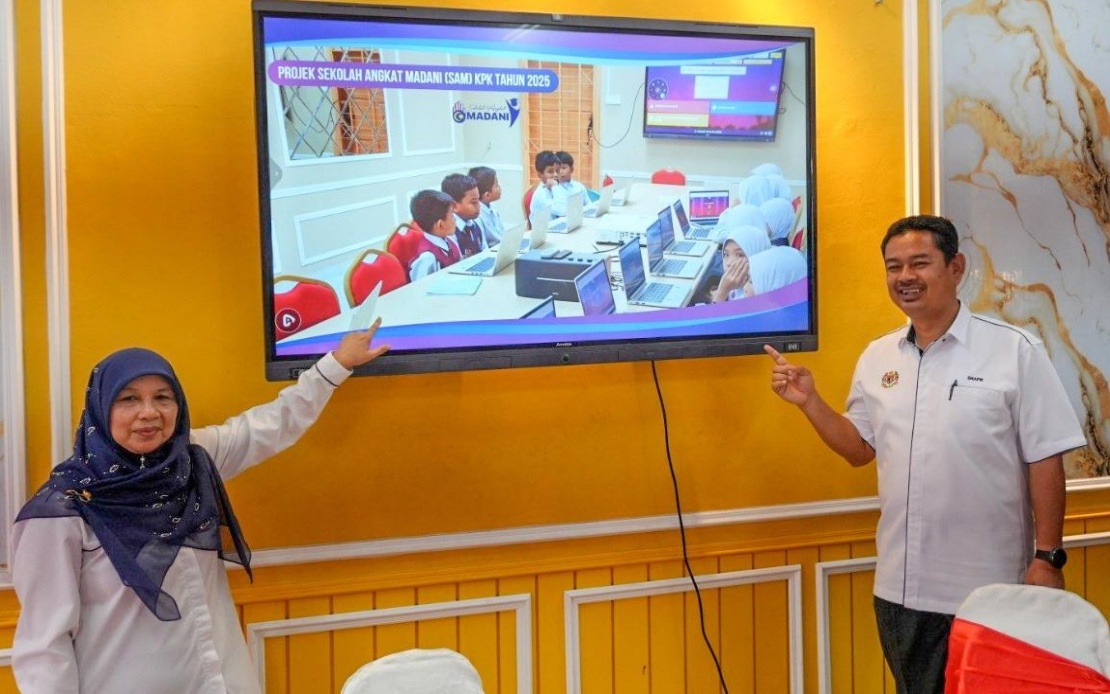
The Ministry of Plantation and Commodities has pledged RM100,000 towards comprehensive improvements at SK Bendang Kering in Kuala Kangsar, Perak, as part of its broader commitment to narrowing educational disparities between urban and rural communities. The allocation was formally handed over at the school on June 19, with the ceremony led by KPK deputy secretary-general (Strategic Planning and Management) Shafie Taib, signalling the government's intention to ensure that peripheral communities benefit from contemporary educational standards and infrastructure.
The Malaysian Rubber Board has assumed responsibility for coordinating the adoption programme on behalf of the ministry, reflecting a strategic partnership within the broader education sector initiative. This collaborative approach underscores how sector-specific agencies can contribute to national educational development beyond their traditional remits, positioning the adoption scheme as a multi-stakeholder initiative rather than a single-ministry effort. The involvement of the rubber board demonstrates the potential for commodity-focused organisations to leverage their resources and networks towards social development objectives, particularly in regions where their operational presence is significant.
The physical improvements channelled through this allocation encompass a sweeping modernisation of the school's infrastructure. The assembly area and main hall have undergone substantial upgrades, addressing spaces that serve dual functions as gathering points for academic and ceremonial activities. The establishment of dedicated reading corners and enhanced preschool classrooms reflects recognition that foundational learning environments shape student engagement from the earliest educational stages, with particular emphasis on creating welcoming spaces that encourage literacy development and curiosity among younger cohorts.
Technology integration forms a cornerstone of the upgrade strategy, with interactive smartboards installed to facilitate more dynamic classroom instruction. These devices enable educators to move beyond traditional chalk-and-talk methodologies, allowing for multimedia-enriched lessons that cater to diverse learning styles. The provision of air conditioning units addresses the practical challenge of maintaining student comfort and concentration in Malaysia's tropical climate, a factor that directly influences educational outcomes, particularly during long examination periods or intensive study sessions. Accompanying these technical enhancements, educational signage and new classroom furniture create a cohesive, modern learning environment that signals to students the institution's investment in their educational experience.
Beyond infrastructure, the programme introduces a structured academic performance framework concentrating on the fundamental subjects of Malay, English, Science, and Mathematics. This targeted approach acknowledges that proficiency in these core areas forms the bedrock upon which more specialised knowledge can be built, and that rural schools may benefit from concentrated support in these domains to help students compete on equal footing with peers in urban centres. The incentive structure embedded within this academic scheme—providing recognition and rewards for students achieving outstanding results—functions as a motivation mechanism that acknowledges individual progress while fostering a culture of aspiration within the school community.
Extracurricular and character-building dimensions receive equal emphasis through the introduction of the Student Leadership Motivation Camp and the Student Talent Development Camp. These initiatives recognise that education extends beyond academic credentials to encompass the cultivation of interpersonal, organisational, and creative capabilities that employers and universities increasingly value. By providing rural students with structured opportunities to explore leadership roles and showcase varied talents, the programme addresses a gap that often exists in peripheral communities where such enrichment programmes may be limited due to resource constraints. The camps also serve a levelling function, exposing rural students to peer networks and mentorship opportunities that might otherwise be geographically inaccessible.
The deliberate selection of SK Bendang Kering for this intervention reflects a calculated policy decision to prioritise rural localities that might otherwise experience educational stagnation. The ministry's statement emphasising the government's commitment to ensuring rural students access "quality, comfortable educational facilities that keep pace with contemporary educational developments" acknowledges an implicit equity principle: that geographic location should not determine educational opportunity or the standard of learning infrastructure. This framing positions school adoption programmes as instruments of spatial justice, actively redistributing resources to counterbalance historical urban-rural disparities.
For Malaysia's broader education landscape, particularly in Southeast Asia where rural-urban divides persist across multiple countries, this initiative offers a replicable model. The approach combines material infrastructure investment with human capital development through academic support and talent cultivation, addressing both the immediate and systemic dimensions of educational disadvantage. The Malaysian Rubber Board's involvement suggests that sector-specific bodies possessing community connections and financial capacity can become conduits for social investment, a principle applicable across various industries and regions throughout the Association of Southeast Asian Nations.
The programme's emphasis on character development and leadership training signals a pedagogical philosophy that views schools as institutions for comprehensive human development rather than mere repositories of academic knowledge. In contemporary Malaysian society, where employers frequently cite soft skills gaps and character deficiencies as constraints on workforce quality, embedding these dimensions into rural school programmes potentially addresses supply-side workforce challenges while reinforcing values of integrity, responsibility, and collaborative capacity. Students who complete the leadership and talent camps exit with portfolios and experiences that enhance their competitiveness in post-secondary pursuits, whether tertiary education or vocational training.
The allocation of RM100,000, while substantial for a single school, also highlights the resource constraints that govern educational development in Malaysia. The strategic deployment of these funds—prioritising both visible infrastructure and less tangible but equally important academic and character initiatives—reflects careful planning to maximise impact across multiple educational dimensions. Future assessments of this programme's effectiveness will provide valuable data on whether such investments translate into measurable improvements in academic outcomes, student retention, and longer-term life trajectories for rural learners, offering insights for scaling similar interventions elsewhere.
As Malaysia positions itself to compete within an increasingly knowledge-driven regional economy, closing gaps between rural and urban educational experiences becomes strategically imperative. SK Bendang Kering's transformation through this adoption scheme represents not merely a single school's upgrade, but a tangible expression of policy commitment to equitable human capital development. The programme's success will likely generate momentum for similar initiatives, potentially inspiring other ministries and sector-specific agencies to contribute to rural educational improvement, thereby multiplying the cumulative impact on communities historically peripheral to resource allocation.