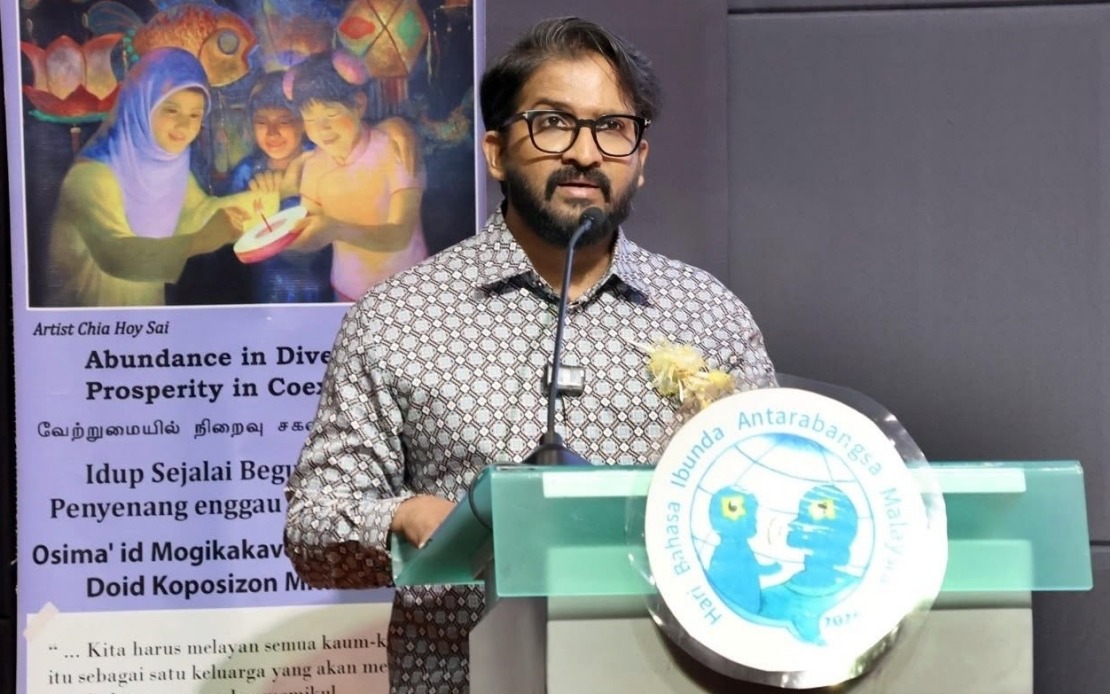
Deputy National Unity Minister R. Yuneswaran has made a compelling case for elevating mother-tongue education as a vital tool in addressing the persistent tensions that plague Malaysian society. Speaking on June 21, Yuneswaran attributed the frequency of 3R issues—matters touching on race, religion and royalty—that flood social media platforms daily to deeper gaps in mutual understanding across linguistic and cultural lines. The minister's remarks underscore a growing recognition within government circles that linguistic fragmentation may be exacerbating the polarization that has become increasingly visible in online discourse, translating into real-world social tension.
At the heart of Yuneswaran's argument lies a nuanced understanding of how language functions within societies. He emphasizes that language extends far beyond its instrumental role as a communication tool; it carries embedded within it the identity markers, historical narratives, and value systems that give communities their distinctive character. When citizens lose fluency or connection to their mother tongues, they simultaneously risk losing access to the cultural contexts and shared memories that would otherwise foster deeper mutual comprehension. This perspective challenges the false premise that multilingualism must come at the expense of mother-tongue proficiency, a tension that has long characterized Malaysian educational debates.
The National Unity Ministry has positioned itself as the custodian of Malaysia's linguistic and cultural assets, particularly under mandates established in the 13th Malaysia Plan. The scope of this responsibility extends beyond administrative oversight; it encompasses the development of cohesive national messaging that frames diversity not as a liability but as a foundational strength upon which social stability rests. By centering efforts on mutual understanding, respect, and the deliberate cultivation of cross-cultural learning, the ministry articulates a nation-building philosophy that acknowledges the nation's complex makeup while rejecting essentialist divisions.
Yuneswaran's personal trajectory illuminates the practical compatibility of maintaining strong mother-tongue ties while simultaneously embracing broader linguistic ecosystems. As an Indian Malaysian who has navigated both Chinese and national school educational streams, he represents a living example of multilingual and multicultural integration. His experience directly contradicts the assumption that proficiency in a mother tongue creates insurmountable barriers to acquiring fluency in the national language or other international languages. Instead, he argues from direct experience that grounding oneself firmly in one's mother tongue actually provides a stronger foundation for linguistic and cultural learning overall.
Malaysia's extraordinary linguistic diversity—approximately 130 languages coexisting within its borders—constitutes a remarkable asset that few nations can claim. This diversity reflects the nation's history as a confluence point for trading networks, migration patterns, and cultural exchanges spanning centuries. Yet this same diversity has occasionally been weaponized in political discourse and social media narratives that frame linguistic differences as irreconcilable rather than complementary. Yuneswaran's intervention attempts to reframe this conversation by insisting that linguistic plurality should be understood as evidence of Malaysia's unique position as a multicultural crossroads rather than as a persistent problem requiring resolution.
The relationship between language competency and 3R-related conflict merits deeper examination. When individuals lack substantive knowledge of their own cultural heritage and linguistic traditions, they become susceptible to simplified narratives that others construct on their behalf. Social media algorithms, designed to maximize engagement through controversy, preferentially distribute content that triggers emotional responses rooted in identity concerns. Those with weak connections to their heritage languages and associated histories may be more readily mobilized around identity-based grievances, precisely because they lack the contextual nuance that comes from deep cultural literacy. Conversely, those fluent in their mother tongues possess interpretive frameworks and historical awareness that can provide ballast against inflammatory rhetoric.
The Deputy Minister's emphasis on understanding rather than mere tolerance represents an important distinction. Tolerance implies grudging coexistence with difference; understanding implies genuine intellectual and emotional engagement with the worldviews, values, and historical experiences of others. Language facilitates this deeper engagement by providing access to idioms, cultural references, literary traditions, and philosophical concepts that cannot be fully translated. When a Malaysian Tamil speaker reads classical Tamil literature, or a Malay speaker engages with classical Islamic scholarship in Arabic, or a Malaysian Chinese speaker engages with Confucian texts, they are not merely acquiring vocabulary—they are accessing entire ecosystems of meaning that shape how their communities understand the world.
The current environment of 3R sensitivities on social media presents both challenges and opportunities. The same platforms that amplify divisive content can theoretically be leveraged to promote linguistic and cultural learning. Educational content highlighting the richness of Malaysia's various languages, the interconnections between different cultural traditions, and the historical achievements of different communities could be systematically promoted. This would require deliberate strategy and resource allocation, but the payoff in terms of reduced social friction could justify the investment. Young Malaysians, who are digital natives and among the heaviest social media users, represent a particularly important audience for such initiatives.
Implementation of Yuneswaran's vision will require coordination across multiple sectors. Educational institutions must provide genuine space for mother-tongue development alongside national language instruction. Media organizations, both traditional and digital, need to reflect the linguistic diversity of their audiences rather than treating ethnic-language content as niche. Cultural institutions should receive resources to document, preserve, and promote the linguistic heritage of various communities. Civil society organizations working on interfaith and intercommunal dialogue could incorporate linguistic and cultural literacy components into their programming. The National Unity Ministry itself must move beyond rhetorical support to become an active facilitator of these initiatives.
The economic dimensions of this policy direction deserve consideration as well. In an increasingly globalized knowledge economy, linguistic diversity represents economic value. Malaysians fluent in multiple languages—particularly those with deep proficiency in mother tongues alongside English and Mandarin—possess competitive advantages in international business, academia, and cultural industries. By positioning mother-tongue proficiency as a strength rather than an obstacle, Malaysia could better leverage its human capital. Additionally, the cultural and creative industries—tourism, film, publishing, music—all benefit from populations with robust connections to their cultural heritage and ability to articulate that heritage in authentic ways.
Ultimates, Yuneswaran's call represents recognition that short-term divisive rhetoric often masks deeper anxieties rooted in cultural erosion and loss of identity. By addressing these underlying concerns through substantive investment in mother-tongue education and intercultural literacy, policymakers can work toward a Malaysia where linguistic diversity strengthens rather than fractures national cohesion. The minister's framing suggests a government that understands social stability cannot be imposed through restriction and control, but must instead be constructed through the patient work of fostering genuine understanding across difference—work that begins, quite literally, with learning to speak and think in the languages that carry the heritage of Malaysia's various communities.
%22%2F%3E%3C%2Fpattern%3E%3C%2Fdefs%3E%3Crect%20width%3D%22100%25%22%20height%3D%22100%25%22%20fill%3D%22url(%23ph29hsg)%22%2F%3E%3Crect%20width%3D%22100%25%22%20height%3D%22100%25%22%20fill%3D%22url(%23ph29hsp)%22%2F%3E%3Ctext%20x%3D%2250%25%22%20y%3D%2250%25%22%20text-anchor%3D%22middle%22%20dominant-baseline%3D%22central%22%20fill%3D%22rgba(255%2C255%2C255%2C0.95)%22%20font-family%3D%22Georgia%2C%20'Times%20New%20Roman'%2C%20serif%22%20font-weight%3D%22700%22%20font-size%3D%22272%22%20letter-spacing%3D%22-0.02em%22%3EMITRA%3C%2Ftext%3E%3C%2Fsvg%3E)
%22%2F%3E%3C%2Fpattern%3E%3C%2Fdefs%3E%3Crect%20width%3D%22100%25%22%20height%3D%22100%25%22%20fill%3D%22url(%23phvxcwg)%22%2F%3E%3Crect%20width%3D%22100%25%22%20height%3D%22100%25%22%20fill%3D%22url(%23phvxcwp)%22%2F%3E%3Ctext%20x%3D%2250%25%22%20y%3D%2250%25%22%20text-anchor%3D%22middle%22%20dominant-baseline%3D%22central%22%20fill%3D%22rgba(255%2C255%2C255%2C0.95)%22%20font-family%3D%22Georgia%2C%20'Times%20New%20Roman'%2C%20serif%22%20font-weight%3D%22700%22%20font-size%3D%22320%22%20letter-spacing%3D%22-0.02em%22%3ERim%3C%2Ftext%3E%3C%2Fsvg%3E)