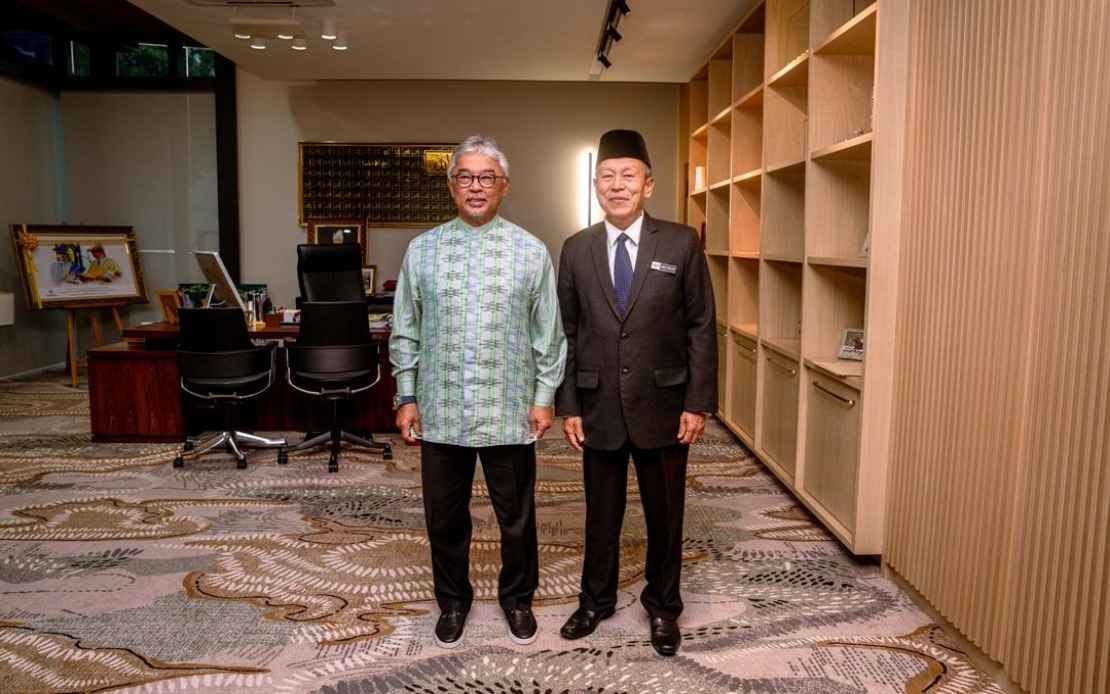
The Sultan of Pahang, Al-Sultan Abdullah Ri'ayatuddin Al-Mustafa Billah Shah, received Malaysian Anti-Corruption Commission chief commissioner Datuk Seri Abd Halim Aman at Shahzan House in Ampang yesterday, marking a significant engagement between the palace and the nation's premier graft-fighting agency. The hour-long audience underscored the royal institution's continued interest in the MACC's operational capacity and its strategic priorities as Malaysia navigates complex governance challenges in an increasingly scrutinised institutional environment.
During the meeting, the MACC leadership presented a comprehensive overview of the commission's recent operational developments and institutional progress. This briefing reflected the agency's desire to maintain transparent communication channels with key stakeholders, particularly the sultanate, which historically plays a custodial role in matters of national governance and constitutional propriety. The presentation encompassed both concrete achievements and forward-looking strategic initiatives designed to address emerging corruption risks across the federal and state bureaucracies.
A central focus of the discussion involved the MACC's multifaceted approach to strengthening integrity frameworks across government institutions. The commission outlined various programmes and initiatives intended to embed ethical standards deeper into administrative practice, moving beyond reactive enforcement toward proactive cultural transformation. This preventative orientation reflects a growing recognition within Malaysia's anti-corruption establishment that sustainable progress requires systemic changes rather than isolated prosecutions alone.
Governance matters featured prominently in the conversation, with both parties examining contemporary challenges confronting Malaysia's institutional architecture. The palace audience provided an opportunity for the MACC to contextualise its enforcement activities within the broader governance landscape, demonstrating how anti-corruption work intersects with accountability mechanisms, transparency standards, and public sector reform. Such discussions are particularly valuable given the sultanate's constitutional role in upholding public trust and institutional legitimacy.
The MACC emphasised its ongoing commitment to combating corruption through both conventional enforcement and emerging prevention strategies. The commission highlighted recent investigations, prosecution outcomes, and sectoral initiatives targeting high-risk areas such as government procurement, land administration, and licensing processes. This comprehensive approach reflects the MACC's understanding that effective anti-corruption work requires coordinated action across multiple fronts simultaneously.
Enhancing public confidence in anti-corruption institutions emerged as a critical theme during the discussion. The MACC leadership recognised that enforcement credibility depends not merely on conviction rates but on broader public perceptions of institutional independence, fairness, and effectiveness. Royal acknowledgement of these efforts carries symbolic weight, as the sultanate's implicit endorsement can reinforce public perception that anti-corruption work serves the national interest rather than partisan agendas.
Datuk Seri Abd Halim expressed gratitude for the audience opportunity and emphasised the significance of royal support for the commission's mandate. His remarks reflected the MACC's recognition that anti-corruption campaigns benefit from institutional endorsement beyond the executive branch. The chief commissioner specifically acknowledged Al-Sultan Abdullah's demonstrated concern for governance standards and transparency, framing the audience as evidence of palace commitment to institutional integrity across government.
The timing of this engagement carries wider implications for Malaysia's governance trajectory. Regional peers and international observers monitor such symbolic interactions as indicators of institutional health and political will regarding accountability. When senior anti-corruption officials meet with royal patrons in formal settings, it signals that graft-fighting remains a priority concern across multiple institutional spheres rather than a temporary political focus subject to shifting priorities or factional interests.
For Malaysian readers, particularly those in Pahang, this audience demonstrates continued institutional engagement on anti-corruption matters at the highest levels. The sultanate's receptiveness to MACC briefings suggests ongoing royal interest in understanding contemporary governance challenges and the commission's response strategies. This engagement between palace and anti-corruption authority reflects the constitutional framework's intent for distributed institutional responsibility regarding public integrity.
The audience also contextualises the MACC's work within Malaysia's broader Southeast Asian position. As regional governance standards evolve and international scrutiny intensifies, showcasing institutional cooperation between the palace and anti-corruption bodies becomes increasingly important for maintaining international confidence in Malaysia's governance architecture. The region has experienced varying experiences with anti-corruption effectiveness, making institutional coordination a visible marker of commitment.
Looking forward, such engagements establish valuable communication pathways between the sultanate and anti-corruption institutions. Regular dialogue allows palace leadership to remain informed about contemporary challenges, while the MACC benefits from understanding royal perspectives on governance and institutional integrity. These relationships, though often conducted through formal channels, contribute meaningfully to institutional coherence and shared commitment to accountability standards.
The discussion of transparency and accountability-based governance reflects international best practice increasingly adopted across Southeast Asia. Malaysia's demonstrated commitment to such frameworks through high-level institutional engagement positions the country within a broader regional trend toward professionalised anti-corruption work. The MACC's emphasis on prevention alongside enforcement aligns with emerging global consensus regarding optimal anti-corruption strategy, suggesting Malaysia's approach remains contemporary and evidence-informed.