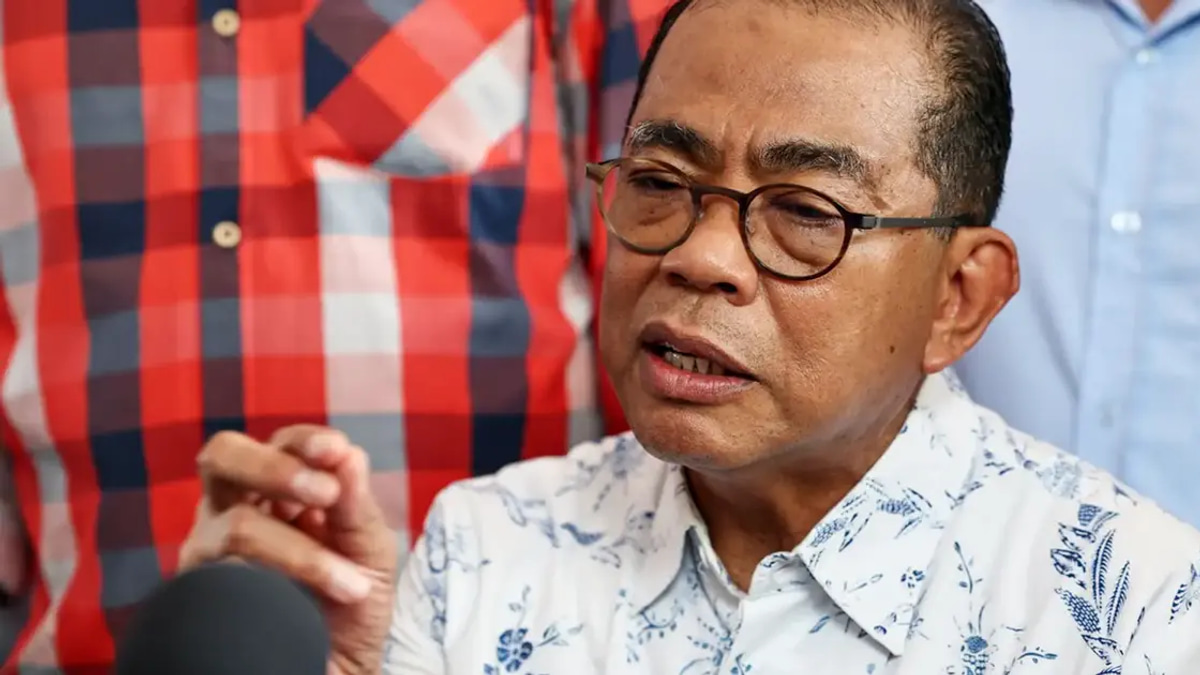
Malaysia's political landscape is undergoing subtle but potentially consequential shifts, with leaders from rival coalitions reportedly approaching Bersama with membership applications. According to recent statements, individuals affiliated with both Pakatan Harapan and Umno have been initiating contact with the relatively newer political outfit, a development that signals the continuing fluidity within the country's multiparty system and the complex negotiations that characterise Malaysian politics.
Bersama, founded in 2022 and still establishing itself within the broader political ecosystem, has emerged as an alternative political platform that could serve as a middle ground between competing visions. The party's positioning as a relative newcomer, untethered to the historical baggage that burdens older coalitions, appears to be attracting interest from political figures who may be seeking new alignments or reassessing their current affiliations. The motivation behind these overtures likely stems from a combination of philosophical disagreement within existing coalitions and tactical calculations regarding the next general election cycle.
The involvement of Pakatan Harapan members in these discussions carries particular significance given the coalition's stated commitment to reformist politics since its 2018 breakthrough victory. That established opposition figures would explore alternative party structures suggests possible dissatisfaction with how Pakatan has governed or managed internal disputes. Similarly, the reported interest from Umno, Malaysia's historically dominant party and current powerbroker within the government, indicates that some within the party establishment may view their present configuration as unsustainable or insufficiently responsive to grassroots concerns.
This bidirectional movement toward Bersama reflects the persistent challenge of coalition stability in Malaysian politics, where defections and realignments have become routine occurrences rather than exceptional events. The 15th general election in 2023 produced a fractured parliament without clear majority control, forcing unprecedented multiparty cooperation and exposing the fragility of existing arrangements. Within this unstable environment, political actors continuously evaluate whether their current party homes maximise their influence, appeal, or policy objectives.
For Malaysian voters and observers, these developments underscore the ongoing difficulty in achieving lasting political consolidation. Rather than two or three stable coalitions competing for power, Malaysia continues to experience perpetual jockeying for position among numerous parties, each pursuing narrow interests. This fragmentation, while theoretically allowing for greater representation diversity, practically results in governance uncertainty and makes long-term policy implementation challenging.
Bersama's appeal likely lies in its lack of entrenched bureaucratic structures and historical rivalries that constrain older parties. The party can theoretically accommodate politicians from different backgrounds without the internal opposition they might face within Pakatan or Umno. However, such ideological flexibility cuts both ways—a party willing to absorb members from opposing camps may struggle to maintain coherent policy positions or organisational discipline.
The timing of these approaches merits consideration alongside other recent political developments. Malaysia's economy continues facing headwinds, with inflation affecting ordinary citizens and raising political pressure on the government. In such circumstances, ambitious politicians often reassess their positioning, seeking platforms that might better serve their electoral prospects or policy ambitions. Bersama could represent a fresh slate for individuals whose current party affiliations have become liabilities.
For Umno specifically, any significant defections would constitute a tangible loss for the party that has dominated Malaysian politics for seven decades. The party's traditional base remains formidable, yet urban and younger demographic shifts have complicated its electoral mathematics. Some Umno figures may believe that alternative platforms better position them to capture emerging constituencies or address evolving voter priorities around governance quality, anti-corruption measures, or social policy innovation.
Within Pakatan Harapan, the complexity of managing three-party consensus has generated documented tensions, particularly around ministerial appointments, policy direction, and the coalition's approach toward cooperation with Umno on government formation. Members frustrated with these compromises or perceiving insufficient influence might view party-switching as a strategic recalibration.
The implications for Malaysian governance extend beyond immediate party arithmetic. Continued political realignment makes legislative agenda-setting cumbersome and invites the kind of politics where positions shift based on momentary convenience rather than principled commitments. Investment in long-term infrastructure, education, and industrial policy—all requiring multiparty consensus—becomes harder to guarantee when party loyalty remains conditional.
Observers of Malaysian politics should monitor whether these Bersama overtures result in actual party transfers or represent mere exploratory discussions with no lasting consequences. History suggests the latter remains likely; many such political conversations produce minimal tangible outcomes. Nonetheless, the very fact that senior figures from opposing coalitions are simultaneously approaching the same alternative platform demonstrates the fundamental instability undergirding Malaysia's current political settlement and foreshadows continued manoeuvring ahead of the next electoral cycle.