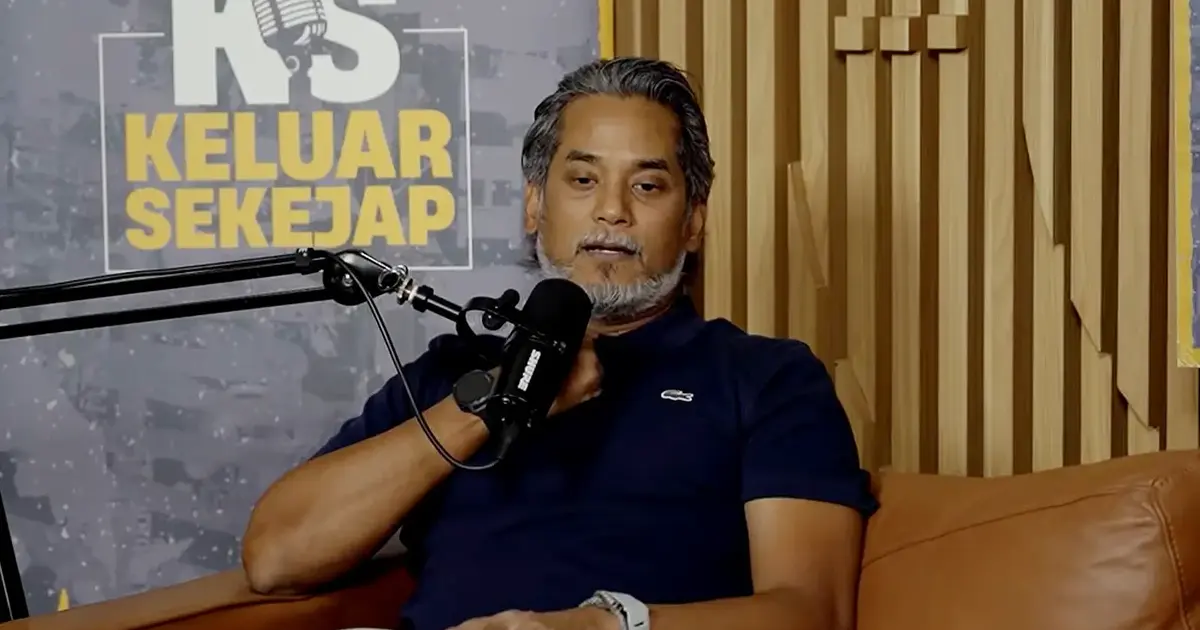
Political analyst and former UMNO Youth chief Khairy Jamaluddin has suggested that Pas Islamic party faces structural limitations in growing its support base without embracing more moderate political allies, pointing to figures like Hamzah Zainudin and parties such as Parti Wawasan Negara as potential vehicles for broader appeal. The assessment reflects growing discussion within Malaysian political circles about the sustainability of PAS's current electoral strategy and its ability to expand beyond its traditional Islamist constituency.
Khairy's comments underscore a fundamental challenge facing PAS as it consolidates power within the federal government and state administrations. The party's core electorate—voters who prioritise Islamic governance and religious policy—represents a defined demographic ceiling. While this base has proven durable and organised, it does not necessarily encompass the full breadth of Malaysian voters. Expanding beyond this traditional support requires messaging and partnerships that appeal to moderates, urban professionals, and multi-ethnic constituencies who may support Islamic principles but prioritise economic management, inter-communal harmony, and pragmatic governance.
The reference to Hamzah Zainudin carries particular significance in contemporary Malaysian politics. As a seasoned politician with roots in UMNO before his departure, Hamzah represents a bridge between establishment politics and PAS's religious agenda. His presence within PAS-led coalitions signals an attempt to soften the party's image and make it more palatable to voters who might otherwise view PAS as ideologically narrow or economically unproven. Similarly, Parti Wawasan Negara's positioning as a centrist outfit offers PAS an opportunity to claim moderation and inclusivity rather than relying solely on religious discourse to mobilise voters.
This strategic calculation has profound implications for Malaysia's political trajectory. Should PAS succeed in moderating its public persona while retaining its core support, it could cement itself as a permanent fixture in federal governance—a shift from its previous role as a challenger party. Conversely, if PAS is perceived as compromising its principles through dilution or alliance-building, it risks alienating the committed activists and religious scholars who have historically driven its organisation and mobilisation capacity. The balance between these extremes determines whether PAS can truly become a nationwide governing party or remains confined to regional strongholds.
The broader context involves PAS's current participation in government through the unity cabinet framework established after the 2022 general election. This arrangement grants PAS ministerial positions and policy influence but also exposes the party to public criticism over economic performance, corruption, and service delivery—areas where religious credentials provide no particular advantage. Khairy's suggestion that PAS needs moderate partners implicitly acknowledges that ideology alone cannot sustain electoral coalitions indefinitely. Voters ultimately evaluate parties on competence, not just principles.
For moderate Malaysian voters concerned about PAS influence, Khairy's analysis offers both reassurance and caution. The suggestion that PAS requires moderate allies implies that purely Islamist governance is insufficient for a national party seeking to govern all Malaysians. However, it also confirms that PAS intends to remain a major political force, with partnerships designed to amplify rather than diminish its influence. The question becomes whether moderate allies genuinely constrain PAS's agenda or merely provide cover for its advancement.
Regionally, PAS's evolution matters for Southeast Asia's democratic models and religious-political dynamics. As the Muslim world's most developed democracy, Malaysia's approach to integrating Islamist parties into mainstream governance carries weight beyond its borders. If PAS successfully broadens its base through moderation, it demonstrates a pathway for other Islamist movements. If it fails or reverts to narrower appeals, it reinforces perceptions of Islamic parties as inherently divisive or limited in scope.
Khairy's comments also reflect the UMNO establishment's continuing calculation regarding its relationship with PAS. UMNO has traditionally competed with PAS for Malay-Muslim voters but now finds itself in political arrangements requiring cooperation. Khairy's analysis—suggesting PAS needs moderates—could be read as UMNO positioning itself as the keeper of moderate conservatism, a contrast to PAS's more doctrinaire approach. This framing serves UMNO's interests by distinguishing its brand from PAS even within coalition governments.
The practical implications for Malaysian voters include understanding that coalition politics and electoral mathematics, not merely ideology, shape party behaviour and positioning. PAS's pursuit of moderate allies reflects rational political strategy rather than ideological conviction or compromise. The party identifies a gap in its electoral support and seeks to fill it through partnerships. Whether these partnerships translate into genuine policy moderation or merely cosmetic rebranding remains an open question requiring careful observation of government actions rather than coalition rhetoric.
Moving forward, the success of any PAS-moderate alliance depends on institutional arrangements that either lock both sides into genuine compromise or prove sufficiently loose to allow each faction to pursue separate agendas. The unity cabinet represents one such experiment, and its outcomes will inform whether Khairy's assessment proves prescient or merely optimistic. For Malaysian democracy, the ability of diverse parties to govern collaboratively while respecting constitutional limits remains the ultimate test of political maturity.
%22%2F%3E%3C%2Fpattern%3E%3C%2Fdefs%3E%3Crect%20width%3D%22100%25%22%20height%3D%22100%25%22%20fill%3D%22url(%23ph4hbbfg)%22%2F%3E%3Crect%20width%3D%22100%25%22%20height%3D%22100%25%22%20fill%3D%22url(%23ph4hbbfp)%22%2F%3E%3Ctext%20x%3D%2250%25%22%20y%3D%2250%25%22%20text-anchor%3D%22middle%22%20dominant-baseline%3D%22central%22%20fill%3D%22rgba(255%2C255%2C255%2C0.95)%22%20font-family%3D%22Georgia%2C%20'Times%20New%20Roman'%2C%20serif%22%20font-weight%3D%22700%22%20font-size%3D%22320%22%20letter-spacing%3D%22-0.02em%22%3EUS%3C%2Ftext%3E%3C%2Fsvg%3E)
%22%2F%3E%3C%2Fpattern%3E%3C%2Fdefs%3E%3Crect%20width%3D%22100%25%22%20height%3D%22100%25%22%20fill%3D%22url(%23ph3e48rg)%22%2F%3E%3Crect%20width%3D%22100%25%22%20height%3D%22100%25%22%20fill%3D%22url(%23ph3e48rp)%22%2F%3E%3Ctext%20x%3D%2250%25%22%20y%3D%2250%25%22%20text-anchor%3D%22middle%22%20dominant-baseline%3D%22central%22%20fill%3D%22rgba(255%2C255%2C255%2C0.95)%22%20font-family%3D%22Georgia%2C%20'Times%20New%20Roman'%2C%20serif%22%20font-weight%3D%22700%22%20font-size%3D%22320%22%20letter-spacing%3D%22-0.02em%22%3EPAS%3C%2Ftext%3E%3C%2Fsvg%3E)
%22%2F%3E%3C%2Fpattern%3E%3C%2Fdefs%3E%3Crect%20width%3D%22100%25%22%20height%3D%22100%25%22%20fill%3D%22url(%23ph5u2f8g)%22%2F%3E%3Crect%20width%3D%22100%25%22%20height%3D%22100%25%22%20fill%3D%22url(%23ph5u2f8p)%22%2F%3E%3Ctext%20x%3D%2250%25%22%20y%3D%2250%25%22%20text-anchor%3D%22middle%22%20dominant-baseline%3D%22central%22%20fill%3D%22rgba(255%2C255%2C255%2C0.95)%22%20font-family%3D%22Georgia%2C%20'Times%20New%20Roman'%2C%20serif%22%20font-weight%3D%22700%22%20font-size%3D%22151%22%20letter-spacing%3D%22-0.02em%22%3EPerikatan%3C%2Ftext%3E%3C%2Fsvg%3E)