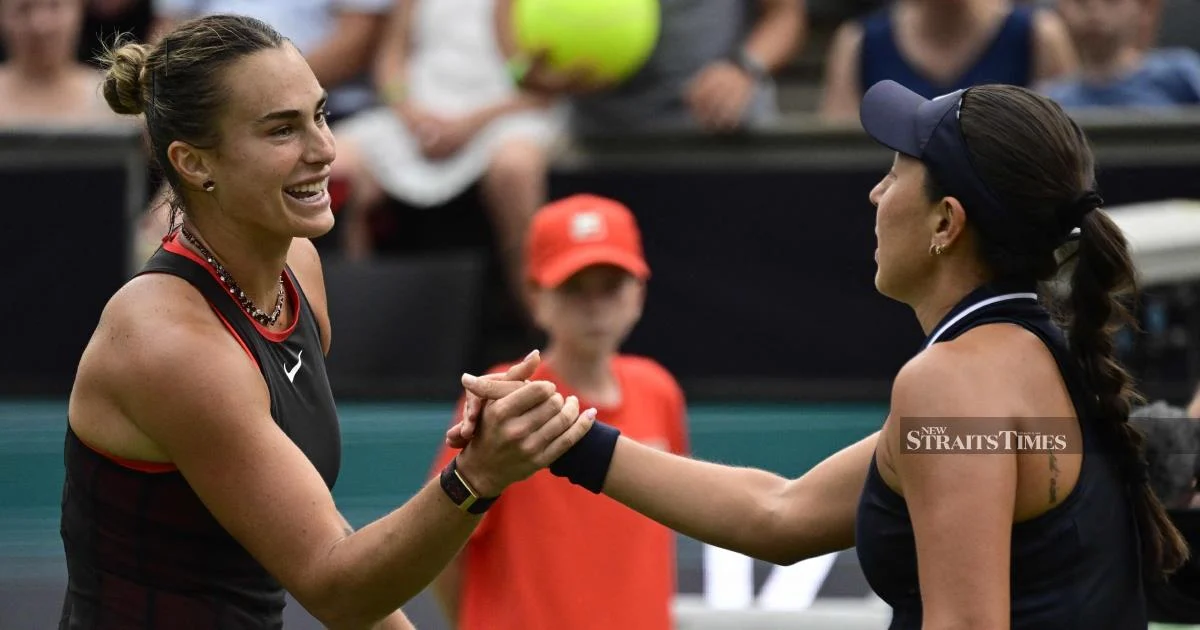
Jessica Pegula has advanced to the final of the Berlin WTA grass-court championship, defeating top-ranked Aryna Sabalenka with a scoreline of 6-2, 6-7 (4-7), 6-0 in a compelling semifinal encounter. The American's victory marks her second appearance in this tournament's championship match, reflecting her growing prowess on the European grass circuit and her capacity to trouble elite opponents on surfaces outside her home turf.
Pegula's path through the semifinal demonstrated the kind of varied, patient tennis that characterises her approach to major contests. The opening set saw her establish early control, breaking Sabalenka's serve and maintaining the momentum to claim the set convincingly. While grass courts traditionally favour aggressive players with big serves, Pegula's ability to construct points and maintain consistency created sufficient pressure to unsettle the normally dominant Belarusian.
The second set evolved into a more intricate battle. Sabalenka, accustomed to dictating rallies with her powerful groundstrokes, began to find her rhythm and pushed the contest into a tiebreaker. In that crucial moment, Pegula's composure proved decisive. Despite the tension inherent in deciding sets, she edged the tiebreaker 7-4, maintaining her grip on the match at a critical juncture and denying her opponent the opportunity to level the contest.
What followed in the third set was perhaps the most striking sequence of the match. Pegula's intensity appeared to intensify further as Sabalenka's resistance crumbled. A 6-0 whitewash in the final set underscored Pegula's capacity to sustain pressure over extended periods and suggested that the momentum established in the earlier phases of the match had fundamentally shifted in her favour. For Sabalenka, the capitulation represented a significant departure from the form that has kept her at the summit of the world rankings.
This result carries broader implications for the competitive landscape at Berlin's prestigious tournament. Pegula's victory over the world number one signals that the American has matured into a player capable of executing complex tactical plans against the sport's elite. Sabalenka's vulnerabilities on grass, while present before this match, have now been exposed in unambiguous fashion, potentially affecting her confidence heading into other major grass tournaments later in the season.
For Malaysian and Southeast Asian tennis enthusiasts, Pegula's progression illustrates the depth of talent within the American tennis system and the pathway players can forge through persistent effort and technical refinement. Pegula has never been regarded as a generational talent in the manner of some peers, yet her strategic intelligence and adaptability across surfaces demonstrate that sustained excellence does not always require superhuman physical gifts—meticulous preparation and mental resilience often suffice.
The Berlin WTA tournament itself remains one of the prestigious grass-court events on the professional calendar, sitting in the weeks preceding Wimbledon. A return to the final will provide Pegula with momentum and court time on this challenging surface at a critical moment in the season. The American will now face a fresh opponent in the championship match, having navigated what many would have regarded as the most daunting possible semifinal draw.
Sabalenka's semifinal exit, while disappointing, does not substantially diminish her standing in the sport. However, it does raise questions about consistency across surfaces and the adaptability required of modern champions who must contend with varied playing conditions throughout the calendar. Her grass-court credentials will merit scrutiny should major tournaments on this surface prove similarly problematic in coming weeks.
From a regional perspective, the performances of American players at European grass-court events remain influential in shaping the global competitive hierarchy as the season progresses toward its traditional summer crescendo. Pegula's advancement represents a notable achievement for American tennis, particularly given the dominance of other nations in recent seasons at specialised surfaces like grass.
The finalist will enter her championship match as a player visibly in command of her game and her confidence restored by a convincing victory against the world's top-ranked player. Whether Pegula can convert this semifinal success into a maiden title at this event remains uncertain, but her passage to the final has underscored her credentials as a serious contender for major honours on specialist surfaces, a reputation she will continue to build in the matches ahead.