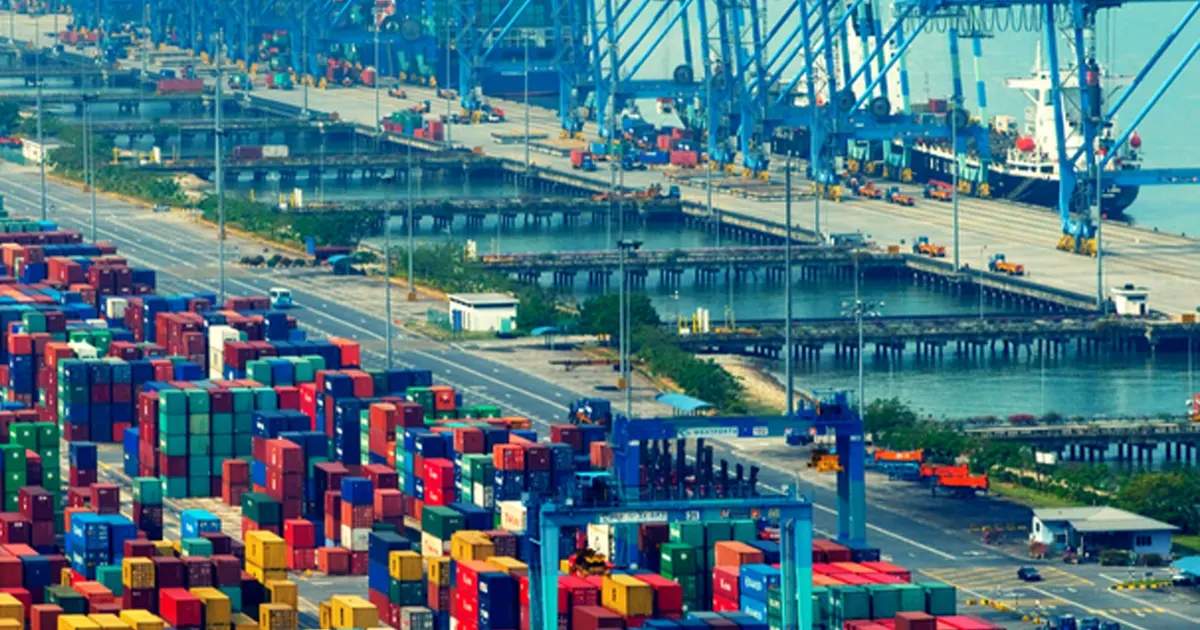
The Port Klang Free Zone (PKFZ) has emerged from a prolonged restructuring phase with tangible evidence of operational recovery, recording RM108 million in revenue as it accelerates toward full operational capacity. Transport Minister Loke Siew Fook has highlighted the facility's trajectory over the past 18 months, characterising the performance as demonstrating steady and encouraging growth that reflects renewed confidence among logistics operators and international traders using the facility.
The 86 per cent reactivation rate represents a meaningful milestone for an asset that had languished amid administrative challenges and operational constraints in prior years. The Port Klang Free Zone, situated at Malaysia's busiest container port, serves as a critical node in regional supply chains, handling free trade activities, warehousing, and value-added logistics services. The reactivation metric indicates that the majority of tenant operations have resumed or been newly established, suggesting that management interventions have successfully restored market confidence and created conditions conducive to business expansion.
This recovery holds particular significance for Malaysia's post-pandemic economic stabilisation. The Port Klang Free Zone functions as more than a warehouse facility—it is an economic barometer for regional trade flows, foreign direct investment sentiment, and logistics sector health. The revenue generation and operational capacity figures suggest that Malaysian ports remain competitive within the broader Southeast Asian logistics ecosystem, competing with established facilities in Singapore, Thailand, and Indonesia for transhipment and value-added services.
The revenue trajectory becomes especially noteworthy when contextualised against global supply chain volatility. International logistics operators have remained cautious about capital commitments and expansion plans, yet the PKFZ's performance indicates that Malaysia's competitive advantages—strategic geographic location, established port infrastructure, and skilled labour availability—continue to attract sustained investment. The facility's ability to attract tenants and generate revenue during a period of broader economic uncertainty demonstrates underlying demand for its services.
The path to this recovery was not straightforward. The Port Klang Free Zone had previously encountered governance issues and underutilised capacity that raised questions about its viability and management effectiveness. The current performance metrics suggest that restructuring efforts, including improved operational procedures, enhanced tenant support mechanisms, and clarified regulatory frameworks, have yielded measurable results. This turnaround carries lessons for other Malaysian industrial and logistics facilities grappling with similar challenges.
Operationally, reaching 86 per cent reactivation provides a cushion of capacity utilisation that permits incremental growth without immediate infrastructure expansion. However, it also indicates that approximately 14 per cent of tenant spaces remain either unutilised or undergoing recommissioning, presenting opportunities for targeted tenant recruitment and service diversification. Port management and the ministry should capitalise on this momentum to close the remaining capacity gap and establish conditions for the facility to operate at optimum efficiency.
The financial performance merits examination within Malaysia's broader trade and investment climate. Port revenues correlate directly with cargo throughput and international commerce volumes, so the RM108 million figure reflects not merely internal performance metrics but external market conditions affecting Malaysian exporters and importers. The consistency of revenue generation signals that Malaysian companies across manufacturing, agricultural, and resource sectors continue to rely on Port Klang infrastructure for international market access.
For regional context, the PKFZ operates within Malaysia's larger effort to position itself as a logistics and trade hub competing with established rivals. Singapore's Jurong Port and Port of Singapore Authority maintain dominant market positions, while neighbouring Thailand and Indonesia possess emerging capabilities. Malaysia's geographic centrality along major shipping lanes and its established port ecosystem at Port Klang provide inherent advantages that the PKFZ can leverage, provided management maintains operational excellence and tenant satisfaction.
The 86 per cent reactivation metric also reflects changing patterns in tenant composition and business models. Modern logistics operations increasingly emphasise integrated services—combining warehousing, inspection, documentation processing, and light manufacturing—rather than simple storage. The PKFZ's recovery suggests that tenants are establishing operations reflecting these contemporary business requirements, indicating the facility has adapted its service offerings accordingly.
Looking forward, sustained growth depends on maintaining operational reliability, competitive pricing relative to alternatives, and proactive engagement with the shipping industry and logistics service providers. The Transport Ministry's visibility in publicising PKFZ performance metrics demonstrates commitment to the facility's success and signals to potential investors that government backing supports long-term viability. This political endorsement can itself attract additional tenants considering facility commitments.
The challenge now lies in converting the recovery momentum into sustained expansion toward full capacity and beyond. The remaining 14 per cent reactivation gap represents targets for focused tenant acquisition campaigns. Additionally, port authorities should evaluate whether the current RM108 million revenue trajectory supports further value-added services expansion, such as advanced logistics analytics, customs clearance specialisation, or specialised cargo handling capabilities that could differentiate the PKFZ from competitors.
The Port Klang Free Zone's resurgence demonstrates that Malaysian infrastructure assets, when properly managed and strategically positioned, can recover from previous setbacks and contribute meaningfully to national and regional economic activity. The next 12 to 18 months will be critical in determining whether this recovery represents a durable structural turnaround or a temporary uptick dependent on global conditions beyond Malaysia's control.