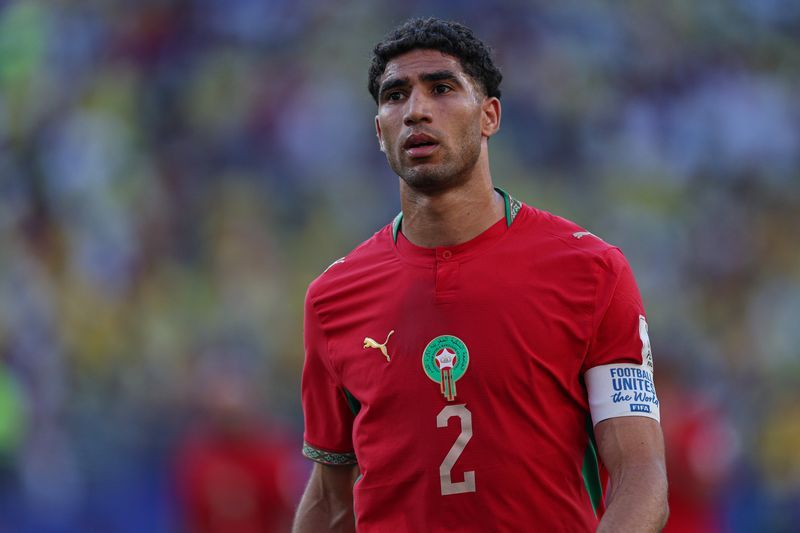
Paris Saint-Germain's Moroccan defender Achraf Hakimi will proceed to trial on a rape charge after losing his legal challenge to block prosecution. The Versailles appeals court has rejected Hakimi's appeal against his referral to criminal court, clearing the way for proceedings to commence at an unspecified date in the future. The development comes as Hakimi prepares to join Morocco's national squad for Friday's fixture against Scotland, adding another layer of complexity to his immediate schedule and public profile.
The 25-year-old defender responded to the court's decision through a post on social media platform X, addressing what he characterised as a distorted narrative surrounding his case. Hakimi stated that circumstances unrelated to his version of events have dominated public discourse, creating what he perceives as an unfair situation affecting his reputation, his family's wellbeing, and broader perceptions of truth. His comments suggest frustration with the media coverage and public commentary that has accompanied the allegations against him since their emergence.
Hakimi's legal position had been under scrutiny since the Nanterre prosecutor's office initiated an investigation in 2023 following the rape allegation. His decision to appeal the referral to criminal court represented an attempt to prevent the case from advancing to trial, a strategy that has now been exhausted following the appeals court's rejection. The defender expressed willingness to engage with the judicial process, indicating that he has been anticipating this moment since the investigation began and views the trial as an opportunity to present his perspective publicly.
The timing of the court decision creates immediate complications for the Morocco national team, as Hakimi's participation in upcoming matches now occurs against the backdrop of pending criminal proceedings. While he remains free to play, the trial's eventual commencement could coincide with international fixtures or club commitments, potentially disrupting both his career schedule and Morocco's defensive preparations. The defender's status as a key figure in both PSG's squad and Morocco's national team setup means any disruption carries significance at multiple competitive levels.
Hakimi's legal team has not yet provided commentary on the appeals court's decision or indicated when the trial might commence. Similarly, the Versailles appeals court itself has not elaborated on the reasoning behind its rejection of his appeal. This lack of immediate detail leaves substantial uncertainty regarding the trial's timing and procedures. The absence of a confirmed trial date means that Hakimi will continue to function in his professional capacity while navigating the psychological and logistical burden of knowing that prosecution is now inevitable.
From a broader perspective, the case illustrates the precarious position athletes face when confronted with serious criminal allegations during active careers. Unlike many professions where individuals might suspend public duties pending legal resolution, footballers must often continue competing while managing the dual pressures of sport and legal jeopardy. Hakimi's situation is further complicated by his prominence in both club and international football, which ensures that every development receives intense media scrutiny across multiple jurisdictions and outlets.
The Moroccan football federation has not issued formal statements regarding how Hakimi's legal situation might affect his selection or participation in national team activities. French authorities have similarly remained circumspect about the case details. This regulatory ambiguity creates a void that media speculation readily fills, potentially influencing public perception of both the defendant and the allegations independent of factual developments within the judicial process itself.
For PSG, the situation presents institutional challenges around player management and team dynamics. While Hakimi remains a contracted player entitled to fulfil his professional obligations, the existence of pending criminal proceedings against a squad member introduces reputational considerations that extend beyond sporting performance. The club has not publicly addressed how it intends to manage the situation as the trial process unfolds.
Hakimi's emergence as a player came through Real Madrid's development system before moves to Borussia Dortmund and Inter Milan, ultimately leading to his 2021 transfer to PSG for a reported fee around €60 million. His international career with Morocco has established him as one of North Africa's leading defensive talents, with appearances in the 2022 FIFA World Cup in Qatar where he featured prominently in Morocco's group stage opener against Brazil. The convergence of his sporting prominence and current legal difficulties has created a high-profile case that extends well beyond the immediate French judicial system.
The legal process ahead will likely consume months or potentially years, during which Hakimi will continue to perform under circumstances of considerable personal and professional uncertainty. His statement expressing readiness for trial suggests a strategic decision to engage with the process directly rather than maintain silence or pursue further delaying tactics. Whether this approach ultimately benefits his position remains unclear, but it represents a deliberate choice to place his case before the courts rather than allow narrative control to pass entirely to prosecutors and media commentators.