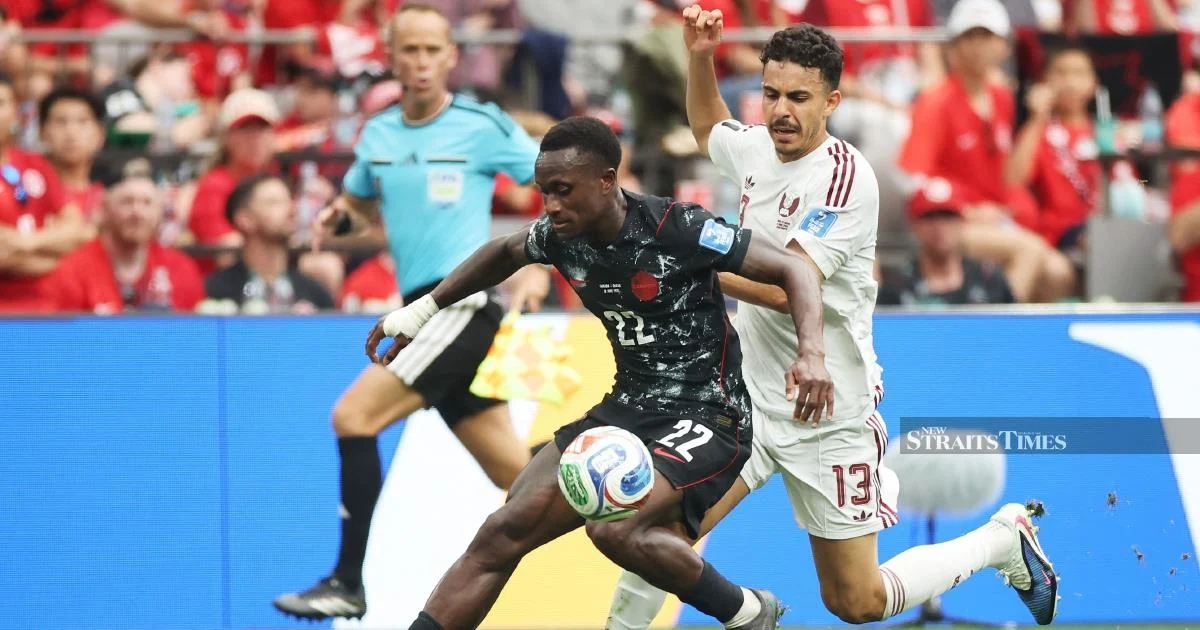
Qatar's spectacular collapse against Canada at the World Cup, culminating in a mortifying 6-0 defeat, has crystallised the age-old football debate about whether vast financial resources can substitute for sustainable sporting development. The comprehensive nature of the loss has prompted analysts to point out the fundamental structural weaknesses that no amount of investment can instantly remedy, particularly in a country where football remains a nascent competitive force.
The gulf in class displayed across ninety minutes tells a deeper story about building footballing infrastructure. While Qatar benefited from hosting the tournament and securing significant financial backing for their national programme, the result suggests that money operates as merely one variable in a much larger equation. Canada's victory exposed how crucial elements such as player development systems, coaching expertise cultivated over decades, and genuine domestic league competition cannot be purchased off the shelf.
Football experts across the region have used Qatar's downfall to illustrate a broader cautionary tale. Investment certainly enables recruitment of better facilities, overseas coaching staff, and improved player development academies. However, the infrastructure required to consistently produce internationally competitive players demands generational commitment and the cultivation of a genuine footballing culture embedded within society. Qatar's focus on spending for immediate results rather than building from grassroots level appears to have been the critical miscalculation.
The Canadian team's demolition of Qatar demonstrates how a nation with an established domestic league structure, coaching traditions, and pipeline of development programmes can outperform a wealthy newcomer to competitive football. Canada possesses institutional knowledge and systematic talent identification processes refined through years of operation. Qatar, by contrast, attempted to bypass these natural evolutionary stages through financial acceleration, a strategy that has demonstrably failed at the highest level.
For Southeast Asian footballing nations, Qatar's experience offers valuable perspective on strategic priorities. The region's developing programmes must balance judicious investment in facilities and coaching with realistic timelines for competitive improvement. Neither can the rush towards instant success through foreign signings and imported talent substitute for building indigenous footballing capacity. Malaysia, Thailand, Vietnam, and other regional competitors understand that sustained progress requires systematic development structures that cannot be expedited through spending alone.
The scale of Qatar's defeat becomes more significant when contextualised within their tournament performance. As tournament hosts with every logistical advantage and considerable resources deployed specifically for the World Cup campaign, the team's inability to compete fundamentally undermines the premise that financial might guarantees competitive success. The mismatch between investment and outcome raises uncomfortable questions about whether leadership structures, strategic planning, and long-term thinking were inadequate.
Canada's superior tactical execution and clinical finishing reflected a team operating with coherent systems and strategic clarity. Their players moved with purpose, understanding their roles within a structured framework. By contrast, Qatar's performance suggested disorganisation and a collection of expensive individuals rather than a functioning unit with shared understanding. This distinction highlights that successful football requires philosophical coherence and strategic consistency that transcends what funding provides.
The implications extend beyond Qatar's immediate disappointment. Global football is gradually shifting toward recognising that sustainable competitive success demands generations of investment in youth development, coaching education, and domestic league strengthening. Emerging nations attempting to shortcut this process through concentrated spending in senior player recruitment face Qatar's cautionary example. The World Cup stage has historically punished teams lacking depth and systemic excellence.
Qatar's defeat also raises questions about whether their investment strategy prioritised the wrong elements. Rather than building comprehensive national team development frameworks, substantial resources concentrated on hosting the tournament itself. While the infrastructure hosting the World Cup does provide some benefit, the absence of equivalent investment in youth talent identification and long-term player development left the national team inadequately prepared for genuine international competition.
Regional observers note that Qatar's experience validates time-honoured football principles. Nations that develop players through strong domestic competition, foster technical coaching education at all levels, and maintain consistent strategic direction typically achieve superior international outcomes. Wealthier nations that neglect these fundamentals, regardless of available capital, inevitably encounter disappointment when faced with established competitors possessing superior institutional depth.
Moving forward, Qatar faces a choice between retreating from financial football or fundamentally restructuring their approach toward genuine developmental investment. The 6-0 thrashing to Canada served as a brutal reality check that footballing success, unlike many commodities, cannot simply be purchased. Instead, it requires patient construction of systems, cultures, and expertise that evolve organically over extended periods. For aspiring football nations throughout Asia and beyond, this lesson deserves careful consideration.