Formal proposals to allow refugees to work face substantial structural and social barriers that extend far beyond simple administrative hurdles. Economist Yah Kim Leng has identified a complex web of legal gaps, insufficient policy infrastructure, and entrenched community resistance as the core obstacles preventing meaningful progress on refugee employment in Malaysia. His analysis suggests the problem runs deeper than political will alone can address, requiring fundamental reconsideration of how the nation's regulatory frameworks approach the economic integration of displaced populations.
The absence of comprehensive legislation specifically governing refugee labour represents perhaps the most immediate challenge. Malaysia's existing employment law was not designed with refugee populations in mind, creating ambiguity around hiring rights, workplace protections, tax obligations, and employer liability. This legislative vacuum means businesses interested in recruiting refugees face genuine uncertainty about compliance requirements and potential legal exposure. Without clear rules codified in statute, employers rationally avoid the risk, leaving refugee communities confined to informal and precarious work arrangements that offer minimal protections and no pathway to formal economic participation.
Yah Kim Leng's assessment gains particular weight given that Malaysian policymakers attempted to address this question previously. The 2017 pilot project that aimed to test refugee employment frameworks ultimately failed to achieve its objectives, providing a cautionary reference point for current deliberations. That initiative's collapse demonstrates that pilot schemes alone cannot overcome systemic resistance without sustained political commitment and adequate institutional support. The lessons from that experience suggest ad hoc projects cannot substitute for coherent, enduring policy architecture that signals long-term commitment to refugee economic integration.
Local resistance to refugee employment operates on multiple levels, reflecting both economic anxieties and cultural concerns within Malaysian society. Workers in lower-wage sectors express understandable concern that an influx of willing refugee workers could depress wages and reduce employment opportunities for Malaysian citizens already struggling with cost-of-living pressures. These concerns, while sometimes overstated, carry sufficient legitimacy that policymakers cannot dismiss them without risking broader social backlash against refugee populations generally. Community leaders and labour representatives have become increasingly vocal about the need to prioritize Malaysian workers first, making political consensus on employment liberalization difficult to achieve.
The intersection of legal uncertainty and social opposition creates a circular problem that standard policy solutions struggle to penetrate. Businesses avoid hiring refugees due to legal risk; the absence of refugee employment remains visible in labour markets, reinforcing public perception that refugees represent economic competition rather than labour market participants contributing productively; and this perception strengthens political resistance to regulatory change. Breaking this cycle requires simultaneous movement on multiple fronts—legal clarity, business engagement, and public education—rather than sequential reforms that address one dimension at a time.
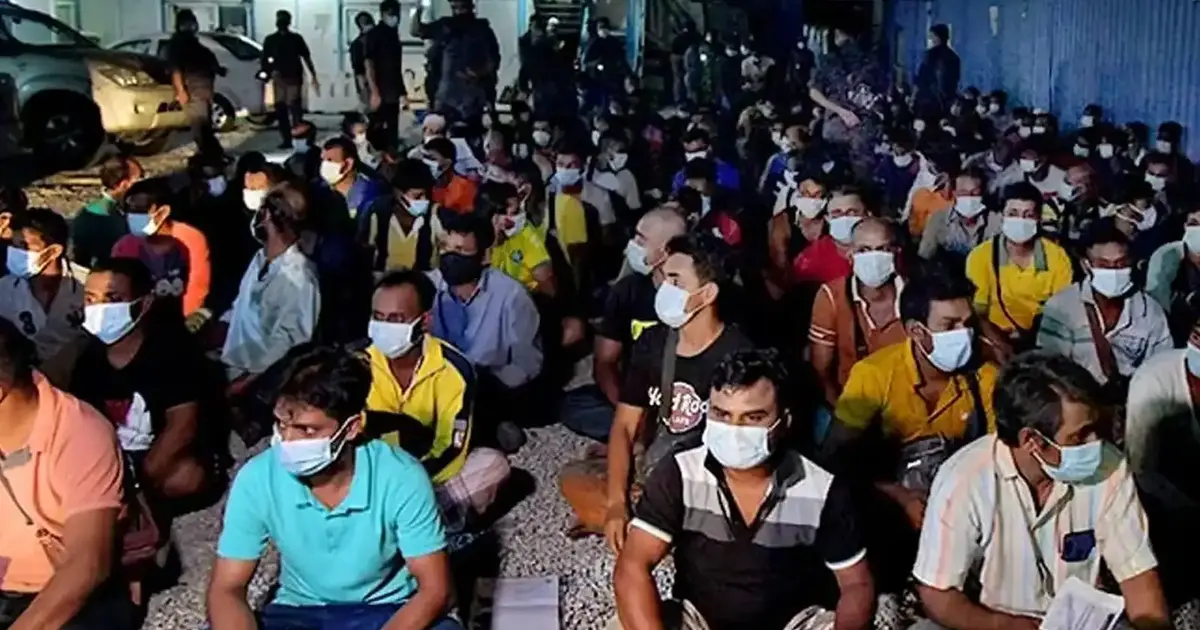
Malaysia's refugee situation carries unique dimensions compared to other Southeast Asian economies contemplating similar reforms. The country hosts approximately 183,000 registered refugees and asylum seekers, predominantly from Myanmar, Syria, and Pakistan, according to United Nations High Commissioner for Refugees data. This population exists in a legal limbo, unable to work formally yet concentrated in urban areas where informal employment becomes their only survival mechanism. Their exclusion from formal labour markets means human capital remains unutilized and refugee communities remain economically vulnerable, dependent on humanitarian assistance and increasingly involved in informal sector activities with limited oversight or protection.
The experience of neighbouring jurisdictions offers limited guidance for Malaysia. Thailand's approach involves selective informal toleration of refugee work in specific sectors, avoiding the legal clarity that formal policy reform would require. Indonesia grapples with similar challenges, though with somewhat different legal frameworks. Singapore maintains restrictive policies, treating refugee populations primarily as humanitarian rather than economic actors. None of these models provides a template readily applicable to Malaysia's particular combination of legal structures, labour market conditions, and demographic circumstances.
Yah Kim Leng's emphasis on policy framework clarity points toward what might constitute a practical pathway forward. Rather than debating whether refugees should work, establishing transparent rules about which employment sectors would accept refugee participation, what certifications or background checks would apply, how wages would be determined, and what protections would extend to refugee workers could neutralize some sources of opposition. Transparency reduces the perception that policymakers are imposing refugee employment through stealth or circumventing normal procedures, potentially building broader acceptance among Malaysian workers concerned about fairness and equal treatment under labour rules.
The economic case for refugee employment liberalization remains theoretically sound. Research from developed economies suggests refugees who gain employment access demonstrate strong labour participation rates, fill genuine labour shortages, and contribute productively without displacing native workers at large—though sector-specific impacts require careful monitoring. In Malaysia's context, an ageing workforce and demographic challenges in certain sectors create genuine labour demand that refugee populations might address. However, this structural argument carries little weight politically without corresponding attention to the institutional and social barriers that Yah Kim Leng's analysis highlights.
Any serious reform attempt would require coordinating across multiple government agencies, from immigration and labour ministries to finance and social departments. The 2017 pilot's failure suggests such coordination proves more difficult than apparent, particularly when implementation responsibilities remain unclear and accountability for outcomes dispersed across agencies with competing priorities. Building institutional capacity for managing refugee employment, should it be authorized, represents an unglamorous but essential prerequisite that preceding discussions often overlook.
Moving forward requires acknowledging that resistance to refugee employment reflects not merely prejudice but legitimate concerns about implementation, fairness, and effects on vulnerable Malaysian workers. Addressing these requires policy sophistication beyond simple statements of principle. Yah Kim Leng's identification of legal gaps and the 2017 pilot failure as central obstacles suggests the pathway involves less dramatic political choices about refugee rights and more technical work developing durable legal frameworks, institutional mechanisms, and sectoral guidelines that make refugee employment both feasible and politically sustainable. Without this groundwork, future proposals will likely encounter similar resistance, regardless of humanitarian imperatives or economic rationale.

%22%2F%3E%3C%2Fpattern%3E%3C%2Fdefs%3E%3Crect%20width%3D%22100%25%22%20height%3D%22100%25%22%20fill%3D%22url(%23phcw7og)%22%2F%3E%3Crect%20width%3D%22100%25%22%20height%3D%22100%25%22%20fill%3D%22url(%23phcw7op)%22%2F%3E%3Ctext%20x%3D%2250%25%22%20y%3D%2250%25%22%20text-anchor%3D%22middle%22%20dominant-baseline%3D%22central%22%20fill%3D%22rgba(255%2C255%2C255%2C0.95)%22%20font-family%3D%22Georgia%2C%20'Times%20New%20Roman'%2C%20serif%22%20font-weight%3D%22700%22%20font-size%3D%22151%22%20letter-spacing%3D%22-0.02em%22%3EThousands%3C%2Ftext%3E%3C%2Fsvg%3E)