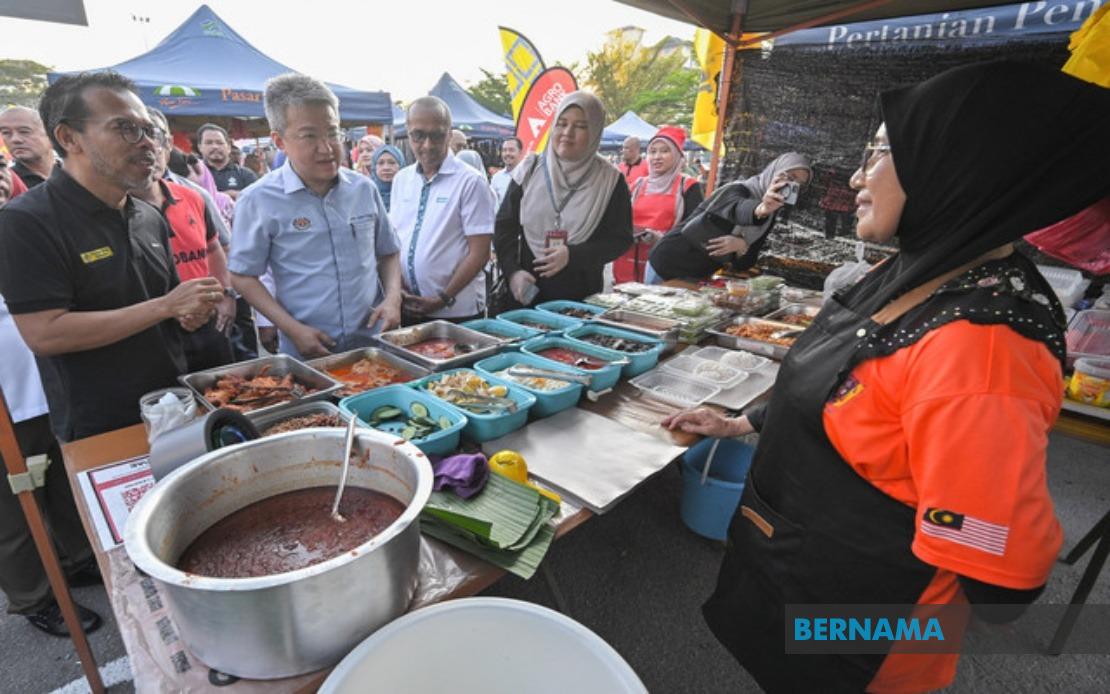
The Malaysian government is deploying substantial financial resources to strengthen the microfinancing ecosystem for small-scale traders and hawkers. Deputy Finance Minister Liew Chin Tong announced the allocation of RM9.8 billion in lending capacity across six key institutions, marking a comprehensive push to democratise access to working capital for the nation's grassroots business community. This initiative reflects growing recognition that micro-entrepreneurs often face structural barriers to credit despite their critical role in the informal and semi-formal economy.
The underlying strategy centres on removing intermediaries and bringing financial services directly to traders where they operate. Rather than expecting small business owners to navigate complex banking procedures in formal settings, the government has designed a mobile outreach model called "Mikro Kredit Turun Padang," which translates to "Microfinance Goes Out into the Field." This approach acknowledges practical constraints facing hawkers and small traders—limited time, unfamiliarity with formal application processes, and geographic distance from financial institutions—that have traditionally prevented them from accessing institutional credit.
Liew emphasised that the initiative aims to prevent small traders from being marginalised in Malaysia's broader economic growth narrative. Without targeted intervention, informal sector participants may lack the capital needed to scale operations, upgrade equipment, improve product quality, or diversify offerings. By ensuring this segment gains sustained financing access, the government seeks to unlock productive potential that might otherwise remain dormant. The allocation sends a signal that policymakers view microfinance expansion as integral to achieving more inclusive economic development.
The six participating institutions represent a cross-section of Malaysia's financial landscape. Amanah Ikhtiar Malaysia (AIM), Bank Simpanan Nasional (BSN), and Agrobank bring specialist lending expertise. Bank Rakyat contributes community banking experience. The Companies Commission of Malaysia facilitates business registration and formalisation. TEKUN Nasional and Majlis Amanah Rakyat (MARA) provide development support and advisory services. This consortium approach distributes responsibility across institutions with complementary capabilities, theoretically allowing borrowers to find products suited to their specific circumstances.
Early results from the "Mikro Kredit Turun Padang" series offer encouraging indicators. At the Dataran Puchong Permai Farmers' Market event, twelve traders secured approvals within a single programme session. Seven received backing from AIM, three from BSN, and two from Agrobank. Such rapid turnaround suggests the streamlined application framework is functioning as intended. Previous iterations at Taman Melawati, Kelana Jaya, and Bandar Tasik Permaisuri markets similarly generated tangible financing outcomes, indicating the model's replicability across different geographical locations and trader profiles.
However, scaling from isolated successful events to nationwide systematic coverage presents challenges. Twelve approvals at one market, while positive, represent a fraction of the thousands of micro-traders operating across Malaysia. Sustaining administrative capacity within the six institutions to maintain outreach frequency and processing speed as the programme expands will require careful resource planning. Additionally, ensuring that approved borrowers successfully repay loans and achieve sustainable business growth—rather than simply accessing credit—will determine whether the initiative delivers long-term impact.
The government's intention to channel trader feedback to the Prime Minister during budget deliberations reveals an important governance element. Rather than treating microfinance as a static programme, policymakers are creating feedback loops that allow grassroots perspectives to inform policy evolution. Traders' direct experiences with application procedures, collateral requirements, repayment terms, and product features will surface practical constraints that bureaucratic planning might overlook. This feedback mechanism could lead to refinements such as adjusted eligibility criteria, modified grace periods, or tailored product design.
For Malaysian small traders, the RM9.8 billion allocation represents genuine opportunity, provided execution matches intention. Access to formal credit at reasonable rates allows hawkers to transition from hand-to-mouth operations to planned growth trajectories. A trader with reliable financing can purchase bulk inventory at better unit costs, invest in food safety compliance, upgrade stall equipment, or expand into additional locations. Over time, such improvements increase profitability and job creation in local communities. The microfinance sector thus functions as an economic multiplier within informal economies.
Regionally, Malaysia's approach aligns with broader Southeast Asian trends emphasising financial inclusion. Neighbouring countries including Indonesia, Thailand, and the Philippines have similarly prioritised microfinance expansion, recognising that formal banking systems alone cannot serve populations with irregular incomes or limited collateral. Malaysia's RM9.8 billion commitment positions it competitively within the region and demonstrates policy alignment with development objectives endorsed by international organisations.
The "Mikro Kredit Turun Padang" initiative also reflects awareness that digital banking, while rapidly expanding, has not universally eliminated the value of in-person financial services. Face-to-face advisory sessions allow loan officers to assess trader credibility through direct conversation, while traders gain confidence through personal interaction with institutional representatives. This hybrid model combining mobile outreach with digital capabilities may prove more effective than exclusively remote application processes for populations with varying digital literacy levels.
Looking forward, success metrics should extend beyond initial approval rates. Subsequent government reporting should track loan utilisation—whether approved funds actually finance intended business improvements—repayment performance, and measurable business outcomes among borrowers. Such transparency would reveal whether the RM9.8 billion generates sustainable economic activity or merely distributes credit that borrowers struggle to service. Rigorous evaluation will inform programme adjustments and justify continued resource allocation in future budgets.
The microfinance initiative represents a recognition that Malaysia's economic agenda must encompass the informal sector deliberately. Hawkers and small traders constitute a significant employment source and contribute to urban vitality and community resilience. By systematically improving their access to capital, the government addresses a structural constraint limiting broad-based prosperity. If effectively implemented across Malaysia's diverse trader communities, this initiative could meaningfully enhance economic participation and entrepreneurial sustainability among populations traditionally underserved by formal financial systems.