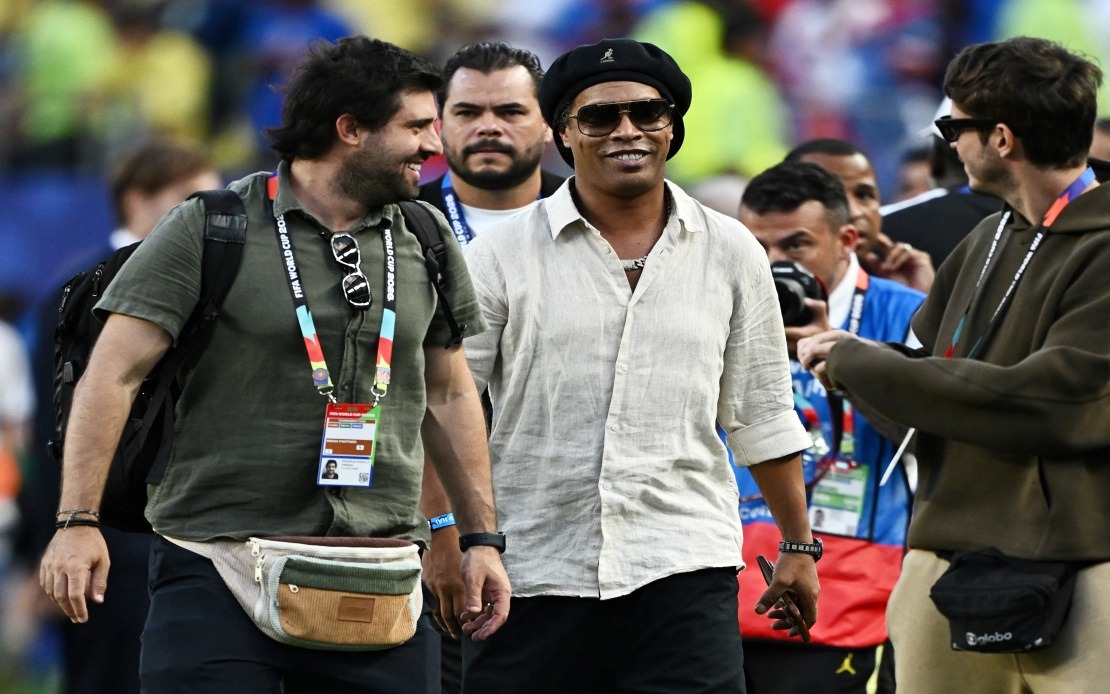
At 46 years old, Ronaldinho appears poised to embark on an improbable comeback to professional football, signing with Ravenna, a club competing in Italy's third tier. The move, reported by German Press Agency citing Italian sports media, would mark a remarkable return for the two-time World Footballer of the Year, who has been away from competitive play since 2015. The Brazilian maestro is expected to unveil full details of the arrangement during a media event scheduled for Tuesday in Miami, though questions remain about the extent of his involvement on the pitch.
Ravenna, based in the Emilia-Romagna region of northern Italy, represents an unconventional destination for a player of Ronaldinho's stature, even in the twilight of his career. The third-division platform offers a considerably lower level of competition compared to the elite European clubs where he made his reputation. Yet the prospect of the former Barcelona star joining any professional side at this stage underscores both his enduring marketability and his apparent desire to experience the joy of competing with a football at his feet once more.
Ronaldinho's supposed enthusiasm for the prospect was evident in his quoted remarks: "I can't wait to dance with the ball again and write a new story with Ignazio and the whole Cipriani family." The statement carries particular resonance given his reputation for treating football as an art form, emphasizing flair and creativity over rigid tactical discipline. Club owner Ignazio Cipriani, a businessman and hotel chain proprietor, appears to have captured the imagination of the legendary forward, suggesting a personal connection beyond purely footballing considerations.
The ambiguity surrounding whether Ronaldinho will actually participate in matches reveals the complex nature of this arrangement. Ravenna vice-president Ariedo Braida told the ANSA news agency that competitive action remains uncertain, though he expressed confidence in Ronaldinho's capabilities: "Will he play? We will see but it can't be ruled out. He is a champion, he knows no age." This cautious optimism reflects the reality that while Ronaldinho's technical gifts remain legendary, the physical demands of professional football at any level present genuine challenges for someone nearly half a century old.
The Brazilian's trajectory since leaving the professional game illustrates the challenge of staging a meaningful return. He last took to the pitch competitively in 2015 while representing Fluminense, the Rio de Janeiro club where he spent part of his career. Following that final appearance, he spent two years competing in India's Premier Futsal League before officially retiring in 2017. For a man accustomed to playing at the highest levels of world football, the intervening years have involved a gradual stepping away from the competitive arena, making any genuine playing involvement at Ravenna a considerable undertaking.
Ronaldinho's career achievements remain astonishing even by the standards of football's modern elite. He captured the FIFA World Player of the Year award twice, a recognition of sustained excellence at the sport's pinnacle. His most celebrated accomplishment came in 2002 when he helped Brazil secure the World Cup in South Korea and Japan, playing a crucial role in that triumphant campaign. Four years later, he reached another peak, winning the Champions League with Barcelona in 2006, representing the pinnacle of club football achievement in Europe.
His influence extended beyond Europe's traditional power bases. In 2013, Ronaldinho guided Atletico Mineiro to Copa Libertadores victory, South America's premier continental competition, demonstrating his ability to elevate teams across different regions. This global success underscores why even a modest Italian third-division side would consider his presence valuable, extending well beyond immediate on-pitch contributions to encompass marketing appeal and the intangible benefits of associating with genuine greatness.
For Malaysian and Southeast Asian audiences, Ronaldinho's potential comeback carries particular resonance given his status as a global football ambassador during his playing days. His combination of skill, showmanship, and genuine love for the game transcended geographical boundaries, making him beloved across Asia despite his European and South American base. A return to professional competition, however limited in scope, would reignite interest among supporters who grew up watching his magical performances.
The timing and setting of the Miami announcement suggests a carefully orchestrated media strategy designed to generate global attention. Ravenna's third-tier status alone would not typically warrant international coverage, yet Ronaldinho's involvement transforms the narrative into a story of athletic longevity and the enduring appeal of football's greatest entertainers. Whether this represents a genuine competitive opportunity or primarily a promotional exercise will become clearer as details emerge from the scheduled event.
The broader implications of this potential move extend to questions about professional football's capacity to accommodate aging superstars seeking continued involvement. Unlike some sports where veteran participation is more normalized, football's intense physical demands typically create sharper dividing lines between active and retired players. Ronaldinho's reported willingness to explore a return, even under unusual circumstances, may inspire reflection on how the sport manages the careers and post-playing involvement of its greatest figures.