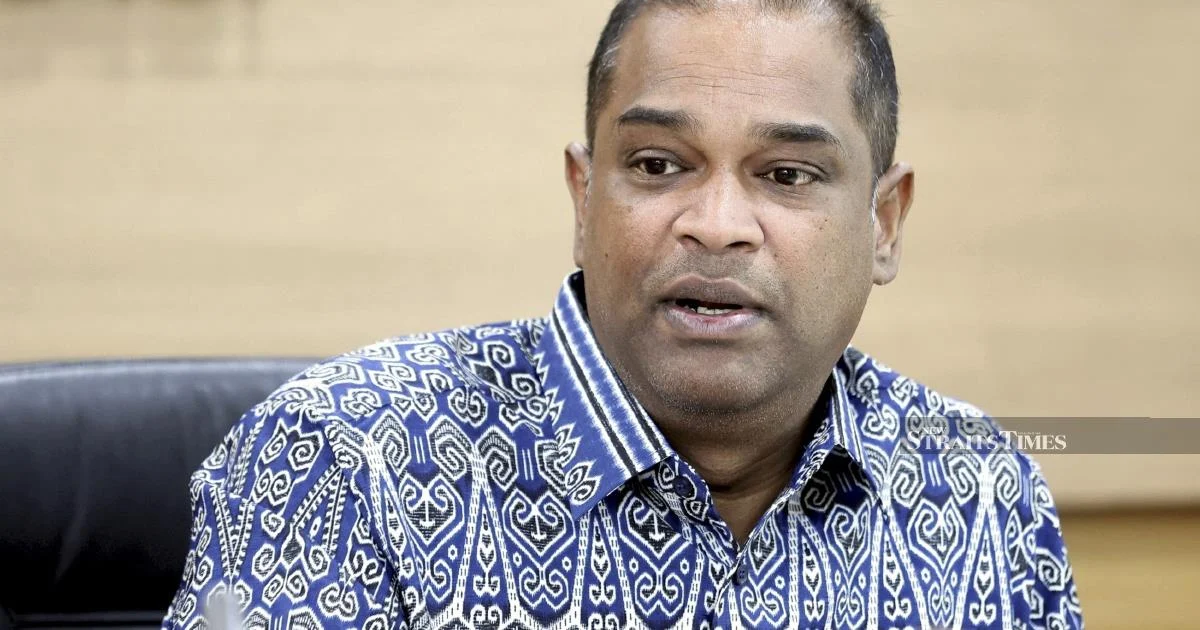
Malaysia's democratic process risks being undermined if political parties continue weaponising the royal institution for tactical advantage, according to PKR vice-president Datuk Seri R. Ramanan, who delivered a stinging rebuke to rivals engaged in such conduct ahead of the 16th Johor state election. Speaking in Johor Baru, Ramanan voiced concern over the trend of bringing palace-related matters into electoral discourse, arguing that such moves threaten the integrity of both the monarchy and democratic competition.
The remarks represent a significant escalation in rhetoric surrounding Johor's upcoming poll, with the PKR leadership drawing a clear line between legitimate political campaigning and what it characterises as institutional manipulation. By invoking the palace directly in his criticism, Ramanan signals that his party views these tactics as crossing a fundamental boundary in Malaysia's political landscape. The warning comes amid intensified jockeying among state and national political players positioning themselves for advantage in an election widely expected to reshape Johor's political geography.
Contextually, Johor has long served as a bellwether for national politics, given its status as Malaysia's second-most populous state and its historical role as a stronghold for the Barisan Nasional coalition. Any election there reverberates across the country, influencing calculations among rival blocs competing for control of state government and parliamentary seats. The 16th state election therefore carries implications well beyond Johor's borders, affecting how national political forces assess their relative strength and future coalition possibilities.
Ramanan's intervention reflects PKR's positioning within a broader opposition coalition that includes DAP and other reform-oriented parties seeking to counter BN's historical dominance. By criticising the conflation of royal matters with electoral competition, PKR attempts to occupy the moral high ground while simultaneously signalling to wavering voters that its opponents are engaged in desperate, divisive tactics. This framing allows the party to portray itself as respectful of institutions while painting rivals as opportunistic and reckless.
The warning also touches on a perennial tension in Malaysian politics: the careful balance required when involving the monarchy in any political discourse. Unlike many democracies, Malaysia's constitutional arrangement accords the king and state sultans considerable symbolic and limited executive authority, making them sensitive subjects in electoral competition. Political leaders must navigate between acknowledging royal prerogatives and pursuing democratic contestation without appearing disrespectful to the institution itself.
For ordinary Johor voters, Ramanan's statement carries an implicit message that they should judge candidates and parties on their policy platforms and track records rather than on claims involving royal preference or support. This appeal to voters' rationality reflects a broader concern within reform-oriented politics that royal institutions, when invoked in elections, can distort the democratic process by introducing elements that lie outside normal channels of accountability and scrutiny.
The timing of Ramanan's comments suggests that palace-related campaigning tactics have already begun to surface in the pre-election environment. Without specifying which parties or leaders he was targeting, the PKR vice-president's criticism implies that multiple sides may be attempting to leverage royal connections for political gain. Such developments typically escalate as election day approaches, with campaigns becoming more aggressive and the boundaries of acceptable rhetoric stretching accordingly.
Raising these concerns publicly serves another strategic purpose for PKR: it allows the party to set expectations about what kinds of conduct it will deem illegitimate or out-of-bounds. By doing so early in the campaign cycle, Ramanan attempts to inoculate against accusations that his own party might later level at opponents if they employ such tactics. It also provides a reference point should voters later observe what they perceive as institutional manipulation, making them more receptive to opposition claims about inappropriate conduct.
The broader significance of this intervention lies in what it reveals about Malaysian political culture at this juncture. Despite Malaysia's long democratic history, anxieties persist about the politicisation of traditionally neutral institutions, including not just the monarchy but also the civil service, security forces, and judiciary. When senior politicians publicly warn against dragging institutions into politics, they implicitly acknowledge that such risks are real and present in the current environment.
For Malaysian democracy to function healthily, the separation between political competition and institutional authority must remain reasonably intact. Voters need confidence that electoral outcomes depend on their choices rather than on manipulation of revered symbols or authority structures. Ramanan's call thus resonates beyond the immediate context of Johor politics, touching on fundamental questions about institutional integrity and democratic fairness that concern citizens across the country.
As Johor heads toward its election, this tension between respecting royal institutions and conducting robust democratic campaigning will likely intensify. Political leaders on all sides face pressure to win votes while maintaining the delicate equilibrium that Malaysian society has constructed around its constitutional monarchy. How various parties navigate this challenge will say much about the maturity and health of Malaysian democracy during what promises to be a hotly contested and nationally significant electoral contest.
%22%2F%3E%3C%2Fpattern%3E%3C%2Fdefs%3E%3Crect%20width%3D%22100%25%22%20height%3D%22100%25%22%20fill%3D%22url(%23ph40ds4g)%22%2F%3E%3Crect%20width%3D%22100%25%22%20height%3D%22100%25%22%20fill%3D%22url(%23ph40ds4p)%22%2F%3E%3Ctext%20x%3D%2250%25%22%20y%3D%2250%25%22%20text-anchor%3D%22middle%22%20dominant-baseline%3D%22central%22%20fill%3D%22rgba(255%2C255%2C255%2C0.95)%22%20font-family%3D%22Georgia%2C%20'Times%20New%20Roman'%2C%20serif%22%20font-weight%3D%22700%22%20font-size%3D%22151%22%20letter-spacing%3D%22-0.02em%22%3EFollowing%3C%2Ftext%3E%3C%2Fsvg%3E)