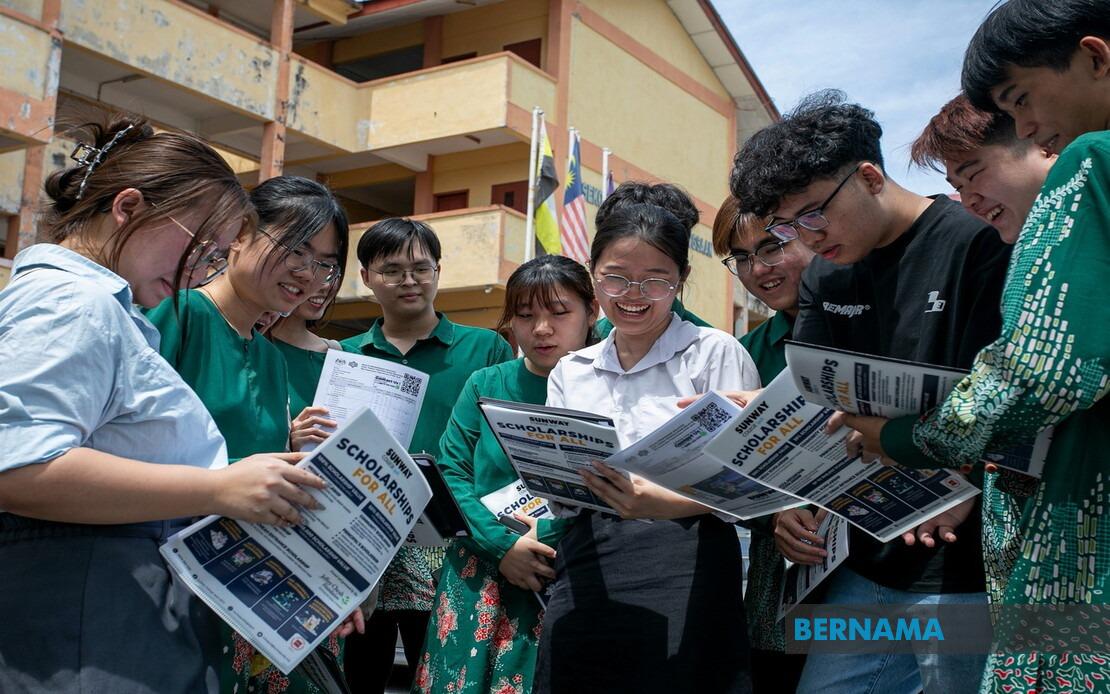
Malaysia's Sijil Tinggi Persekolahan Malaysia (STPM) qualification continues to serve as a viable and increasingly valued pathway into higher education, according to top-performing students recognised by the Malaysian Examinations Council (MPM) this month. The two-year Form Six programme, which has sometimes been overshadowed by alternative routes into tertiary study, is gaining fresh momentum as evidence mounts that it equips learners with genuine competitive advantages while remaining affordable and accessible to students from all socioeconomic backgrounds.
Hazaril Hakimi Hassan, an Orang Asli student from Kampung Paya Mendoi in Kuala Krau, Pahang, exemplifies the pathway's inclusive reach. Studying at SMK Temerloh, Hazaril achieved a perfect 4.00 Cumulative Grade Point Average in the 2025 STPM examinations, earning recognition at the MPM headquarters in Kuala Lumpur. His accomplishment carries particular significance given historical disparities in educational access and attainment among indigenous Malaysian communities. Hazaril credits his success not merely to individual effort but to a gradual realisation of the concrete advantages that Form Six study offers—a recognition that did not come naturally but required sustained encouragement from teachers and family members who helped him understand why this pathway merited serious consideration.
For Hazaril, the practical implications of choosing STPM have become clear through lived experience. Having committed to the qualification, he now aims to read Malay Language Education at Universiti Putra Malaysia with aspirations of eventually becoming a university lecturer. His trajectory demonstrates how STPM can function as a springboard for students from underrepresented communities to access professional careers and contribute their expertise to Malaysia's education sector. The visibility of such success stories matters considerably, as it counters lingering perceptions that Form Six remains a lesser option compared to other pre-university qualifications.
The financial dimension of STPM deserves particular attention, especially in a Malaysian context where access to quality education remains unevenly distributed across income groups. Ng Yu Yong, a high-achieving student from SMK Tsung Wah in Kuala Kangsar, Perak, who also attained a 4.00 CGPA with distinctions in Physics and Biology, explicitly highlighted the cost advantage of Form Six study. Unlike certain private pre-university pathways that command premium fees, STPM operates within Malaysia's public education system, substantially reducing the financial barriers facing talented students from modest households. This affordability factor, combined with rigorous academic standards, positions STPM as uniquely valuable for merit-based advancement regardless of family wealth.
Ng's perspective on STPM's academic rigour carries weight within the medical education context. His ambition to read Medicine at Universiti Malaya, one of Asia's leading medical schools, reflects confidence that STPM provides adequate preparation for highly competitive university programmes. He views the qualification not as a budget alternative but as fundamentally superior for students prioritising genuine academic excellence. His counsel to younger students—that Form Six offers superior intellectual challenge and better prepares candidates for university-level work—inverts the narrative sometimes prevalent among Malaysian families, where alternative pathways are chosen based on perceived prestige rather than pedagogical substance.
Beyond conventional achievement metrics, STPM's value extends into the realm of inclusive education infrastructure. Yeoh Chwen Yih, a visually impaired student from St John's Institution who likewise achieved a 4.00 CGPA, provides crucial testimony regarding how Form Six programmes accommodate students with disabilities. Yeoh benefited substantially from screen-reading technology integrated into Form Six learning systems, which proved more efficient and effective than traditional Braille-based materials for accessing coursework. This technological accessibility represents institutional thinking that extends educational opportunity beyond merely enrolling students with disabilities to genuinely supporting their learning processes.
The implications of such accessibility become apparent when considering Yeoh's career ambitions in law. Without adequate technological and pedagogical support, a visually impaired student's university prospects might remain severely constrained by practical obstacles rather than intellectual capacity. STPM's inclusive infrastructure demonstrates that Malaysian institutions can design educational pathways accommodating diverse learner needs while maintaining academic standards. This matters as Malaysia positions itself among Southeast Asia's knowledge economies—wasting talent through inadequate support systems represents not merely individual tragedy but national loss.
The international recognition enjoyed by STPM credentials provides another layer of value that Malaysian students increasingly appreciate. Ng's remarks about STPM's standing among leading overseas universities reflect the qualification's acceptance across Commonwealth nations and beyond. For Malaysian families contemplating their children's educational futures, STPM's international portability represents genuine optionality. Students achieving excellence through STPM can credibly pursue advanced study at prestigious institutions globally, whether by choice or circumstance, without facing credential recognition obstacles.
These testimonies cohere around a central proposition: STPM functions most effectively not as a fallback option but as an intentional choice rooted in understanding its genuine strengths. For students like Hazaril discovering Form Six's advantages somewhat belatedly, the cost is incomplete information and delayed confidence rather than any inherent deficiency in the pathway itself. Similarly, Ng's observation that excellence-focused students should deliberately choose STPM for its academic rigour inverts common assumptions about educational hierarchies. When high-achieving students actively endorse STPM's competitive intensity, they validate institutional structures that Malaysian education policymakers have developed.
The diversity of these three students' backgrounds—spanning indigenous heritage, socioeconomic circumstance, and disability status—underscores STPM's functionality as genuinely inclusive infrastructure. Each accessed the qualification through Malaysia's public school system, each achieved at the highest levels, and each secured pathways into university studies reflective of their ambitions rather than constrained by credential limitations. Their successes suggest that STPM's continuing value to Malaysian higher education lies not in nostalgic tradition but in contemporary relevance.
Moving forward, Malaysian educators and education policymakers might consider how these narratives of achievement and inclusion can reach students and families who remain unfamiliar with STPM's genuine advantages. Hazaril's journey illustrates how intelligent mentorship and community support can transform perception of educational pathways. Ng's public advocacy for STPM's academic competitiveness provides peer-to-peer messaging potentially more persuasive than institutional promotion. Yeoh's testimony regarding inclusive infrastructure signals institutional commitment to equitable access. Together, these voices suggest STPM's renaissance need not depend on policy overhaul but on visibility and understanding of what already functions effectively within the system.
%22%2F%3E%3C%2Fpattern%3E%3C%2Fdefs%3E%3Crect%20width%3D%22100%25%22%20height%3D%22100%25%22%20fill%3D%22url(%23ph45cjvg)%22%2F%3E%3Crect%20width%3D%22100%25%22%20height%3D%22100%25%22%20fill%3D%22url(%23ph45cjvp)%22%2F%3E%3Ctext%20x%3D%2250%25%22%20y%3D%2250%25%22%20text-anchor%3D%22middle%22%20dominant-baseline%3D%22central%22%20fill%3D%22rgba(255%2C255%2C255%2C0.95)%22%20font-family%3D%22Georgia%2C%20'Times%20New%20Roman'%2C%20serif%22%20font-weight%3D%22700%22%20font-size%3D%22170%22%20letter-spacing%3D%22-0.02em%22%3EMalaysia%3C%2Ftext%3E%3C%2Fsvg%3E)