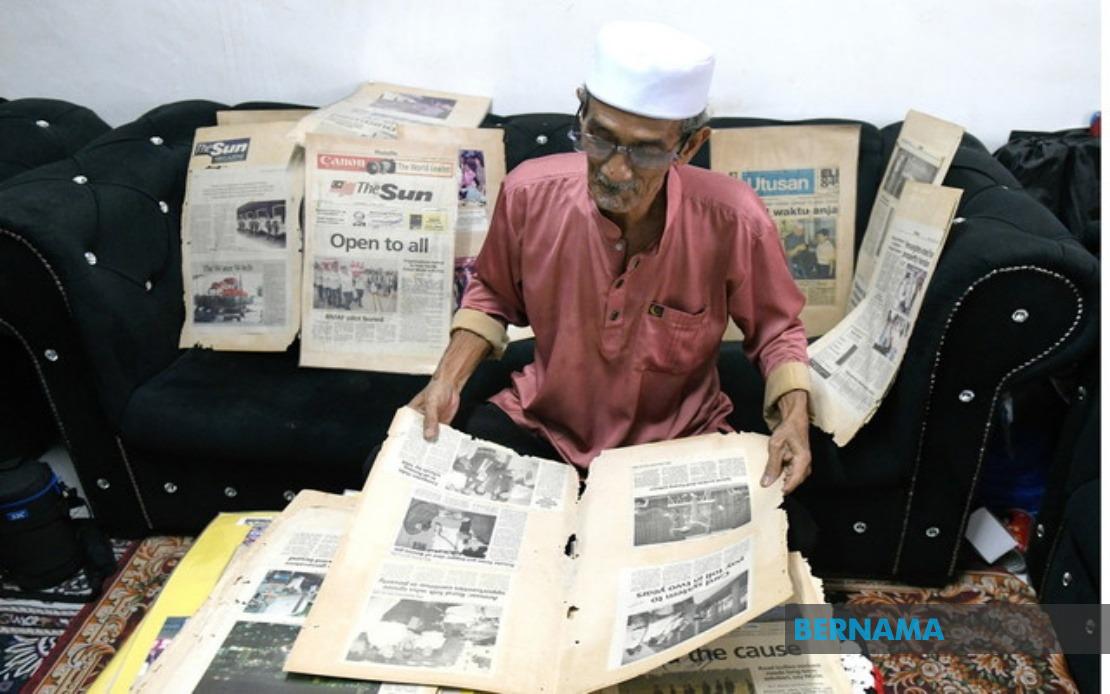
Azmi Sapiei has spent more than three decades navigating the demanding world of Malaysian news photography and videography, accumulating a wealth of stories that chronicle both his professional evolution and the transformation of the media industry itself. The 64-year-old former Bernama photographer and RTM Penang cameraman carries vivid memories of the challenges inherent to his profession, including a particularly traumatic incident around 2001 while working at The Sun newspaper, when he was physically assaulted by a criminal suspect during court coverage. Yet these difficult moments have not deterred him from pursuing a career that combines technical expertise with unwavering commitment to capturing newsworthy moments, no matter the circumstances.
Azmi's journey into photojournalism began in the mid-1980s after he chose to leave factory work and relocate to Kuala Lumpur to pursue his passion for photography. Before joining the national news agency Bernama in 1993, he worked independently with various agencies and women's magazines, gradually honing his craft and building a foundation of technical knowledge. His decision to join Bernama proved transformative, as the agency functioned as both employer and educational institution, instilling discipline and high standards in visual reporting. During his nearly three years at Bernama, he gained exposure to significant national events and developed the professional rigour that would define his career trajectory throughout subsequent postings at The Sun, Bernama TV, and eventually RTM Penang.
One of Azmi's most notable assignments came in July 1994 when he captured exclusive photographs of Shamsiah Fakeh, a former Malayan Communist Party member, upon her return from China. The story demonstrates both the unpredictability of news work and the value of being in the right place at the right time. Azmi and his assigned journalist managed to gain access to her residence in Gombak before the area was secured, positioning themselves strategically to document her arrival. Using the film cameras standard to that era, Azmi shot three rolls of film during the assignment. Upon returning to the office, his supervisor initially questioned whether three rolls were sufficient, even discarding them into a waste bin in front of him, a moment that combined professional embarrassment with frustration. However, when the negatives were developed, major newspapers across the country ran his photographs prominently the following day, validating his instincts and editorial judgment.
The evolution from film-based to digital photography fundamentally altered the nature of visual journalism work in Malaysia, though Azmi experienced both eras firsthand. During the analogue period, photographers faced significant constraints that shaped how they approached assignments. Every frame consumed physical film, and images remained invisible until they underwent chemical processing at a laboratory. This uncertainty required photographers to make educated decisions about shot selection, composition, and coverage while on location, since there was no opportunity for immediate review or correction. Azmi's responsibility extended beyond image capture to writing detailed captions for editorial review before distribution to Bernama's customers, making him responsible for both visual and textual elements of each story.
The transition to television camera work introduced a different set of physical and technical demands that tested his endurance and professional adaptability. When Azmi worked as a part-time cameraman for Bernama TV, he operated Betacam equipment, a robust but extraordinarily heavy video camera system that weighed approximately 12 kilograms. Colleagues colloquially referred to these cameras as 'junk iron,' a nickname that reflected both their durability and their considerable heft. Azmi frequently carried this equipment on his shoulders throughout assignments, a demanding requirement that necessitated exceptional physical strength and stamina. The experience highlighted a crucial distinction between still photography and television cinematography: while both professions share fundamental principles regarding visual composition and news judgment, the practical execution of video work demands substantially greater physical capacity due to equipment weight and the need to maintain steady camera operation over extended periods.
Azmi's recognition within the Malaysian media landscape extended beyond his employers' internal acknowledgement of his contributions. In 2006, he received the Penang State Media Award in the visual electronic media category, a formal recognition of his professional standing and impact on regional journalism standards. This honour reflected not merely technical proficiency but demonstrated commitment to ethical reporting and meaningful visual storytelling throughout his career. The award validated the cumulative effect of decades spent developing visual narratives that informed Malaysian audiences about significant national events, court proceedings, and newsworthy developments across multiple platforms and technological eras.
Beyond his individual accomplishments, Azmi's broader influence on Malaysian media stems from his role within Bernama, an institution he characterises as a 'school' that produced numerous quality photographers and enforced rigorous standards in visual journalism. The agency's emphasis on discipline ensured that photographs and video footage possessed not only technical accuracy but substantive news value, distinguishing professional journalistic output from casual documentation. These institutional values shaped Azmi's approach throughout his career and influenced how he subsequently trained the next generation of media professionals.
The physical and psychological demands of news photography work frequently remain unacknowledged in public discussions of journalism, yet they constitute essential dimensions of the profession that Azmi confronted throughout his tenure. Beyond the obvious incident involving assault by a criminal suspect, the work required consistent mental resilience when navigating challenging field conditions, unpredictable subject interactions, and pressure to deliver publishable images despite circumstances beyond a photographer's control. Azmi's reflections on these challenges offer younger journalists insight into the real-world operational difficulties of visual news gathering, distinguishing professional practice from the romanticised perceptions outsiders may hold regarding media work.
Azmi's decision to retire in mid-2020 marked the conclusion of an extended professional journey, yet his influence extends into the present generation of Malaysian media practitioners through his family connections. His second son, Muhammad Syafiq, aged 30, currently works as a cameraman with Media Prima Television Network, representing a direct continuation of his father's professional legacy. Syafiq's entry into television journalism followed a conventional pathway that involved early exposure to his father's work, observing him transport equipment home and gradually accompanying him to assignment locations after completing his Sijil Pelajaran Malaysia examination in 2016. By the following year, Syafiq had begun operating cameras independently, building upon the technical foundation and professional principles his father had modelled throughout his upbringing.
The transmission of professional knowledge from Azmi to Syafiq demonstrates how institutional values regarding visual journalism standards propagate across generations and through family structures within the media industry. Syafiq credits his father not merely as a parent but as a comprehensive educator and professional mentor who imparted technical cinematography skills, visual composition principles, and workplace discipline standards. This mentorship relationship reflects broader patterns within Malaysian journalism where senior practitioners actively cultivate the next generation's development, ensuring that institutional memory, professional ethics, and technical excellence continue despite industry transformations and generational transitions.
Azmi's career trajectory mirrors the broader technological and organisational changes that have reshaped Malaysian media over the past four decades. His progression from film-based still photography through Betacam videography to contemporary digital systems reflects the accelerating pace of technological obsolescence and adaptation required of working journalists. Simultaneously, his sustained commitment to fundamental principles regarding accuracy, news judgment, and ethical reporting demonstrates that certain professional values transcend technological platforms and remain essential regardless of whether images are captured on celluloid, magnetic tape, or digital sensors. For Malaysian readers and media professionals, Azmi's experience provides instructive perspective on how individual careers intersect with larger institutional and technological transformations within the journalism ecosystem.