The Malaysian government is moving swiftly toward implementing a groundbreaking social security initiative specifically designed for workers who regularly cross international borders, with the formal legislative process commencing when Parliament convenes tomorrow. Human Resources Minister Datuk Seri R. Ramanan announced that the Traveller Scheme proposal has reached an advanced stage of preparation and is ready for presentation to lawmakers, representing a significant milestone in protecting a largely vulnerable and underserved segment of the nation's workforce.
The scheme emerges from a partnership between the Ministry of Human Resources (KESUMA) and the Social Security Organisation (Perkeso), which have jointly refined the proposal through a rigorous approval process. Ramanan indicated that administrative clearances are progressing smoothly, with the entire approval framework expected to be finalised by August, setting the stage for the scheme's operational rollout. This accelerated timeline reflects government recognition of the pressing need for social safety nets among workers in the crucial Singapore-Johor corridor.
The legislative journey ahead involves multiple parliamentary hurdles that must be navigated sequentially. Beyond the initial tabling tomorrow, the government plans to conduct comprehensive briefing sessions with members of both the Dewan Rakyat and Dewan Negara, ensuring lawmakers understand the scheme's mechanics and intended benefits before voting. This engagement strategy aims to build political consensus and address any concerns that legislators might raise about implementation, funding, or coverage details.
The scale of the initiative underscores its national importance. Approximately 480,000 Malaysians commute daily between Johor and Singapore, representing a substantial cross-border workforce that has historically operated outside conventional social security frameworks. These workers face unique vulnerabilities, including employment discontinuity, exposure to workplace accidents across different regulatory regimes, and limited retirement provisions. The Traveller Scheme directly addresses these gaps by extending protection to a demographic that traditional employment-based systems have largely neglected.
Operationally, the scheme will function through an expansion of existing mechanisms under Act 789, specifically leveraging the Self-Employment Social Security Scheme framework administered by Perkeso. This approach represents pragmatic policy design, building upon established institutional infrastructure rather than creating parallel bureaucratic structures. Eligible individuals will contribute to the scheme and gain access to eight distinct benefit categories, though the proposal paper released to Parliament is expected to detail these benefits comprehensively.
The socioeconomic implications for Johor are particularly profound. The state hosts Malaysia's largest concentration of cross-border workers, and the scheme promises to integrate these workers into formal social protection systems for the first time. Beyond individual security, the initiative strengthens Johor's competitiveness as a regional economic hub by ensuring its workforce enjoys comparable protections to those available in Singapore, potentially attracting higher-skill positions and stabilising employment patterns across the border.
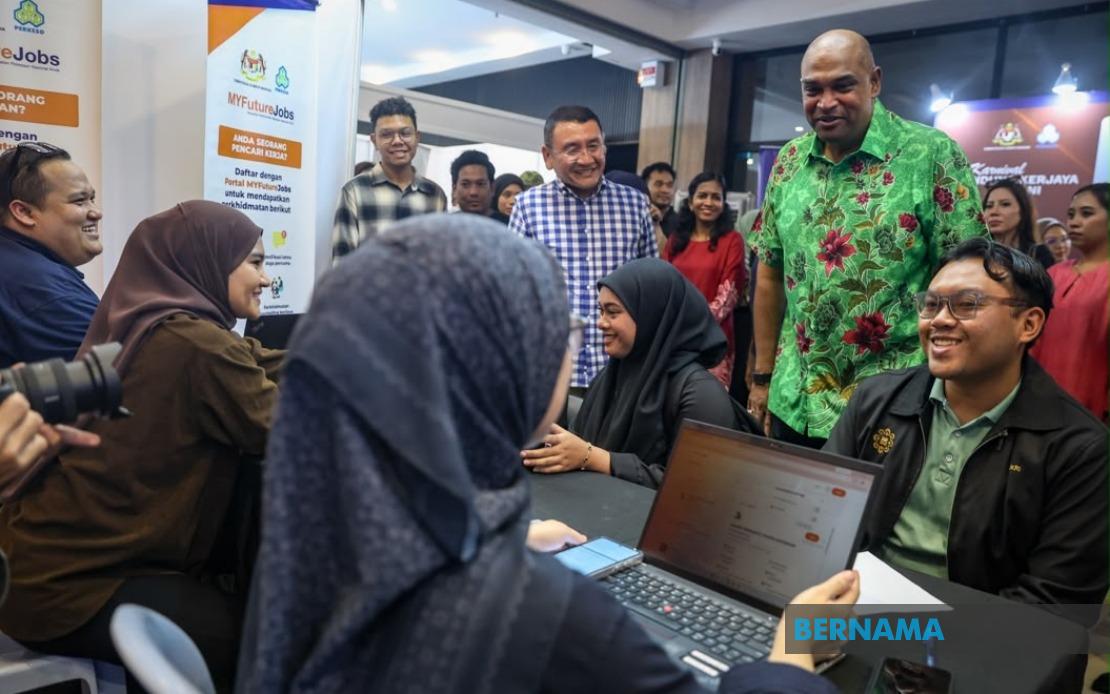
Ramanan's announcement came during his visit to the LINDUNG Kerjaya MADANI Carnival in Setia Tropika, where twenty employers were recruiting across more than two thousand vacancies, including highly specialised roles commanding salaries reaching RM16,000 monthly. This employment showcase highlighted the government's concurrent focus on job creation and worker protections, demonstrating that the Traveller Scheme exists within a broader policy framework aimed at enhancing workforce welfare and economic participation.
The August implementation deadline, while ambitious, reflects government determination to move from policy formulation to practical delivery. Cross-border workers have waited years for formal social security recognition, and delaying further would perpetuate their precarious status. The compressed timeline also capitalises on current political momentum and demonstrates responsiveness to stakeholder demands from both Malaysian and Singaporean sides of the economic corridor.
For Malaysian policymakers, the scheme represents an innovative response to the challenges posed by regional labour mobility. Unlike traditional employment-based systems that assume stable, long-term workplace relationships, the Traveller Scheme accommodates irregular work patterns and multiple employers, reflecting the realities of contemporary cross-border commuting. This flexibility could serve as a model for other regional arrangements as Southeast Asian labour markets increasingly feature worker flows across national boundaries.
The broader context of Malaysia-Singapore economic integration adds weight to the initiative. The two countries maintain deep trade and investment linkages, with tens of thousands of Malaysians employed in Singapore's economy across sectors ranging from domestic work to specialised professions. Conversely, Singaporean companies operate extensively in Johor and across Malaysia. The Traveller Scheme recognises these interdependencies and formalises state commitment to protecting workers navigating this integrated economic space, potentially reducing friction and enhancing bilateral confidence in people-to-people exchanges.
Implementation challenges remain, particularly regarding contribution collection mechanisms and benefit distribution across borders. Perkeso will need to establish systems for tracking contributions from workers employed in Singapore, liaise with Singaporean authorities on compliance verification, and process claims involving cross-border medical treatment or family circumstances. These operational complexities, however, are surmountable through careful coordination and phased rollout beginning with high-volume use cases.
The scheme's success ultimately depends on uptake among the target population. Workers must perceive genuine value in contributions relative to alternative uses of income, and employers must facilitate participation through payroll deductions or other mechanisms. Government and Perkeso will need to mount comprehensive awareness campaigns in both Johor and among Malaysian communities in Singapore to explain benefits and enrollment procedures, particularly targeting smaller employers and informal arrangements where workers operate outside structured human resources systems.
%22%2F%3E%3C%2Fpattern%3E%3C%2Fdefs%3E%3Crect%20width%3D%22100%25%22%20height%3D%22100%25%22%20fill%3D%22url(%23ph40ds4g)%22%2F%3E%3Crect%20width%3D%22100%25%22%20height%3D%22100%25%22%20fill%3D%22url(%23ph40ds4p)%22%2F%3E%3Ctext%20x%3D%2250%25%22%20y%3D%2250%25%22%20text-anchor%3D%22middle%22%20dominant-baseline%3D%22central%22%20fill%3D%22rgba(255%2C255%2C255%2C0.95)%22%20font-family%3D%22Georgia%2C%20'Times%20New%20Roman'%2C%20serif%22%20font-weight%3D%22700%22%20font-size%3D%22151%22%20letter-spacing%3D%22-0.02em%22%3EFollowing%3C%2Ftext%3E%3C%2Fsvg%3E)