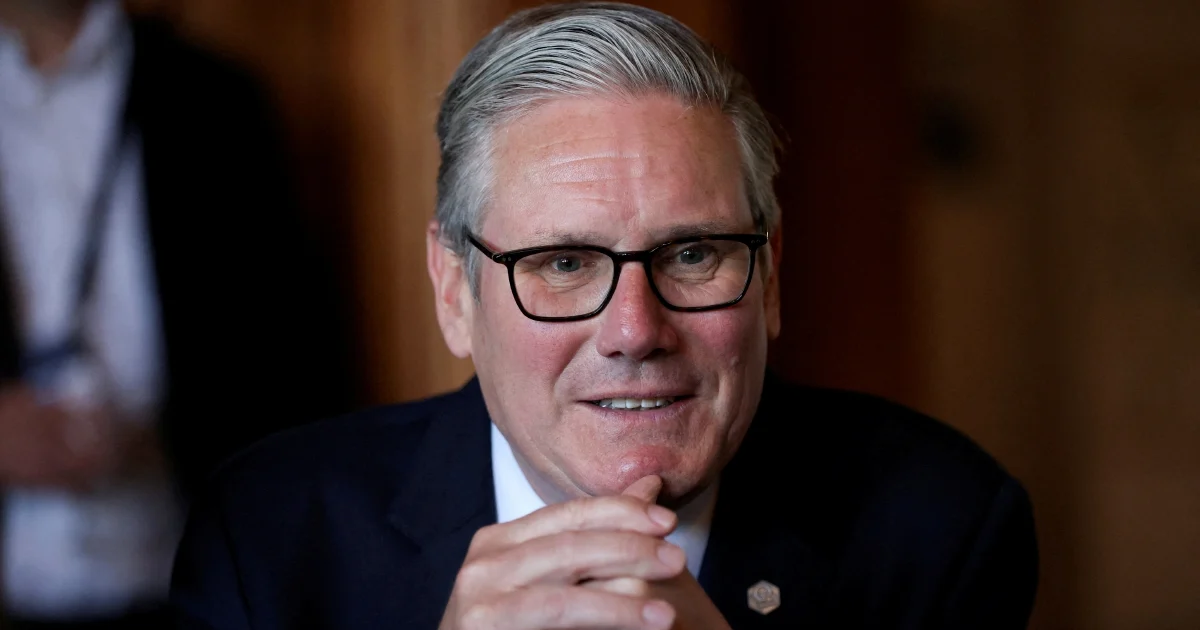
The political stability of the United Kingdom came into question when the Observer newspaper reported that Prime Minister Keir Starmer was poised to step down from his position, potentially announcing his resignation and outlining a schedule for his eventual departure from office on Monday. This claim, however, stands in stark contrast to statements issued by his government, which asserted that Starmer continues to focus his efforts on the responsibilities of leading the nation.
The emergence of such contradictory reports highlights the volatile nature of contemporary British politics, where speculation about leadership transitions can rapidly gain traction in major media outlets. The Observer's assertion about an impending resignation represents the kind of significant political claim that typically triggers immediate response from government communications teams, particularly when it involves the sitting Prime Minister. The apparent collision between press reporting and official denials underscores how rapidly political narratives can shift in Westminster.
For Malaysian observers of international affairs, the situation illustrates how quickly political uncertainty can develop within established democracies. The UK's robust free press, while a hallmark of its democratic institutions, can also generate substantial pressure on political leadership through investigative reporting and speculation about ministerial movements. This dynamic differs notably from how political transitions are managed in Southeast Asian contexts, where succession planning often follows more structured protocols.
The timing of such reports carries particular significance given the weight of governance challenges facing any sitting Prime Minister. Whether the Observer's reporting reflects genuine inside information or represents preliminary analysis remains unclear, but the publication's prominence in British journalism suggests the claim warrants serious consideration. Government sources typically issue emphatic denials only when they perceive a genuine threat to public confidence or when they wish to firmly counter what they view as inaccurate reporting.
Starmer's position as Prime Minister carries enormous responsibility for managing multiple concurrent crises, from economic policy and inflation concerns to social welfare and international relations. Any suggestion of imminent departure inevitably creates uncertainty among civil servants, parliament members, and international partners about continuity of policy direction. The British political system, unlike some parliamentary democracies, typically experiences relatively smooth transitions when they occur, given established procedures for selecting new party leaders.
The contradiction between media reporting and official government statements points to a broader pattern in modern politics where senior officials must simultaneously manage domestic media narratives, parliamentary pressure, and international diplomatic relationships. A Prime Minister facing resignation speculation must balance demonstrating unwavering commitment to the role while remaining responsive to legitimate grievances or pressures that may exist within his own government or party structure.
For Southeast Asian nations monitoring UK politics, such developments carry implications for bilateral relationships and regional stability. Britain maintains significant diplomatic and trade relationships throughout Asia-Pacific, and any uncertainty about political leadership could affect the continuity of these connections. Additionally, political instability among G7 nations can influence global economic conditions that ultimately affect emerging markets and developing economies.
The specific detail about announcing a resignation timeline represents a notable element within this narrative. Should a Prime Minister indeed determine that departure is necessary, establishing a transition timetable would represent an orderly approach consistent with Westminster conventions. Such an arrangement would theoretically provide government continuity during a leadership transition period, allowing for preparation of policy handoffs and departmental administration.
Government sources who countered the resignation claims by emphasizing Starmer's continued focus on governing duties were employing a standard communications strategy: emphasizing present commitment and forward momentum rather than engaging in detailed rebuttals of specific claims. This approach typically aims to shift media attention away from succession speculation and redirect focus toward substantive policy achievements and ongoing government work.
The broader context of this situation involves understanding the contemporary pressures facing UK leadership. Governments across developed democracies face increasing demands from multiple constituencies, complex international challenges, and intense media scrutiny that can accelerate political transitions or amplify pressure on sitting leaders. The emergence of resignation reports at any point typically reflects either genuine internal party dynamics or the media's attempt to interpret ambiguous signals from within government circles.
Regional analysts in Southeast Asia would note that leadership stability remains a paramount concern for international investors and trading partners. Any indication of political transition in a major economy like Britain inevitably generates questions about policy continuity, particularly regarding trade negotiations, security partnerships, and diplomatic commitments. The region's economies, many deeply integrated into global supply chains and dependent on stable international relationships, benefit from predictable leadership and clear policy direction.
The unfolding situation surrounding these competing narratives will likely be clarified within days as events develop or as additional information emerges. Whether the Observer's reporting proves prescient or represents premature speculation, the episode illustrates how quickly political narratives can develop around senior leadership in contemporary democracies and how such uncertainty, even when ultimately unfounded, can create temporary market and diplomatic reverberations across interconnected global systems.