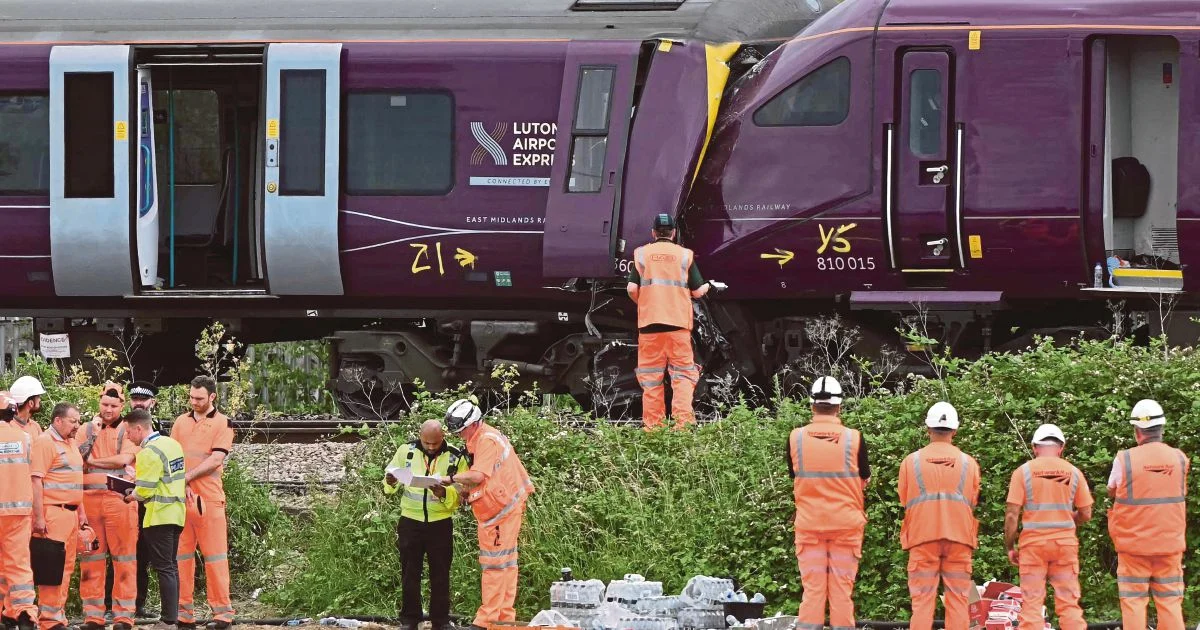
A fatal train collision that occurred north of London has claimed the life of one driver and left 28 people hospitalised, prompting immediate action from accident investigators as they work to establish what caused the crash. Among those receiving hospital treatment, nine passengers sustained critical injuries requiring urgent medical intervention. The incident has triggered a formal investigation as authorities seek to understand the sequence of events that led to the collision.
UK accident investigators arrived at the scene near Bedford on Saturday morning to begin their detailed examination of the wreckage and gather evidence. The focus of their initial investigation will centre on determining the exact cause of the collision, including examination of the trains involved, track conditions, and any signals or communications systems that may have played a role. Such investigations following major rail incidents are conducted with meticulous care, as they form the basis for future safety recommendations across the entire rail network.
The severity of injuries sustained by passengers highlights the violent nature of the impact. With nine individuals classified as critically injured, medical teams at receiving hospitals have been working to stabilise patients and assess the extent of their injuries. The remaining 18 people hospitalised are believed to have sustained less severe injuries, though all require medical observation and treatment as doctors monitor their conditions closely.
For Malaysia's perspective on such incidents, train collisions of this magnitude remain relatively rare in Malaysia due to the maturity of the rail safety system overseen by operators like Keretapi Tanah Air (KTM) and Kuala Lumpur's light rail operators. However, the incident underscores the global nature of rail safety challenges and the critical importance of rigorous regulatory oversight and infrastructure maintenance regardless of a country's stage of development. The UK's decision to immediately launch a formal investigation reflects international best practices that Malaysia's rail authorities also follow.
The Bedford area, situated along one of England's major rail corridors, sees substantial daily train traffic carrying both passengers and freight. The density of rail operations in such regions means that any collision carries significant consequences for passenger safety and network operations. The scale of this particular incident will likely prompt questions about the spacing of trains on this route and adherence to safety protocols that are designed to prevent such catastrophic events.
Initial observations from the scene will help investigators determine whether the collision resulted from human error, mechanical failure, or system malfunction. Modern trains are equipped with sophisticated safety systems designed to prevent collisions through automatic braking mechanisms and signalling protocols, yet accidents continue to demonstrate that no system is entirely foolproof. The investigation will examine whether these safety systems functioned as intended during the incident.
For the families and loved ones of those affected, the coming days will bring anxiety as they await updates on patient conditions and seek answers about how the collision occurred. The loss of the driver represents a tragedy that will reverberate throughout the rail workforce, where safety concerns are paramount in workers' minds. Such incidents often lead to renewed discussions about training standards, fatigue management, and the psychological toll that working in safety-critical industries places on personnel.
Beyond the immediate human toll, the collision raises broader questions about rail infrastructure investment and maintenance. Across Europe, including the United Kingdom, rail networks face challenges related to ageing infrastructure and the balance between maintaining existing systems and investing in modernisation. For Southeast Asian nations like Malaysia expanding rail capacity, lessons from major incidents abroad provide valuable guidance in planning safer, more resilient transport networks.
The investigation's findings will likely feed into international rail safety bodies and could result in recommendations that extend across multiple countries. Malaysia's rail operators, along with those throughout the region, monitor such incidents and adjust their own protocols accordingly. The interconnected nature of global transportation standards means that a collision in Bedford can inform safety measures implemented thousands of kilometres away.
Investigators will examine communication records between signallers and train operators, review maintenance logs, and reconstruct the events leading to the collision through witness statements. This painstaking process can take weeks or months, though preliminary findings may emerge within days as authorities work to rule out immediate hazards that might require urgent remedial action across the network.
The incident occurs at a time when rail transport is increasingly promoted across the world as a sustainable alternative to road and air travel. However, such catastrophic events serve as reminders that the safety foundations supporting this preference must be absolutely robust. Investment in rail infrastructure must therefore encompass not merely capacity expansion but rigorous maintenance, operator training, and continuous system upgrades that prioritise passenger protection above all other considerations.
As the investigation unfolds and hospitals continue caring for the injured, the rail community and the public at large will be seeking assurances that such incidents can be prevented through vigilant oversight and technological safeguards. The preliminary findings from Bedford will be watched carefully by transport authorities worldwide, including those managing Malaysia's expanding rail network, as each major incident provides invaluable lessons for the entire global rail industry.