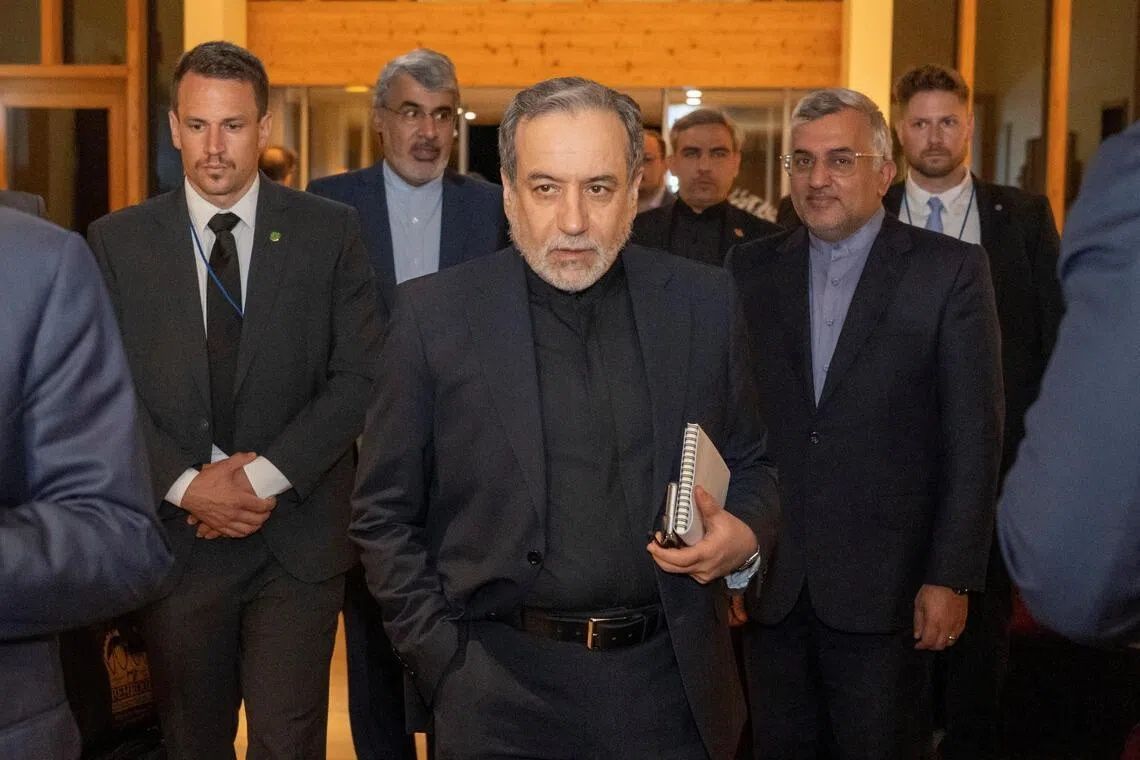
High-level delegations from the United States and Iran convened Sunday morning at the Buergenstock resort in Switzerland to pursue a negotiated settlement to their nearly four-month conflict. Vice President JD Vance led the American contingent, which included Trump administration figures Steve Witkoff and Jared Kushner, while Iran sent Foreign Minister Abbas Araqchi and chief negotiator Mohammad Baqer Qalibaf. The timing marks a significant diplomatic moment, coming days after Presidents Donald Trump and Masoud Pezeshkian signed a preliminary accord on Wednesday brokered by Pakistan, signalling both capitals recognise the necessity of formal peace machinery despite persistent disagreements on fundamental issues.
The mountainous Swiss resort, accessed through winding roads and multiple security checkpoints manned by armed personnel, provides neutral ground for what both parties hope will establish a lasting framework for ending hostilities. The venue's isolation—surrounded by leafy hills and guarded by helicopter surveillance—reflects the sensitive nature of negotiations between adversaries whose military forces continue operating in adjacent theatres. Pakistan's Prime Minister Shehbaz Sharif and army chief Field Marshal Syed Asim Munir attended the resort to underscore their role as mediators and demonstrate commitment to sustainable peace architecture.
Underlying the diplomatic choreography lie substantive tensions that threaten to derail progress before substantive negotiations mature. Iran's Islamic Revolutionary Guard Corps declared the Strait of Hormuz closed on Saturday in retaliation for Israeli operations in Lebanon, contending that such strikes violated ceasefire commitments. However, the United States military documented 55 merchant vessels transiting the critical waterway on Saturday alone, carrying more than 17 million barrels of oil destined for global markets. This contradiction between Iranian rhetoric and observable commercial reality reflects both sides' rhetorical positioning and raises questions about whether Tehran's claim represents genuine blockade capacity or strategic messaging aimed at leveraging negotiations.
The Strait of Hormuz's strategic significance cannot be overstated for Malaysian and broader Southeast Asian interests. Before February 28 military escalations, the waterway facilitated roughly one-fifth of global maritime oil commerce, with implications extending throughout Asia's energy-dependent economies. Any sustained disruption would reverberate through Malaysian petrochemical industries, power generation, and manufacturing sectors dependent on affordable energy inputs. The United States has committed to ensuring commercial passage continues unrestricted during the 60-day negotiation window and beyond, though President Trump introduced ambiguity by suggesting Washington might levy tolls on shipping "for services rendered as the Guardian Angel to the countries of the Middle East" should peace talks collapse—a formulation that introduces uncertainty regarding future regional maritime arrangements.
The Lebanon ceasefire arrangement constitutes another fragile element threatening negotiation momentum. While a truce ostensibly took effect, Israeli and Hezbollah forces continued exchanging fire on Saturday, with Lebanese civil defence officials reporting 20 deaths from Israeli strikes hours after the supposed cessation commenced. Israel maintains it responds to Hezbollah provocations and will not withdraw forces from occupied Lebanese territory, while the militant group vows to resist any Israeli military freedom of movement within Lebanon. This dynamic creates a precarious equilibrium where technical adherence to ceasefire provisions coexists with tit-for-tat hostilities that could reignite broader conflict.
Iranian officials have signalled that genuine progress requires more than ink on paper; implementation must follow. Mohammad Mokhber, an adviser to Supreme Leader Ayatollah Mojtaba Khamenei, accused Washington of failing to implement the preliminary agreement's first of fourteen points, which explicitly includes ceasefire provisions "on all fronts" encompassing Lebanon. Iran's position holds that energy markets will remain constrained until the other side demonstrates tangible compliance, not merely symbolic commitment. Conversely, Oil Minister Mohsen Paknejad indicated that strict adherence to the agreement's spirit could unlock substantial investment opportunities and contract frameworks previously frozen by conflict—suggesting Iran recognises economic benefits flowing from normalisation.
Vice President Vance projected confidence in the negotiations' trajectory before departing the United States, stating "we're going to hopefully make progress on the nuclear issue, make progress on the Lebanon ceasefire issue," anticipating "a couple days of talks." His assessment suggests American negotiators anticipate relatively rapid progress on foundational matters, though historical precedent involving Iranian nuclear negotiations suggests complexity may expand timelines considerably. The nuclear dimension remains central to American objectives, though its prominence in initial discussions remains uncertain given the immediate urgency of stabilising Lebanon and Hormuz arrangements.
Israeli public sentiment presents a complicating factor rarely discussed in diplomatic communiqués yet profoundly relevant to regional stability. A Hebrew University poll indicated approximately 92 percent of Israelis believe Iran benefited more substantially than Israel from the joint Israeli-American military campaign, with only eight percent viewing Israel as victorious. Almost 90 percent assessed that war objectives remained unmet, and fewer than 30 percent credited Prime Minister Benjamin Netanyahu's claims of major achievements. This pronounced public skepticism regarding military outcomes could constrain Israeli flexibility in subsequent negotiations and create domestic pressure for harder-line positions.
Casualty figures underscore the conflict's devastating human toll. Lebanon's health ministry documented 4,057 deaths since March 2, though without specifying combatant versus civilian breakdowns, while Israeli authorities report 32 soldiers and four civilians killed in Hezbollah-related operations. These figures, however incomplete, illustrate why all parties ultimately recognised negotiated settlement as preferable to continued attrition. The inclusion of medical personnel and women and children in casualty counts—noted by Lebanese health authorities—points toward the conflict's indiscriminate character and the escalating humanitarian costs that typically catalyse diplomatic breakthroughs.
The negotiation structure itself reflects careful attention to inclusion and mediation. The Qatari-owned Buergenstock resort provided symbolic neutrality, with Qatar's long-standing mediation efforts acknowledged implicitly through venue selection. Pakistan's high-level attendance at talks signals South Asian investment in regional stability outcomes, given Pakistan's own strategic interests in preventing wider Middle Eastern conflagration. This multilayered mediation apparatus suggests negotiators recognise that sustainable peace requires buy-in from multiple stakeholders beyond just primary combatants.
For Malaysian observers and policymakers, these negotiations warrant close attention for multiple reasons extending beyond humanitarian concern. The Strait of Hormuz remains critical infrastructure for Malaysian energy security and broader regional commerce, making any arrangements affecting transit security and pricing matters of direct national interest. Furthermore, the negotiations' outcome will significantly influence regional stability trajectories affecting Association of Southeast Asian Nations members' security environments and economic prospects. Successful negotiation could unlock Middle Eastern energy supplies and investment capital, while failure risks renewed escalation with cascading effects across Asian economies.