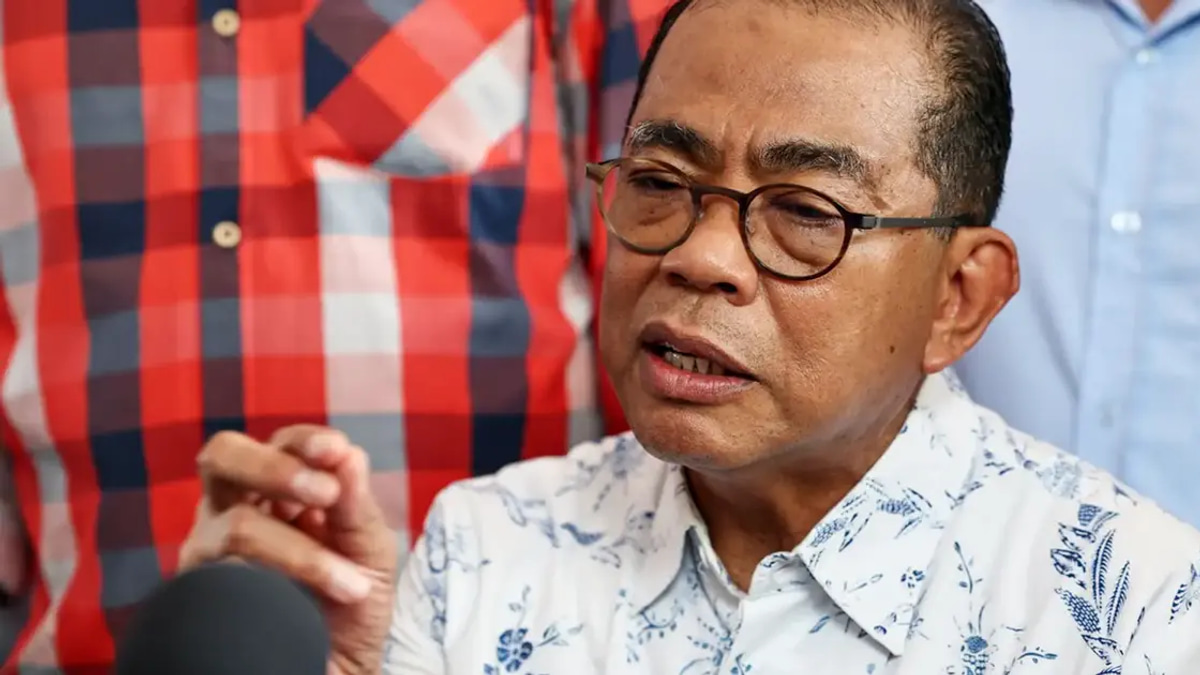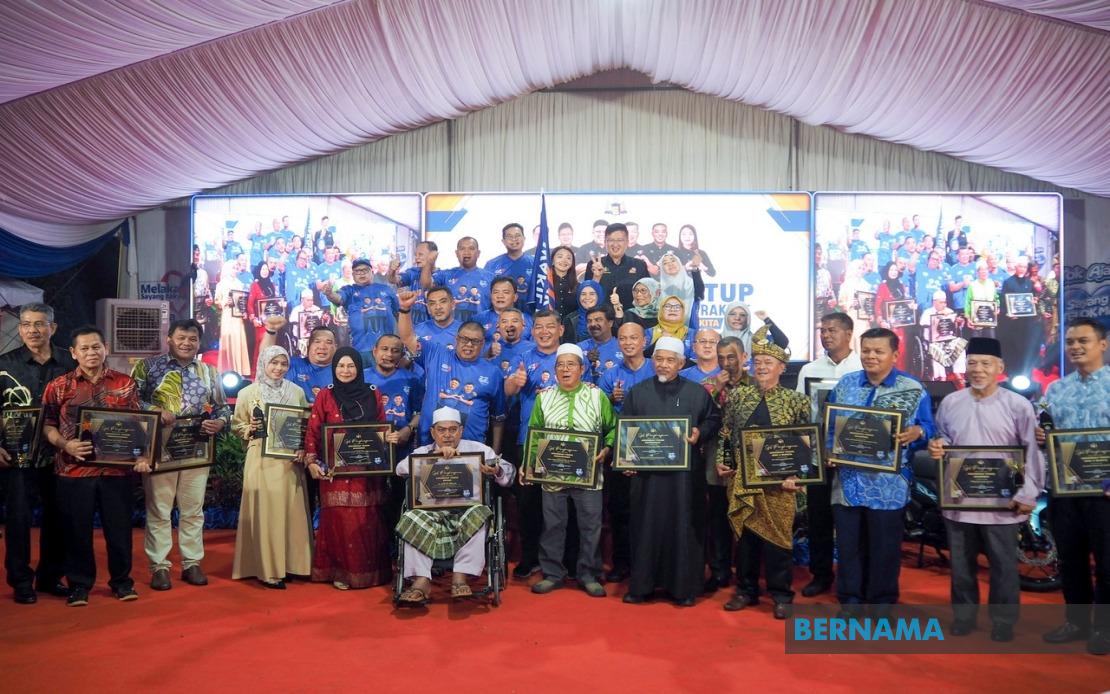
Melaka Chief Minister Datuk Seri Ab Rauf Yusoh has redirected attention toward substantive outcomes rather than programme volume as the Wakil Rakyat Untuk Rakyat (WRUR) initiative expands across the state. Speaking at the closing ceremony of WRUR's deployment in the Kota Melaka parliamentary constituency in Telok Mas, Ab Rauf argued that meaningful governance cannot be reduced to statistical measurements of implementation numbers. Instead, the administration's performance should be evaluated by whether citizens experience tangible improvements in their daily lives and whether legitimate grievances receive prompt, professional resolution.
The WRUR framework operates on a deceptively simple premise: establish direct channels for constituents to lodge complaints, ensure comprehensive documentation of each concern, and pursue systematic resolution regardless of the complainant's political affiliation or geographic location. This grassroots-focused methodology represents a departure from traditional top-down policy implementation, instead positioning elected representatives as ombudsmen who translate community feedback into concrete administrative action. By anchoring the programme's success criteria to complaint resolution rates rather than programme counts, the Melaka administration signals a shift toward accountability measures that citizens can personally verify.
Data from the pilot phase demonstrates the programme's reach and preliminary effectiveness. Across 19 state constituencies, WRUR has documented approximately 4,027 public complaints, with 2,633 cases—representing more than 65 percent—successfully resolved. These figures provide an empirical foundation for assessing whether the initiative delivers on its promise to address persistent governance gaps. However, the completion of resolution does not automatically signify citizen satisfaction, an important distinction that underscores the need for follow-up mechanisms beyond formal programme closure.
Kota Melaka represents the third parliamentary constituency to participate in WRUR, following earlier rollouts in Alor Gajah and Hang Tuah Jaya. During its four-week operational period, the programme executed more than 500 initiatives across five state constituencies, reaching an estimated 200,000 residents. Within Kota Melaka specifically, programme operators received 470 complaints, with 31 resolved during the active phase while the remainder entered a prioritisation queue for continued processing. This tiered approach acknowledges that genuine problem-solving requires time and coordination among multiple agencies, rejecting artificial urgency in favour of sustainable implementation.
A critical dimension of WRUR's design involves institutional continuity beyond the programme's formal conclusion. Ab Rauf has instructed all relevant government agencies to maintain oversight of outstanding complaints and persist in addressing them according to urgency and complexity. This directive transforms WRUR from a temporary intervention into an embedded operational standard, institutionalising citizen complaint mechanisms within regular governance structures. For Malaysian and Southeast Asian readers accustomed to programme fatigue—the cyclical appearance and disappearance of initiatives—this commitment to post-programme follow-through carries particular significance.
Paralleling WRUR's community engagement component, Telok Mas assemblyman Datuk Abdul Razak Abdul Rahman outlined the state constituency's broader development trajectory. Over the preceding five years, 328 local infrastructure projects valued at approximately RM68 million transformed Telok Mas across twelve distinct areas. These projects encompassed road rehabilitation, river and drainage system upgrades, residential repairs and construction, and community facility improvements ranging from prayer houses to educational institutions. Such comprehensive infrastructure development provides essential preconditions for citizen well-being, though infrastructure alone cannot substitute for responsive governance mechanisms like WRUR.
Direct welfare interventions have complemented infrastructure development. During the same five-year period, 6,098 Telok Mas residents accessed food assistance, welfare payments, and healthcare support totalling RM1.2 million, while 213 medical beds reached vulnerable populations. These targeted interventions address immediate material hardship, particularly significant as Malaysian households face persistent cost-of-living pressures. The Jualan Rahmah and Jualan Murah programmes, launched 70 times since 2022, provide subsidised purchasing opportunities, whereas the Free Petrol Programme distributed RM177,000 in fuel assistance to approximately 15,000 residents, illustrating multi-layered approaches to economic relief.
Educational investments further demonstrate commitment beyond infrastructure. The Telok Mas administration supported 1,694 students preparing for Sijil Pelajaran Malaysia examinations while disbursing RM244,200 in educational incentives to 255 high-achieving Form Five students and those attending public higher education institutions. These investments in human capital development carry long-term economic and social implications, particularly for communities where educational attainment correlates with future employment prospects and earning potential.
Tourism sector development represents an emerging priority within Telok Mas's growth strategy. The Ministry of Tourism, Arts and Culture allocated RM2.4 million to upgrade facilities at Sungai Punggor and Alai, with completion anticipated by 2027. An additional RM300,000 commitment will transform Dataran Telok Mas into a consolidated tourism and local product showcase centre. Most significantly, Bukit Larang geosite qualification as a Melaka Geopark component positions the constituency for national geopark recognition assessment scheduled for October. Tourism development carries implications for employment diversification, small business expansion, and cultural preservation within the constituency.
The convergence of these initiatives—complaint resolution mechanisms, infrastructure investment, welfare distribution, educational support, and economic development—illustrates a comprehensive governance approach extending beyond administrative tidiness. WRUR's emphasis on impact measurement rather than programme enumeration reflects evolving expectations around government accountability. Malaysian constituents increasingly demand evidence that policy interventions produce measurable life improvements rather than merely generating administrative activity. By prioritising resolution rates, institutional persistence, and citizen feedback integration, Melaka's administration articulates a governance philosophy that privileges substance over appearance, a standard that may influence peer administrations across Malaysia and the broader Southeast Asian region.