SpaceX rocket stage set to crash into the moon, leaving new crater
The roughly 4,000kg Falcon 9 upper stage is expected to strike the moon's northern hemisphere on Wednesday, posing no danger to Earth.
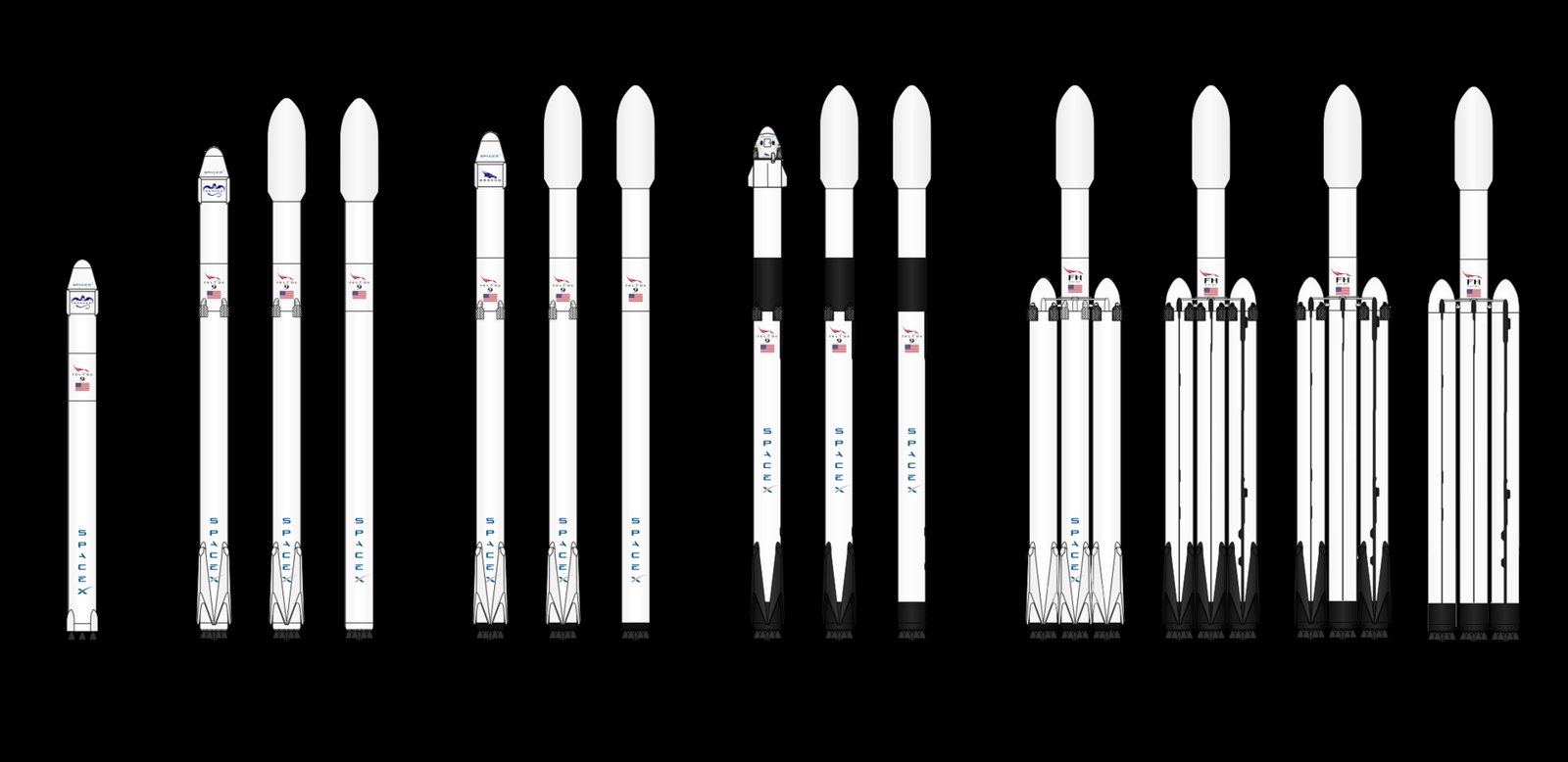
NEW YORK – The upper stage of a SpaceX rocket is expected to crash into the lunar surface on Wednesday, an impact that poses no danger to Earth and will simply leave behind a new crater.
Scientists and astronomy enthusiasts are awaiting the chance to witness a sunlit plume of rock and debris when the Falcon 9 upper stage strikes the moon at around 2.35am local time.
"Those with telescopes may be able to see the plume of material produced by the impact. It is still unclear how bright that plume will be, and that is one of the reasons we want to study this event," said Benjamin Fernando, an official at the Los Alamos National Laboratory in New Mexico and lead author of a study on the impact.
Assuming all its fuel has been used up, the research team estimates the upper stage weighs about 4,000 kilogrammes. It is expected to hit the moon's northern hemisphere near Einstein Crater at a speed of roughly 8,690 kilometres per hour.
"There is no danger to Earth. NASA will continue tracking the rocket for practice purposes, and will later observe the impact site for scientific research," NASA spokesman Jimi Russell said in a statement.
The Falcon 9 was launched in January carrying two lunar landers. The booster returned to Earth while the upper stage remained in space to continue sending both landers on their way.
"For high-energy missions like that, SpaceX normally performs trajectory adjustments to ensure the second stage is safely disposed of according to established rules. We did that, but instead a combination of solar activity and gravity shifted its path towards the moon," said Julianna Scheiman, NASA's director of science programmes for SpaceX Dragon, at a press conference on Monday.
Like many other scientists, Scheiman said she was excited to see observations of the impact. The study's authors have encouraged professional and amateur astronomers to try to watch or record the collision.
"This event offers an opportunity to test methods of locating impact sites on the lunar surface for future seismic experiments, to study dust and ejecta dynamics from lunar impacts, and to assess the risks posed by human-made debris in space," the research team wrote.
NASA hopes to establish a continuous human presence on the moon in the near future, making an understanding of space debris in lunar orbit increasingly important.
The moon is frequently struck by space debris such as meteoroids, but collisions involving human-made objects are rare. In the 1970s, the US space agency carried out deliberate impacts during the Apollo programme to gather seismic data. – AFP
This article was produced with the assistance of artificial intelligence (AI), in accordance with our editorial policy.